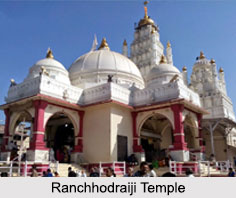
 Ranchhodraiji Temple situated in Dakor is a pious shrine located 94 kms away from Ahmedabad, Gujarat. The small shrine of the initial Ranchhodraiji temple has now been enclosed in a huge temple complex. It was built by Shri Gopalrao Jagannath Tambwekar in 1772 AD. It is constituted of brick walls and stoned pillars and square-shaped with four entrances.
History of Ranchhodraiji Temple
Lord Ranchhodraiji, the presiding deity of the temple, is actually an incarnation of Lord Krishna. There is an interesting story behind the name Ranchhodraiji and the temple. According to Hindu mythology, Lord Krishna fled from the battlefield during a war with an ally, Jarashand and since then he came to be known as Ranchhodraiji. Ranchhodraiji Temple, was however, established here as a result of the Lord`s mercy for his devotees.
In ancient times, Bholanath, a passionate devotee of Lord Krishna traveled from Dakor to Dwarka to worship Him. This was noticed by Krishna, and he was overwhelmed by his devotion. He decided to shift himself to Dakor, in order to save his follower from the troubles of travelling so far. In this manner, he accompanied Bholanath to Dakor. It is believed that the idol of Ranchhodraiji Temple is originally from Dwarka. This incident has made the Lord an all-time favourite with the devotees here in Dakor. A fair is organized every year, on Sharad Purnima (full moon day in the winters).
Structure of Ranchhodraiji Temple
The main door of the temple faces the Gomati River. There are three remaining doors leading also to the main shrine. The door facing the Lord opens in front of an audience chamber. The doors to the main Ranchhodraiji shrine remain open throughout the day, except in the afternoon. This is the time when the Lord is supposed to take rest. And for this purpose, a separate bedchamber is linked to the main chamber of the shrine. The bedspread of the Lord is plentifully decorated with fragrant garlands, soft mattress, blankets, gold and silver bedsteads with soft cotton and silk.
Visiting Information to Ranchhodraiji Temple
Ahmedabad Junction Railway Station and Sardar Vallabhbhai Patel International Airport are the nearest to visit the temple. National Highway 19 connects Ahmedabad to other major cities of India.