


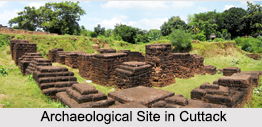
 History of Cuttack in Odisha is deciphered from the excavated archaeological ruins maintained by Archaeological Survey of India, forts of medieval era and the houses of the Indian Freedom fighters. History of Cuttack in Odisha is deciphered from the excavated archaeological ruins maintained by Archaeological Survey of India, forts of medieval era and the houses of the Indian Freedom fighters.
Early History of Cuttack The early history of Cuttack dates back from the rule of Keshari dynasty. According to the historians, the present day Cuttack was established as a military cantonment by King Nrupa Keshari of Keshari dynasty in 989 AD. Madala Panji, a chronicle of the Jagannath temple of Puri also suggested the establishment of Cuttack during that era. The reign of Maharaja Markata Keshari was distinguished for the stone embank built to protect the new capital from flood in 1002 AD. After the decline of Keshari Dynasty, Cuttack came under the rule of Eastern Ganga Dynasty, who was responsible for the erection of Jagannatha Temple of Puri. Medieval History of Cuttack 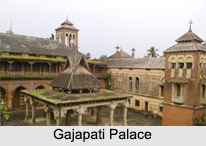 Cuttack became the medieval capital of local kingdom founded by Raja Anangabhimadeva III of Ganga dynasty in 1211 AD. After the end of Ganga rule, Odisha passed to the hands of the Suryavamsi Gajapati dynasty who ruled Cuttack from 1434–1541 AD. Under the rule of Suryavamsi Gajapati dynasty, Cuttack became the capital of Odisha. After the death of Raja Mukunda deva, the last Hindu king of Odisha, Cuttack first came under the direct rule of Delhi Sultanate and later under Mughal Dynasty, who made Cuttack the seat of the new Orissa Subah (imperial top-level province) under Mughal Emperor Shah Jahan. After the death of Aurangazeb, when Mughal Empire in India was shattered into pieces, Maratha Empire began to rule Cuttack and made the control area for Eastern Ghats Mountain Range in India, to overlook the Nawabs of Bengal. During 1750, Cuttack came under Maratha rule and it grew fast as a trading centre being the convenient point of contact between the Marathas of Nagpur and the English merchants of Bengal. After its decline, Cuttack in Cuttack District of modern day Odisha was occupied by the British Empire in India in 1803 and later became the capital city of Odisha division in 1816. Cuttack became the medieval capital of local kingdom founded by Raja Anangabhimadeva III of Ganga dynasty in 1211 AD. After the end of Ganga rule, Odisha passed to the hands of the Suryavamsi Gajapati dynasty who ruled Cuttack from 1434–1541 AD. Under the rule of Suryavamsi Gajapati dynasty, Cuttack became the capital of Odisha. After the death of Raja Mukunda deva, the last Hindu king of Odisha, Cuttack first came under the direct rule of Delhi Sultanate and later under Mughal Dynasty, who made Cuttack the seat of the new Orissa Subah (imperial top-level province) under Mughal Emperor Shah Jahan. After the death of Aurangazeb, when Mughal Empire in India was shattered into pieces, Maratha Empire began to rule Cuttack and made the control area for Eastern Ghats Mountain Range in India, to overlook the Nawabs of Bengal. During 1750, Cuttack came under Maratha rule and it grew fast as a trading centre being the convenient point of contact between the Marathas of Nagpur and the English merchants of Bengal. After its decline, Cuttack in Cuttack District of modern day Odisha was occupied by the British Empire in India in 1803 and later became the capital city of Odisha division in 1816.
Modern History of Cuttack Modern History of Cuttack began with the intervention of British Empire in India against Maratha Empire. After Maratha regime, British East India Company began to rule Cuttack and made Cuttack a Princely State of India. From 1948 onwards, when the capital was shifted to Bhubaneswar, the city remained the administrative headquarters for the state of Odisha. Cuttack was the nerve center of the nationalist movement during the Indian Struggle for Independence. During the course of freedom struggle, Swaraj Ashram of Sahebazada Bazaar was the center of all nationalistic activities. The indoctrinated followers of Mahatma Gandhi assembled in the Ashram to discuss the principles and ideals of Gandhi to expel the British from India. The growing militant and revolutionary movements in Cuttack appeared as a threat to the British and they appointed a Commissioner of Odisha division stationed in Cuttack till 1936. Cuttack has been serving as the administrative and the commercial hub of Eastern India since its advent. |
| |||



History of Cuttack
| History of Cuttack began with the advent of Somavansis and Eastern Ganga Dynasty. After its decline, Cuttack came under the rule of Muslims and later the British Empire in India. During the rule of British Raj, Cuttack became the hot spot for Indian Independence Movement. |
| ||||||||||||||||||||||||||||

