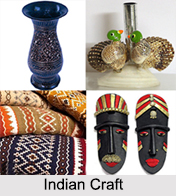
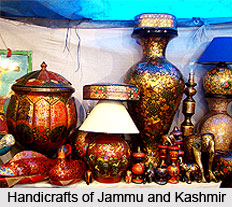
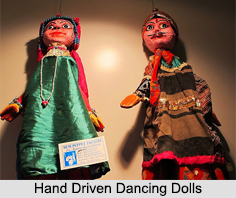
The variety of the crafts of Himachal Pradesh reveals the artistic deftness of the people of the state. In this state of mountains and valleys, people make several handicrafts throughout the year. The crafts include textiles, woodcarvings, carpet making, leather craft, pottery, and many more. These crafts are indigenous to the tribes of the region and trace its history centuries ago. With the wave of modernization, these crafts have evolved in design and style but their beauty remains the same.
Types of Crafts in Himachal Pradesh
Crafts of Himachal Pradesh are mainly categorized by their utility in day-to-day life and their compatibility with the climate of the regions. Weaving, carving, and metal crafts are a part of the life of the Himachalis. Kullu is well-known for its shawls and metalwares. Pottery and carpentry are extremely popular among tribal women and finds their significance in temples. Other popular crafts of Himachal Pradesh include embroidery, jewellery, stone crafts, paintings, leather works, etc.
Clay craft
The town of Kangra in Himachal Pradesh is famous for traditional clay craft mostly in dark red or black, which are very attractive. Few of the items are gidya, which is a jug bowl for curd or butter, which is called patri, tobacco smoking pot called narele, which is shaped like a coconut.
Wood craft
Dense forests occupy a large portion of the state and therefore it is obvious that woodwork has developed as a major form of craft. The artistic dexterity in woodwork is displayed by the craftsmen of Chamba who specialize in wooden boxes of geometrical forms for storing grains. Some common woodwork designs are naghbel, which is zigzag line that combines the serpentine pattern with three or four petal flowers in each side of the line or dori.
Stone craft
Himachal Pradesh boasts of traditional stone carvings. Among all, sandstone is predominantly used in the stone crafts of Himachal Pradesh. Rubble masonry is another popular stone. The artisans create wide varieties of objects out of them. The ancient Pahari carvings are well decorated with cylindrical figures. Stone crafts of Himachal Pradesh can also be observed in various temples, materials and pieces.
Embroidery craft
Embroidery is a household craft in Himachal Pradesh. The big handkerchiefs called rumal of Chamba are famous. They are used for wrapping ceremonious gifts during festivals and weddings. These rumals are heavily embroidered and are very eye-catching. The embroideries of these rumals bear an aesthetic resemblance of Mughal miniature painting.
Carpet weaving
Himachal Pradesh is also well known for its carpets like karcha, chuktu and chugdan. Panga, a town in Chamba district produces a carpet woven in goat hair called thobi, which is dominated, by black and grey. The rugs bear designs like trishul, swastika and a few odd symbols like an eight-pointed motif composed of a diamond and a concentric circle.
Cotton Weaving
Himachal Pradesh produces cotton durries (floor coverings), which are plain and mostly in blue or red colours. The expert weavers of the Sirmur region use pitloom for producing different attractive effects on the durries. Himachali caps and Pullas are also popular woven items in the region.
 Wool Weaving
The woolen garments of Himachal Pradesh stand out from the rest of the crafts. The traditional pattern or design includes geometrical motifs assembled in straight horizontal lines, bands and stripes. This pattern is combined in several intricate but symmetrical orders to create a wide range of effects. From the traditional designs a multitude of designs are tried out like `bumba`, which is a kettle, shaped design with colours in between, `chatham` which is a big cross tipped by tiny crosses at both ends, `khabatobi` which is the typical Central Asian key, trishul, the trident from four corners crossing in the centre, yashin, a staircase of bands with a square in the centre and religious motifs of chorten and swastika.
Shawl and Blanket Weaving
When there is less work during the winters, the women spent most of the time weaving the traditional Kullu shawls. In the Kullu valley and Chamba district other woolen fabrics like pattu and dohru are woven in rich colours. Blankets called `gudumas` are made of light long fibred loose flossy wool fibres. They are primarily woven in natural colours in white set off by wide crimson at two ends.
Metal Craft
Metal artifacts exist in Himachal Pradesh since 600 AD when the kings appointed craftsmen specialized in metalwork in their court. Antique metal idols are one of the most significant aspects in many temples of Himachal Pradesh. Tribal jewelleries of Himachal Pradesh made using metals and chunky beads are sought-after items among the tourists. From enameling to embossing, several metals like gold, silver, iron, and copper are used in making jewelleries. Some of the metalwares are amulets, pendants, necklaces, daggers and rings.
Miniature Paintings
Pahari painting had two principal phases of development. The earlier phase that started from the mid-17th century can be distinguished by fish-shaped elongated eyes, oval faces, receding foreheads, round chins and prominent noses. Bold figures are carefully laid against monochrome background of red, yellow, green or brown colours. The style underwent a change in the second quarter of the 18th century and a new phase of style developed in the Guler area. The paintings of this phase are done in a somewhat naturalistic manner.