


 Clove oil which is one of the oldest essential oils is derived from a plant that originally comes from India. Clove is also known as 'Lavanga' or 'Launga'. It is enriched with vitamin C, potassium, iron, phosphorus, calcium, sodium and vitamin A. Clove oil is commonly used in India for myriad purposes ranging from daily life to medicinal usage. Clove oil which is one of the oldest essential oils is derived from a plant that originally comes from India. Clove is also known as 'Lavanga' or 'Launga'. It is enriched with vitamin C, potassium, iron, phosphorus, calcium, sodium and vitamin A. Clove oil is commonly used in India for myriad purposes ranging from daily life to medicinal usage.
The American Dental Association has approved clove oil as an anesthetic and it is traditionally used for toothaches. Since, it is very strengthening to the musculature, it is also traditionally recommended that expectant mothers consume cloves in the last month of pregnancy to tone the uterus and prepare it for the birth pro dilution. Clove oil has a warm, strong, spicy smell and the oil is colourless to pale yellow with a medium to watery viscosity. Types of Clove Oil There are three types of clove oil. Clove Bud Oil: Both analgesic and antiseptic, clove bud oil is derived form the flower-buds of S. aromaticum. It consists of 60-90% eugenol, eugenyl acetate, caryophyllene and other minor constituents. It can help eliminate and prevent disease and infection. Clove Leaf Oil: It is derived from the leaves of S. aromaticum. It consists of 82-88% eugenol with little or no eugenyl acetate, and minor constituents. It is used to relieve pain, sore muscles, disinfect, and repel insects. Clove Stem Oil: It is derived from the twigs of S. aromaticum. It consists of 90-95% eugenol, with other minor constituents. It is used to relieve arthritic pain, toothache and mouth sores. It can be used as a mouthwash to maintain healthy gums. 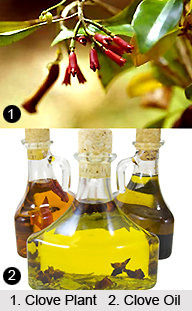 Therapeutic Properties of Clove Oil
The therapeutic properties of clove oil are analgesic, antiseptic, antispasmodic, anti-neuralgic, carminative, anti-infectious, disinfectant, insecticide, stimulant, uterine and tonic. Clove oil can be mixed well with the following oils: Cardamom, Cinnamon, Lavender, Ginger, Orange, Vanilla, Rose, Clary Sage, Bergamot, Bay Leaf and Ylang Ylang. Uses of Clove Oil: Side Effects of Clove Oil Clove oil can be made at home by mixing some household ingredients and clove. It is also readily available at the local grocery stores and the stores that specialize in all-natural products in the vitamin section. |
| |||



Clove Oil
| Clove oil is one of the oldest essential oils and is enriched with vitamin C, potassium, iron, phosphorus, calcium, sodium and vitamin A. It is used for myriad purposes ranging from daily life to medicinal usage. |
| ||||||||||||||||||||||||||||

