


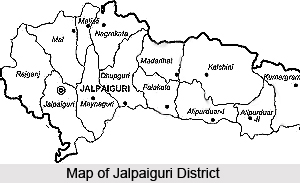
 Jalpaiguri district of West Bengal with abundance of natural beauty, is mainly known for its tea plantations and deep forests swarming with wildlife. It is situated in the foothills of the lower Himalayas. The district is of immense potential with regard to tourism. In fact, Jalpaiguri is the biggest district in North Bengal with respect to land area.
History of Jalpaiguri District Jalpaiguri district was established in the year 1869. The name Jalpaiguri comes from a Rajbongshi or Kamatapuri word 'Jalpai'. The word 'jalpai' means olive which grew in the town till 1900. The word 'guri' on the other hand means a place. The region which is encompassed by the district actually forms a part of the 'Koch Rajbongshi' Kingdom or Kamtapuri. Very recently, Jalpaiguri has become a part of West Bengal. The district is mostly inhabited by people of the Rajbongshi community. The name of Jalpaiguri is also associated with 'Jalpesh' or Lord Shiva which is the presiding deity of the region. Geography of Jalpaiguri District Jalpaiguri is situated between 26 degree 16 minutes and 27 degree and zero minutes North latitudes and 88 degree 4minutes and 89 degree 53 minutes East longitudes. It encompasses an area of 6,245 square kilometers. Jalpaiguri is bounded by Bhutan in the north; Bangladesh in the south and Assam and Darjeeling hills borders the district towards the East, West and Northwest. Topography of the region is mainly composed of rivers, rivulets and hills. The main rivers of the district are Teesta River, Torsa River, Jaldhaka River, Dyna, Neora, Sankosh and a lot more. The average temperature of the region ranges from 30.9 to 10.8 degrees all through the year. The average rainfall in Jalpaiguri is equal to 3160mm and the mean humidity is about 82 percent. 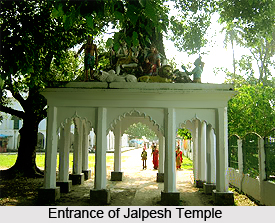
As far as vegetation is considered most of the area in the district is covered with lush green forests and tender tea gardens. Jalpaiguri is also known for being home to several endangered mammals and birds. Demography of Jalpaiguri District According to the census of 2001, the population of Jalpaiguri is equal to 3,403,204 and the density of population in the area is as high as 547 persons per square kilometres. The ratio of males and females in the district are not equal and there are more males than females. Most of the population in the district is based in the rural areas. The number of literate population in the district is 1,839,036. Jalpaiguri is home to a large number of tribal populations like the Totos. Culture of Jalpaiguri District Various races and cultures have intermingled in the district of Jalpaiguri, yet all the races and cultures in the region have retained their individuality. In other words it can be said that the multiple cultures have retained their individual flavours amidst the serenity of nature. Various cultures like the Bhotia culture, the Lepcha-Limbu Culture, the Rajbanshi Culture and the several other cultural styles belonging to the Coch, the Mech, the Ravas, the Totos and the Bengalis form an integral way of life for the people of Jalpaiguri. The tribal culture of Jalpaiguri district mainly incorporates the folk culture. The folk culture in turn includes folk dance, song and folklores. The major festivals for the population of Jalpaiguri are Durga Puja, Kali Puja, Teesta Burir Puja and Monosha Puja. The religious festivals of the region are accompanied by colourful fairs and stage shows. Thus it can be said that Jalpaiguri is the abode of multiple cultures and is a befitting example which shows a variety of lifestyles. Education of Jalpaiguri District Primary and secondary education in Jalpaiguri district has improved well over the years. Generally there are two patterns of education which are followed by the schools of the district. They are the West Bengal Board of Secondary Education and the Council for the Indian School Certificate Examination. As far as higher education is concerned it is not much developed in the district and a lot needs to be done in that regard. Economy of Jalpaiguri District The tea estates and tourism form the major source of economic revenue in Jalpaiguri. Apart from these two mediums of commercial activities, there are several government offices in the district and hence a large number of people in the area constitute the government work force. The retail business has also flourished in the region to a large extent in the recent years. Tourism of Jalpaiguri District 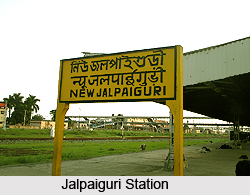 Rarely can one find an area which has so much potential in tourism. The turbulent rivers, steep mountain ranges, large stretches of tea estates and lush green forests have made Jalpaiguri a picturesque treat for the eyes of an onlooker. A tourist can never feel bored or tired when one is in Jalpaiguri. Rather it can be said that the district has the capacity to rejuvenate a weary soul. Jalpaiguri has been blessed abundantly by nature. Every aspect of the nature in the district is synonymous with a heavenly bliss. Not only is the district blessed with a bountiful nature but at the same time it also has flavour of history and a number of temples add to the glory of the region. Some of the well known tourist destinations of the region are Garumara National Park, Jaldapara Wild Life Sanctuary, Rupang Valley and Buxa-Duar in Buxa Tiger Reserve. Places like Jainti, Murti, Santale Khola, Mongpong allows a tourist to enjoy nature most closely. Apart from these there are also the temples of Jalpeshwar and Jatileshwar and the Prisoners Cell at the Buxa Fort. In other words it can be seen that Jalpaiguri is a haven for all nature lovers. As far as transportation is concerned the district is well connected by rail, road and air from all parts of the country.
Hence, it can be concluded saying that Jalpaiguri district since its inception have been capable of evoking an eerie feeling and a strange romanticism within the hearts of every beholder. |
| |||



Jalpaiguri District
| Jalpaiguri district of West Bengal, originally a trading centre, is presently the important site of tea industry. This place is blessed with the natural beauties ans shopping centres. |
| ||||||||||||||||||||||||||||

