History of Kolkata - Informative & researched article on History of Kolkata
 Indianetzone: Largest Free Encyclopedia of India with thousand of articlesIndian Cities


in  
 Art & Culture|Entertainment|Health|Reference|Sports|Society|Travel
Forum  | Free E-magazine  | RSS Feeds  
Indian Cities : Ancient Indian Cities |Metropolitan Cities in India |Indian hill stations |Capital Cities of India |Indian Holy Cities |Port Cities in India |British Cathedrals in India |Indian Cities |Pilgrimages In India |Tourism in India
Home > Travel > Indian Cities > Capital Cities of India > Kolkata > History of Kolkata
History of Kolkata
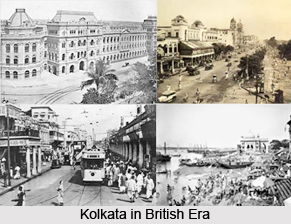
History of Kolkata witnessed a fast improvement as the second city of the British Empire in the 1800s.

 History of Kolkata dates back to the late 17th century with the arrival of Job Charnock, a British agent in the then Sutanuti Kolkata is the capital of the Indian state of West Bengal. Located in eastern India on the east bank of the River Hooghly, the city is a colonial city developed by the British East India Company and then the British Empire.

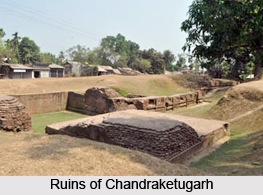
The archaeological evidences at Chandraketugarh reveal that the represent region of Kolkata had been inhabited for over two millennia. But the history of Kolkata, however documented from the beginning of the British rule in India, when the East India Company was merging its trade business in India in 1690. The three villages, in particular, kalikata, where the city is located, was incorporated by Job Charnok, the administrator of the Company and the history of Kolkata starts from this very time. According to some scholars, Kolkata was designated a special status with the establishment of the Fort William in 1698.

The past history of Kolkata recounts the fact that the emergence of "Calcutta" as a country capital is not a sudden outcome. The British, with their solemn aim to establish a political hold in India, approached towards Calcutta. During the Seven Years` War the constant rivalry of the British with the French came to an end with the fall of Madras to the forces of Dupleix in early 1756. Consequentially near about the whole of India came under the sway of the British.

Fort Wiilliam - History of KolkataThe British authorities at that time started the reconstruction of the Fort William, which was almost demolished on account of the battle. The Nawab of Bengal, Siraj-ud-daulah, found the British supremacy as an adverse threat to his sovereignty. Infuriated with the British when they provide refuge to one of Krishnaballav, who had embezzled money from Diwani of Dhaka, Siraj, invaded the British establishment and captured Cossimbazar and finally Calcutta, for which a period of short siege crept up on 20th June 1756 and the Governor and many other officials escaped down the Hooghly River. The history of Kolkata narrates this event as "The Siege of Calcutta". The Nawab shifted his capital and reinstalled it in Kolkata, with the new name Alinagar. Appointing Manickchand as his delegate in Calcutta, he himself returned to Murshidabad.

Manickchand, being less competent, could not retain his supremacy for long and Robert Clive and Watson again captured Calcutta with the Company sepoys and the assistance of the Royal Navy on 2nd January 1757. From 1757, the British documented the history of Calcutta. The year 1757 was the beginning of the full-fledged British regime in India. Although Siraj conceded the temporary defeat in the pact of Alinagar, still he schemed with the French against the British. Meanwhile the Third Carnatic War began. The Bengal chiefs, particularly MirJafar at that time were plotted against Siraj.

They approached Clive to sought assistance and Clive rightly seized on this plan in order to get rid of the two enemies at the same time. Clive attacked Murshidabad and finally in the Battle of Plassey, the English captured the entire territory of Murshidabad and assassinated Siraj. Mir Jafar was reinstated the Nawab of Bengal, who had to act according the British. In 1765, after defeating the Nawab of Oudh and the Muhgal King at the battle of Buxar, the British seize the entire control of Bengal and even India. The history of British imperialism in India thus nurtured with the conquest of Bengal, Calcutta being the main pawn of the play. Calcutta was turned into the capital city of British India in the year1772.

After the territorial conquest of Bengal, the British initiated the opium trade with Calcutta as their principal seat. The opium sold at auction in Calcutta was directly smuggled to Canton of China, which eventually gives rise to the Opium Wars. The precedent history of Kolkata reveals the city as the breeding ground of politics and the famous wars during the 18th century.

The History of Kolkata on looks the budding of social and intellectual fervor, in the tumultuous panorama of burning politics. Hickey`s "Bengal Gazette" or "Calcutta General Advertiser" is the first newspaper to be printed in India is the invaluable Chronicle of the social life of contemporary Kolkata. Contemporary memoirs of the time are the major sources of the history of Kolkata.

Sir William Jones - Founder of Asiatic Society - History of KolkataAs far the history of Kolkata is concerned, the intellectual development in Kolkata positively influenced the politics of Kolkata; the foundation of Asiatic society by Sir William Jones augmented the intellectual and the scholastic activities in Kolkata. It was the intellectuals who imbued the spirit of liberalism in the hearts of the common people. The rational activities mushrooming all over Kolkata initiated the common people to participate in the Indian War of Independence. The glorious history of Kolkata has given the city of Kolkata an unparallel reputation in the history of Indian politics.

According to the history of Kolkata, after the undesirable conclusion of the Battle of Plassey, Calcutta witnessed the first Movement of Independence, influenced with the ideals of rationalism and liberalism. Being the capital city, Calcutta was the station of the British troops. In the early 19th century, some fragmented revolts were organized in the pockets of Kolkata and one of which at Barrackpore Cantonment by a sepoy Mangal Pandey, sparked off as a huge revolt and shortly spread throughout India. The revolt was named by the historians as "Indian Mutiny" or commonly called "Sepoy Mutiny" of 1857.

Again after the demolition of the mutiny, Kolkata witnessed the growth of intellectual activities with the national conferences all being held at the core of Calcutta. Kolkata is also the native city of Indian National Congress. Besides a number of societies based on the social and nationalist ideals were also sprung up all over Kolkata, which stir the nationalist activities of India. The history of Kolkata points out the verity that Kolkata is not only the second city of the British but at the same time was a city, politically conscious and hailed the growth of rationalism, liberalism and modernity all over the country.

However the contemporary history of Kolkata begins right from the period of post independence and the partition of India. Due to the partition a mass of Muslims left Kolkata for East Pakistan and a vast chunk flee from Dhaka to sought refuge in Kolkata. Hence the infrastructure and the demography of Kolkata have undergone a massive change. In the recent years, Kolkata is inflicted with the violence of the Marxist- Maoist and the Naxalites.The history of Kolkata in the present age is marked with the regime of the West Bengal Communist Party (CPIM). The post modernism and the rapid industrialization, revitalized on Information Technology are the upcoming trends in Kolkata.

Kolkata`s economic recovery gathered momentum after economic reforms in India introduced by the central government during the mid-1990s. Since 2000, Information Technology (IT) services revitalized the city`s dormant economy. The city growth in the manufacturing sector has also included a new chapter in the history of Kolkata. Following similar moves elsewhere in the country, the state government changed the city`s official name from Calcutta to Kolkata in 2001; this act was seen largely as a political ploy.

(Last Updated on : 28/07/2010)
 
 
History of Kolkata Culture of Kolkata Tourism In Kolkata
Shopping centers in Kolkata Sports in Kolkata Dum Dum
Alipur Raj Bhavan  
Recently Updated Articles in Indian Cities
Tourism in Mahisadal
Mahisadal is a small town in Haldia, Purba Medinipur which is an apt place for tourism.
Tourism in Bharatpur
Bharatpur is known popularly as `The Eastern Gateway to Rajasthan`.
Places of Interest in Bharatpur
Places of Interest in Bharatpur comprise of forts, museums and national parks.
Lohagarh Fort
Lohagarh Fort is located in Bharatpur and Maharaja Suraj Mal constructed the fort.
Travel Information in Bharatpur
Travel Information in Bharatpur will be quite useful for tourists who are looking forward to a trip to this district.
E-mail this Article | Post a Comment
Forum
Forum on Indian Cities
Free E-magazine
Subscribe to Free E-Magazine on Travel
 
 
History of Kolkata - Informative & researched article on History of Kolkata
Sitemap
Contact Us   |   RSS Feeds
Copyright © 2008 Jupiter Infomedia Ltd. All rights reserved including the right to reproduce the contents in whole or in part in any form or medium without the express written permission of
Jupiter Infomedia Ltd.