 Demography of Jalpaiguri District in West Bengal comprises 4.24 percent of the total population. An official census 2011 detail of Jalpaiguri district says those Jalpaiguri districts had population of 3,872,846 of which male and female were 1,983,064 and 1,889,782 respectively.
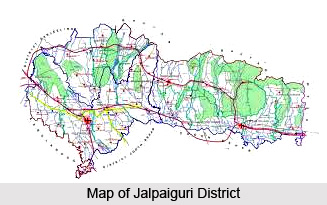
.In 2001 census, Jalpaiguri had a population of 3,401,173 of which males were 1,751,145 and remaining 1,650,028 were females. Jalpaiguri District population constituted 4.24 percent. There was change of 13.87 percent in the population compared to population as per 2001. In the previous census of India 2001, Jalpaiguri District recorded increase of 21.45 percent to its population compared to 1991. The initial provisional data released by census India 2011, shows that density of Jalpaiguri district for 2011 is 622 people per sq. km. In 2001, Jalpaiguri district density was at 546 people per sq. km. Jalpaiguri district administers 6,227 square kilometers of areas.
The average literacy rate of Jalpaiguri district in 2011 were 73.25 compared to 62.85 of 2001. If things are looked out at gender wise, male and female literacy were 79.95 and 66.23 respectively.
For 2001 census, same figures stood at 72.83 and 52.21 in Jalpaiguri District. Total literate in Jalpaiguri District were 2,498,780 of which male and female were 1,396,622 and 1,102,158 respectively. In 2001, Jalpaiguri District had 1,810,083 in its district.
With regards to sex ratio in Jalpaiguri district, it stood at 953 per 1000 male compared to 2001 census figure of 942. The average national sex ratio in India is 940 as per latest reports of Census 2011 directorate.
In 2011 population census, child sex ratio is 955 girls per 1000 boys compared to figure of 969 girls per 1000 boys of 2001 census data. In census enumeration of 2011, the data regarding child under 0-6 age were also collected for all districts including Jalpaiguri district. There were total 461,700 children under age of 0-6 against 521,287 of 2001 census. Of total 461,700 male and female were 236,117 and 225,583 respectively. The child sex ratio as per census 2011 was 955 compared to 969 of census 2001. In 2011, the children under 0-6 formed 11.92 percent of Jalpaiguri District compared to 15.33 percent of 2001. There was net change of -3.41 percent in this compared to previous census of India.