 The Upanishads form a part of the Vedas and are essentially a set of ancient mystic teachings. In the ancient Indian philosophy, the Upanishads teamed with the philosophy of Upanishad are always regarded as a class of literature that is independent of the Vedic hymns and the Brahmanas. The simple faith of god in the hymns was displaced by the mechanical belief of the Brahmanas and the Upanishads also feel that the faith that ends in a sacristy is not enough. The Upanishads also made some attempts for moralizing the religion of the Vedas, by keeping its form, unchanged. There are a lot of things that consists the advance of the Upanishads on the Vedas and they are the increased emphasis on the monistic suggestions of the Vedic hymns, the shifting of the center from the outer world to the inner world, the protest against the externalism of the Vedic practices and the indifference to the sacredness of the Veda.
The hymns of the Rig-Veda actually asserted a certain principle of unity and comprehension and some of the hymns also formulated the conception of a single central power. The philosophy of Upanishad also carried out the same tendency and they did recognize only one spirit. The spirit is the almighty, infinite, eternal, incomprehensible, self-existent, the creator, preserver and also the destroyer of the world. The philosophy of Upanishads also described the spirit as the light, lord and life of the universe, the one without a second and also the sole subject of worship and adoration. The half-Gods of the Veda also disappeared in the Upanishads and the Upanishads strongly propagated the idea of one Supreme power.
The philosophy of Upanishad presented some polytheistic conceptions and those conceptions were quite deeply rooted in the Indian consciousness. This root can easily be overthrown and the Upanishads subordinated the concept of many Gods, to the One. According to the philosophy of Upanishad, none of the many Gods can do even a single thing, without the help of the Brahman and sometimes, the many Gods were also made the parts of the One. According to the philosophy of Upanishads, a compromise between the philosophic faith of the few and the fancied superstition of the crowds is the only possible reconciliation. There was another thing that influenced in determining the main attitude of the philosophy of Upanishads and the factor is that, the aim of the Upanishad thinkers was not science or philosophy, but the right living. They actually had the aim to liberate the spirit from the trammels of the flesh that it might enjoy communion with God. Apart from having the feeling of reverence for the past, the thinkers of Upanishads also made the intellectual discipline, as subsidiary to holiness of life. The Upanishads actually sought to square a growing idealistic philosophy with the dogmas of a settled theology, through this way.
The philosophy of the Vedas mainly describes the vast order and movement of nature and the Gods in Vedas also represents cosmic forces, whereas the philosophy of Upanishads always explore the depths of the inner world. The attention shifts from the outward physical fact to the inner immortal self-situated at the back of mind, in the Upanishads. The Upanishads say that the true living God. The Atman, should be worshipped, not the so-called Gods and the heart of man is the dwelling place of the God. They said that the inner immortal self and the great cosmic power are actually the one and the same and the Brahman is the Atman and the Atman is the Brahman. The Upanishads also never uphold the theory of grace in the same spirit, as the Vedas do. However, it has been found that the discontent with the actual is the necessary precondition of every moral change and spiritual rebirth and the pessimism of the Upanishads is the condition of all philosophy.
A return to the fresh springs of spiritual life can be found in the philosophy of Upanisads, as they declare that the soul is not going to obtain salvation by the performance of sacrifices. According to the philosophy of Upanishads, the soul can only be obtained by the truly religious life that would be based on an insight into the heart of the universe. The Upanishads say that a consciousness of the identity of one`s own soul with the great All-soul is the real essence of a truly spiritual life. The Upanishads also bring out the uselessness of ritual, the futility of sacrifices as means to salvation and they say that God can only be honoured by spiritual worship, rather than any external ceremony.
Philosophical Development from Upanishadic Metaphysics to Scientific Realism:
The metaphysical development of Indian philosophy, depended to a large extent on the philosophies and rationalism of Upanishad. Although the Upanishadic texts are mainly concerned with the knowledge of the "soul", "spirit" and "god" -yet the idea of rationalism, which is deeply seated in the philosophy of Upanishad, cannot be denied. The idea of rationalism, in Upanishad points to an instinctive understanding of nature and natural processes where the ideas are presented in deep philosophical and exploratory manner whilst hinting the rational approach of Indian philosophy.
The philosophical development ushered in an era, which was not opposed to the development of rational ideas, even encouraging scientific observation and advanced study in the fields of logic, mathematics and the physical sciences. This was followed by an era when rituals and superstitions had begun to propagate, in some ways the rationalism in Upanishad and upanishadic texts helped to clear the ground for greater rationalism in society. Brahmin orthodoxy and ideas of ritual purity were superseded by a spiritual perspective that eschewed sectarianism and could be practiced universally, unfettered by an individual`s social standing. Much of the emphasis was on discovering "spiritual truths" for oneself as opposed to mechanically accepting the testimony of established religious leaders.
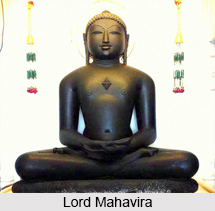
The Upanishadic concept of god was more abstract and philosophical. Different texts postulated the doctrine of a universal soul that embraced all physical beings. All life emanated from this universal soul and death simply caused individual manifestations of the soul to merge or mingle back with the universal soul. The concept of a universal soul was illustrated through analogies from natural phenomenon. As a corollary to this theory emerged the notion that even as individual beings might refer to this universal soul - i.e. god in varied ways - by using different names and different methods of worship - all living beings were nevertheless related to each other and to the universal god, and capable of merging with the universal god. This approach thus laid the foundation for egalitarian and non-discriminatory philosophies such as Buddhism and Jainism (as well as non-sectarian streams of Hinduism) that followed the Upanishadic period. As is evident, such an approach was not incompatible with secular society, and permitted different faiths and sub-faiths to coexist in relative peace and harmony. The common theist solution to this philosophical dilemma was to simply reject logic and demand unquestioning faith on the part of the believer. The Upanishadic philosophers attempted to resolve this contradiction by defining god as an entity that extended infinitely in all dimensions covering both space and time. Another philosophical advance of the Upanishadic period was that religion was transformed from the realm of bookish parroting of scriptures to the realm of advanced intellectual debate and polemics. The Upanishadic philosophers did not lay down their conclusions as rigid doctrines or inviolable laws but as seductive parables - sometimes displaying remarkable worldly insight and analytical skill. By attempting to win over their followers through analogies from nature, and by employing the methods of abstract reasoning and debate, they created an environment where dialectical thinking and intellectual exchanges could later flourish.