
Non-Cooperation was a movement of passive resistance against British rule, which was initiated by Mahatma Gandhi. To resist the dominance of the British Government and advance the Indian nationalist cause, the non-cooperation movement was a non-violent movement that prevailed nationwide by Indian National Congress under the leadership of Mahatma Gandhi. This movement took place from September 1920 to February 1922 and initiated Gandhi era in the Independence Movement of India.
The Rowlatt Act, Jaliwanwala Bagh massacre and Martial Law in Punjab caused the native people not to trust the British Government anymore. The Montagu-Chelmesford Report with its diarchy could satisfy a few only. Until then Gandhi believed the justice and fair-play of the British Government, but after this incidences he felt that Non-cooperation with the Government in a non-violent way must be started. In the meantime the Muslims in India also revolted against the harsh terms of the Treaty of severes between Allies and Turkey and they started Khilafat movement. Gandhi also decided to stand beside them. Gandhiji`s idea of winning over Muslim support also helped in Non-Cooperation Movement of India.
Gandhi had given a notice to the Viceroy in his letter of 22nd June in which he had affirmed the right recognized `from time immemorial of the subject to refuse to assist a ruler who misrules`. After the notice had expired the Non-Cooperation movement was launched formally on 1st August of 1920. At the Calcutta Session on September, 1920 the program of the movement was stated.
The programs of Non-cooperation involved the surrender of titles and offices and resignation from the nominated posts in the government body. It included not attending Government duties, Durbars and other functions, withdrawing children from government schools and colleges and establishment of national schools and colleges. The people of India were instructed to boycott the British courts and establish the private judicial courts. The Indians should use Swadeshi cloth and boycott the foreign clothes and other things. Gandhiji strictly advised the Non-Cooperators to observe truth and non-violence.
The decision taken in Calcutta Session was supported in the Nagpur Session of the Congress on December, 1920.The decision was also taken for the betterment of the party organization. Any adult man or woman could take Congress membership for 4 annas as subscription. This adoption of new rules gave a new energy to the Non-Cooperation movement and from January of 1921 the movement gained a new momentum. Gandhi along with Ali Brothers went to a nationwide tour during which he addressed the Indians in hundreds of meetings.
In the first month of the movement, about nine thousand students left schools and colleges and joined the national institutions. During this period about eight hundred national institutions were established all over the country. The educational boycott was most successful in Bengal under the leadership of Chitta Ranjan Das and Subhas Chandra Bose. In Punjab also the educational boycott was extensive under the leadership of Lala Lajpat Rai. The other active areas were Bombay, Bihar, Orissa, Assam, Uttar Pradesh. The movement also affected Madras.
The boycott of lawcorts by the lawyears was not as successful as the educational boycott was. The leading lawyers like, Motilal Nehru, CR Das, Mr Jayakar, V Patel, Asaf Ali Khan, S Kitchlew and many others gave up their lucrative practices and many followed their path inspired by their sacrifice. Bengal again led in this matter and Andhra, UP, Karnataka and Punjab followed the state.
However, the most successful item of the Non-Cooperation was the boycott of foreign clothes. It took such an extensive form that value of import of the foreign clothes reduced from hundred and two crores in 1920-21 to fifty-seven crores in 1921-22.
Although some of the veteran political leaders like the Bal Gangadhar Tilak, Bipin Chandra Pal, Mohammad Ali Jinnah, Annie Besant opposed Gandhiji`s plan but the younger generation supported him fully. Muslim leaders like Maulana Azad, Mukhtar Ahmed Ansari, Hakim Ajmal Khan, Abbas Tyabji, Maulana Mohammad Ali and Maulana Shaukat Ali also supported him.
In the month of July 1921, the Government had to face a new challenge. Mohammad Ali and other leaders believed that it was `religiously unlawful for the Muslims to continue in the British army` and they were arrested for their view. Gandhi and other Congress leaders supported Mahammad Ali and issued a manifesto. The next dramatic event was visit of Prince of Wales on 17th November, 1921. The day on which Prince boarded on Bombay Port the day was observed as a `Hartal Divas` all over India. The Prince was greeted with empty streets and closed shops wherever he went.
The Non-Cooperators gained more and more energy at their success and became more aggressive. The congress volunteer corps turned into a powerful parallel police. They used to march in formation and dressed in uniform. Congress had already granted permission to the Provincial Congress Committees to sanction total disobedience including non-payment of taxes. The Non-Co operational movement had other effects also which are not very direct. In UP it became difficult to distinguish between a Non-Co operational meeting and a peasant meeting. In Malabar and Kerala the Muslim tenants roused against their landlords. In Assam the labors of tea-plantation went with strike. In Punjab the Akali Movement was considered as a part of Non-Cooperation movement.
The Non-Cooperation movement particularly strengthened in Bengal. The movement was not only seen in Kolkata but it also agitated the rural Bengal and an elemental awakening was observed. The movement reached a climax after the Gurkha assault on coolies on the river port of Chandpur (20-21st May). The whole Eastern Bengal was under the lash of the movement under the leadership of JM Sengupta. The other example was the Anti-Union Board agitation in Midnapur led by Birendranath Sashmal.
As the Non-Cooperation movement proceeded the woman of India, especially from Bengal wanted to take active part in the protest movement. The women nationalists were assembled under the Mahila Karma Samaj or the Ladies organization Board of the Pradesh Congress Committee of Bengal. The ladies members of that organization arranged meeting and circularized the spirit of Non-Cooperation. Women volunteers were enlisted to take part in the movement. The ladies from many respected families led them. CR Das`s wife Basanti Devi and sister Urmila Devi, JM Sengupta`s wife Nellie Sengupta, Mohini Devi, Labanya Prabha Chanda played significant role in this movement. Picketing of foreign wine and cloth shops and selling of Khaddar in the streets were the point of attention of this movement.
The Government proclaimed Sections 108 and 144 of the code of criminal procedure at various centers of agitation. The Congress Volunteer Corpse was declared illegal. By December 1921 More than thirty thousand people were arrested from all over the India. except Gandhiji, most of the prominent leaders were inside jail. In mid-December Malaviya initiated a negotiation, which was futile. The conditions were like that it offered sacrifice of Khilafat leaders, which Gandhiji could never accept.
At that time Gandhiji was also under a pressure from the higher leaders of Congress to start the mass civil disobedience. Gandhiji gave an ultimatum to the Government but the British Government paid no attention to it. In response, Gandhiji initiated a civil disobedience movement in Bardoli Taluqa of Surat district of Gujrat. Unfortunately at this time the tragedy of Chauri Chaura occurred that change the course of the movement, where a mob of three thousand people killed twenty-five policemen and one inspector. Gandhi was in support of complete non-violence and this incident was too much for him to bear. He ordered to suspend the movement at once. Thus, on February 12th, 1922 the Non-Cooperation movement totally stopped.
There were limitations in achievements of Non-Cooperation Movement as it apparently failed to achieve its object of securing the Khilafat and changing the misdeeds of Punjab. The Swaraj could not be achieved in a year as it was promised. The retreat of the February 1922 was only temporary. The movement slowed down gradually. The part of Battle was over but the war continued.
Non Cooperation Movement
The Non Cooperation movement was a passive resistance against British rule introduced by Mahatma Gandhi .
Recently updated articles in History of India
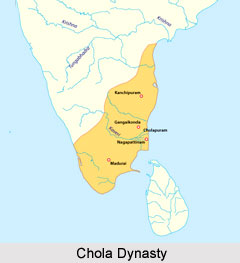
Chola Dynasty
Chola Dynasty is a Tamil dynasty and had longest duration of ruling in parts of South India. Chola dynasty had ruled South India successfully for a ex...
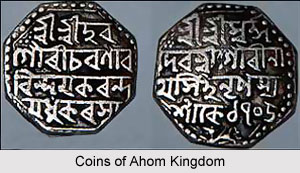
Suhungmung
Suhungmung was the fourteenth ruler of the Ahom dynasty who ruled from the period 1497 to 1539 AD. His reign was significant in terms of expansion of...
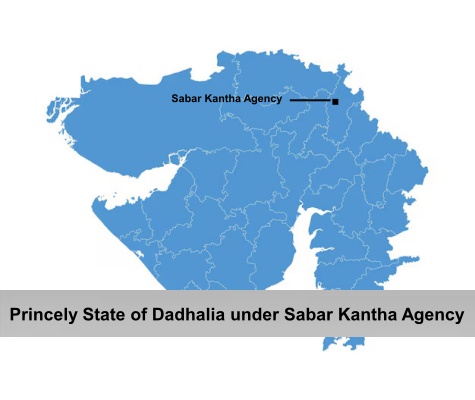
Princely State of Dadhalia
Princely State of Dadhalia was located in the present state of Gujarat. The state covered a total area of 28 sq miles and comprised of 15 villages. Th...
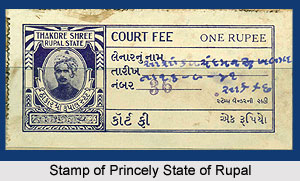
Princely State of Rupal
Princely State of Rupal was a part of the Baroda Agency, a sub division of Western India States Agency. It was under the administrative control of the...
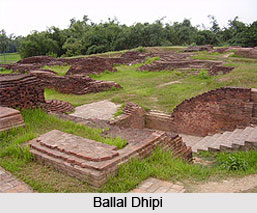
Archaeological Sites of West Bengal
Archaeological sites of West Bengal reveal several aspects of ancient India. Excavations by the Archaeological Survey of India have furnished artefact...
Related articles in History of India
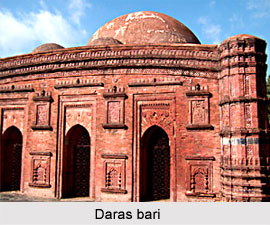
Mughal Architecture during Babur
Mughal architecture during Babur marked the foundation of a new architectural era in India, blending Timurid, Persian, and local influences. His reign...
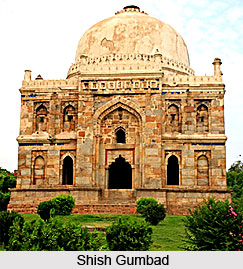
Architecture during Sayyid and Lodi Dynasty
Architectures during the Sayyid and Lodi dynasty were mainly the tombs and monuments for the dead rulers. It were carefully designed and meticulously...
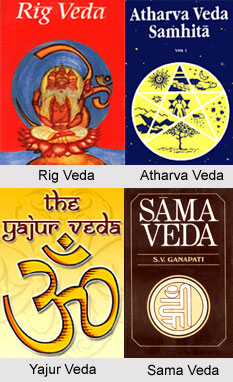
Brahmanical Sources of Ancient History
Brahmanical Sources of ancient history are contained in the Vedas and they constitute one of the most important literary sources of information about...
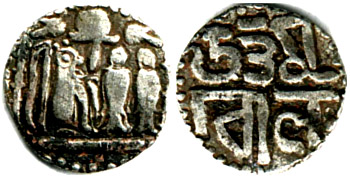
Coins of Chola Empire
Coins of Chola Empire were issued in gold, silver and copper and carried the Chola emblem.
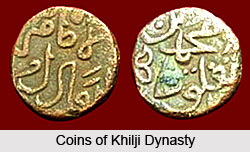
Coins of Khilji Dynasty
Coins of Khilji Dynasty had an influential feature that was followed by the other dynasties.