


 History of Jammu and Kashmir is quite interesting since its origin dates back to the ancient ages. The ancient history of Jammu and Kashmir especially in Kashmir, when Jammu was not in existence, has the rich history of immigration, when Middle East was loomed in terror, as mentioned in Holy Bible. History of Jammu and Kashmir is quite interesting since its origin dates back to the ancient ages. The ancient history of Jammu and Kashmir especially in Kashmir, when Jammu was not in existence, has the rich history of immigration, when Middle East was loomed in terror, as mentioned in Holy Bible.
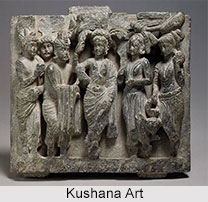
Early History of Jammu and Kashmir The valley of Kashmir was once great lake Satisar. According to Hindu texts, the Hindu sage Kashyapa drained a lake lying north of the Pir Panjal range cutting the mountain near Varamulla, now Baramulla, which is now Baramulla District of Jammu and Kashmir. The locals named the valley Kashyap-Mar and Kashyap-Pura in honour of the sage. The Kashmir valley was incorporated into Maurya Empire and then into Kushana Empire. In the 8th century, Kashmir became the centre of Hindu warrior Lalitaditya Muktapida's empire spanning much of northern India and Central Asia. Medieval History of Jammu and Kashmir Islam arrived in the region through traders and missionaries. Sufi saint helped in spreading Islam across Kashmir. In 1327 A.D, the ruler of Kashmir, Rinchen Shah converted to Islam which led to a series of Muslim dynasties that ruled Kashmir for centuries together. In around 1400 AD, a Hindu king formed the modern city called Jammu. After that it was named with Jammu and Kashmir. In 1586 A.D, Mughal Army defeated Yusuf Khan of Kashmir with aide of Ramchandral that was led by Hindu King Bhagawant Das. After the battle, Akbar appointed Ramchandral as the governor of Himalayan kingdom. Ramchandral founded the city of Jammu (named after Jamwa Mata) south of Pir Panjal range. After the death of Ranjit Deo in 1780, the Raja of Jammu, the kingdom of Jammu was captured by Sikhs under Ranjit Singh of Lahore. Thus end the medieval history of Jammu and Kashmir with the coming of British East India Company in India. 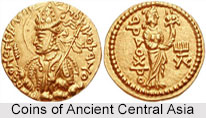
Modern History of Jammu and Kashmir Modern History of Jammu and Kashmir began with the decline of Mughal rule and the civil war led between British East India Company and Sikhs. Ranjit Singh's grand nephew Gulab Singh was later made the raja of Jammu in 1820 .Gulab Singh with the help of his able officer Zorawar Singh soon captured Ladakh and Baltistan. Two treaties concluded the First Anglo-Sikh War in 1845.The first one stated "The state of Lahore to be handed over to the British, as equivalent for rupees one crore of indemnity, the hill countries between Beas and Indus" and by the second the British made over to Gulab Singh for Rs.75 lakhs all the hilly or mountainous country situated to the east of Indus and West of Ravi i.e now well known as Valley of Kashmir. In 1925 Ranbir Singh’s grandson who ascended the throne was the reigning monarch in 1947 at the conclusion of British rule in the subcontinent. As a part of the partition process, both countries had agreed that the rulers of princely states would be given the right to opt for either Pakistan or India or-in special cases-to remain independent. In 1947, Kashmir's population was 77 per cent Muslim and it shared a boundary with Pakistan. Hence, it was anticipated that the Maharaja would accede to Pakistan, whenever the British paramount ended. But he hesitated to do this, to which Pakistan launched a guerrilla onslaught meant to frighten its ruler into submission. Instead the Maharaja appealed to Mountbatten for assistance, and the Governor General agreed on the condition that the ruler accedes to India. In the last days of 1948, a ceasefire was agreed under UN auspices; however, since the plebiscite demanded by the UN was never conducted, relations between India and Pakistan soured, and eventually led to two more wars over Kashmir in 1965 and 1999. Since the year 1990 the state has been hit by confrontation between militant separatists and Indian Armed Forces, which has resulted in the deaths of thousands of people. The Indian army maintains a significant deployment of troops in Jammu and Kashmir to maintain law and order. Related Articles Jammu and Kashmir History of Kashmir Culture of Jammu and Kashmir Kalhana, Ancient Indian Writer Rajatarangini, Kalhana Mughal Dynasty Mughal Emperors Palaces of Jammu and Kashmir |
| |||



History of Jammu & Kashmir
| History of Jammu and Kashmir involves a series of political and geographical transformations from every ancient era to the modern times also. Even now, Jammu and Kashmir has its political tension between Pakistan and India. |
| ||||||||||||||||||||||||||||

