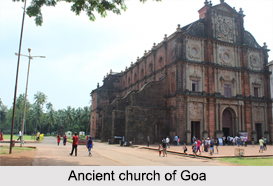
 Goa is one of those states of India to have a fascinating history. The history of Goa, which is popularly known as the beach capital of India, dates back to 3rd century BC. It was during this time Goa became a part of Mauryan Empire. Colonial rule, glorious culture, oppressive rulers make the rich history of Goa.
Ancient History of Goa
The ancient history of Goa dates back to the 3rd century BC. It is a small island at the foot of the Western Ghats that was earlier known as Goa but the Aryans called it Gomati. Chandragupta Maurya had established his empire in Goa that was further enhanced by his son Ashoka. After the death of Ashoka in 232 BC the Maurya Empire collapsed almost immediately. Later the Kadamba dynasty and the Chalukya Dynasty also ruled this state.
Medieval History of Goa
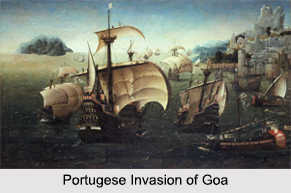
14th century saw Goa gradually becoming a trading centre, during that time mostly horses were traded from Middle East. It was this time when eminent empires, like the Vijaynagar Empire and Kadamba Empire took Goa under its rule. However, they were soon defeated by the Bahmani Sultans and took the controls in their hand, but things started to change in 1510 A.D when Portuguese arrived in Goa. Goa was also ruled by Yousuf Adil Shah of Bijapur.
 Modern History of Goa
Owing to its natural harbors, Goa served as a perfect base for the Portuguese to take control of spice trade from Middle East. The Portuguese had come to Goa in the year 1510 and their stay lasted for over 450 years. During the Portuguese rule, Christianity conversions began. During the time of the spice trade, Goa reached its Golden Age and it was this time, Old Goa became the biggest city in East.
In the early 1605 Dutch Invasion in Goa began. They first attacked and blocked the state. At that time they however lost to the Portuguese forces but in 1639 they again attacked Goa. In 1605 the Dutch annexed the principal Spice Islands in the East Indies and the Portuguese were thus forced to shift to the South Celebes. Slowly the Dutch conquered the coastal settlements of the Portuguese Empire. In 1560 the Holy Office of Goa arrived. The Viceroy gave them the old palace of Yusuf Adil Shah and he himself shifted his own accommodations to the fortress also. The Holy Office handled sufficiently to keep Goa itself in a state of dogmatic purity for the next two hundred years. It was finally abolished in 1774.
During this period the Luso-Maratha War also took place from early 1737 that continued for the almost two years until May 1739. The war exhibited the Portuguese defenders` worthiness. However in 1739 the Marathas sent a huge force against Goa that successfully blocked the borders of Bassein from the capital. Margao and Rachol Fort were also captured and the nuns and priests were forced to vacate from Goa to the fortress of Marmagao.
Goa in 19th century witnessed the end of Maratha power. During 1818 and by the end of the third Anglo-Maratha war, half of India was reduced to British pensioners. During that time British held a high position and gradually took over most of the country. On the other hand the Portuguese territories gradually slipped from their hands. Thus in the coming years India was ruled by the Britishers. Finally in 1947 with the help of eminent freedom fighters India gained its independence from the Britishers but remained a Portuguese colony. In the year 1961, erstwhile Prime Minister Jawaharlal Nehru, sent armed forces and under the name of `Operation Vijay`, the Indian army took over Goa in just two days. Since then Goa became one of the Union Territories of India.