 Philosophy in India is essentially spiritual. It is indeed the intense spirituality of India and the history of Indian thought which has developed, structured and finally silhouetted Indian philosophy to a great extent.
The spiritual motive dominates life in India. Indian philosophy therefore has its interest in the haunts of men. It takes its origin in life and enters back into life after passing through the schools whist echoing a deep spiritualism in its all sense. Spirituality in Indian philosophy is dressed up in myths, legends and stories to befit the understanding of the majority. The founders of philosophy strive for a socio-spiritual reformation of the country. The ultimate truths are truths of spirit, and in the light of them actual life has to be refined - this very crux echoes the spirituality in Indian philosophy in perhaps the most subtle way.
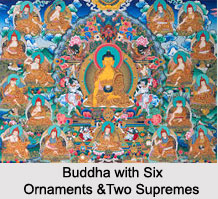
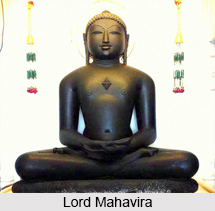
Indian philosophy is inseparable from the doctrines of Indian religion. The unification of Indian philosophy with Indian religion is a rational synthesis which went on gathering into itself new conceptions as philosophy progressed. Be it therefore the insights of Buddha or the philosophies of Mahavira or Vyasa or the thoughts of Samkara, it is the very idea of stirring the depths of spiritual life which contoured the Indian philosophy. Belief in God is an inseparable part of Indian religion and indeed that of the Indian philosophy. Intertwined with its sheer spiritualism, Indian philosophy therefore stands as an emblem of ultimate consciousness. The very presence of the metaphysical God, ideally unifies with the absolute reality in Indian philosophy whilst reverberating the aura of spiritualism in the most eloquent way. The beauty of the Indian philosophy here gains dimension as it colossally unifies the Metaphysical God who is the Absolute Reality and the substratum of all existence, with the Personal God who is the basis of all morality, ethics and the inspiration to lead a meaningful life.
The pride of the Indian philosophy lies in this magical blend of the concept of reality with that of the existence of personal God. This immense fusion further crafts Indian philosophy as the most tolerant religions. The concept of Ishvara is the very core of Indian Philosophy.
Ishvara in Sanskrit means, the Lord. In Indian philosophy therefore Ishvara is reckoned as the ultimate Ruler , the supreme power and is indeed the preternatural Being of the Cosmos :
"The whole of this Universe is pervaded by me in my Unmanifested form (Avyaktamoorti). I am thus the support of all the manifested existences, but I am not supported by them" - this eternal law is the very basis of Indian philosophy and is also the main concept of spiritualism in India.
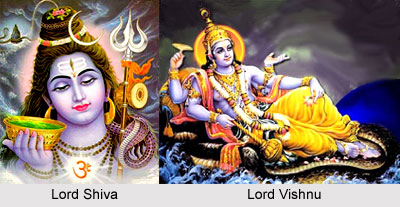
God is the creator, the preserver and the destroyer of the cosmos. He is the divinity and this very idea is the crux of Indian philosophy. The concept of Brahman in Indian philosophy again offers a rather spiritual facet to Indian philosophy; as according to Krishna " . ...Into Brahman I plant the seed giving birth to all living beings..." Brahman therefore remains as the logo of the Divine essence of the cosmos. The reference of Brahman is there also in Mundaka Upanishad, which structures the base of the Indian philosophy.
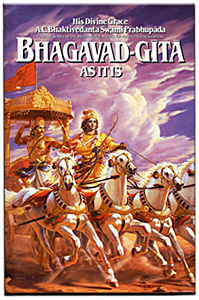
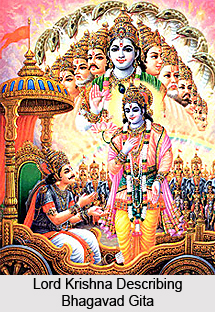
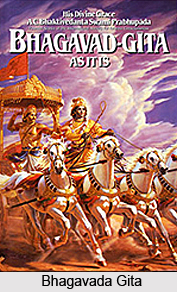
This inviolate Truth about spirituality in the form of God or Ishvara is imparted in the Bhagavada Gita, the Ultimate Literature of Life, as it has been reckoned. In Gita, the words of Lord Krishna, echoes the authentic aura of spirituality, which delicately defines the Indian Philosophy as a "spiritual journey". The presence of God as the supreme power, the concept of "Omnipresence of the Omnipotent" therefore finds a divine dimension amidst the concept of Indian philosophy. Indian philosophy suggests that all that exists in this universe is the ultimate manifestation of God. The words of Krishna further support this. As Krishna says:
"I am the original fragrance of earth and the heat of fire. I am the life of all that lives and I am the penance of all seekers. I am the consciousness of all who have developed their consciousness. I am the splendor of all which is fine."
This is the part where Indian philosophy ultimately offers a definite contour to the term "Spirituality". As this is when, finally the Ultimate Consciousness is emerged which leads one towards felicity and towards that eternal bliss. This is the very halo of spiritualism in Indian philosophy, which finally binds the religiosity and the phantasmal elements with that sheer thread of tenet and feelings.
The ideal harmonization of spiritualism and religiosity in Indian beliefs makes the Indian philosophy a never-ending journey in understanding the "Knowledge" of that perpetual contentment. God is the ultimate reality; the unchallengeable, the huge, the brightest light who is there almost everywhere --- even in the green grass, in the bight fire, in the living air, in the round ocean, in the blue sky and finally in the mind of man. To experience His immortality, to feel His presence and to sense His enigmatic immensity the pious man plunges into the ocean of consciousness whilst praying.
"Asato Ma Sad Gamaya;
Tamaso Ma Joytir Gamaya;
Mrityor Ma Amritam Gamaya"
"Lead me from the unreal to the Real. Lead me from darkness unto Light. Lead me from death to Immortality."