Shiva Purana, one of the major texts of the eighteen Puranas, has been completely ascribed to Lord Shiva. This work also deals with the same subjects, characteristic of the ancient Puranas- creation of the world, genealogies etc, as the Vishnu Purana. Only here the legends which are related serve for the glorification of Shiva, not of Vishnu. The Shiva Purana is the compilation of the instructions provided by Lord Shiva on Dharma while sitting in the posture of linga (phallus). The Purana speaks of the twenty-eight forms of Lord Shiva and contains 11,000 verses depicting the deeds of Shiva. The common belief runs that if the book is given as a gift to a Brahmin with Tiladhenu on the full-moon day in the month of Phalguna (March), the donor will attain Shivasayujya.
Origin of Shiva Purana
A Purana proclaimed by the Wind-god, i.e. a Vayu Purana, is quoted in the Mahabharata as well as in the Harivamsa, and the Harivamsa in many cases agrees literally with the Vayu Purana. Even the poet Bana is known to have had a Vayu Purana read out to him, and that in this Purana the rule of the Guptas is described as it was in the 4th century A.D. There certainly existed an ancient Purana under this name, and undoubtedly there is still preserved in the text much of the ancient work, which is probably not later than the 5th century A.D.
Content of Shiva Purana
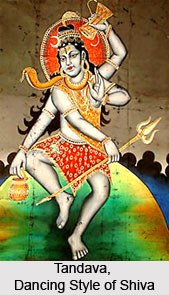
The Shiva Purana essentially depicts the appearance of Lord Shiva. Lord Shiva is reckoned as one among the Tridevas (trinity). The Shiva Purana depicts the eternal truth that Lord Brahma is the creator, Lord Vishnu is the preserver and Lord Shiva the destroyer. According to the Shiva Purana, Lord Shiva is also considered as the lord of Shakti or power. Lord Shiva is depicted as having on his left side the Goddess Parvati, the Ganges and the moon on his forehead, poison in the throat and cobras on the chest, and he is the protector of the entire mortal world.
The Shiva Purana contains a detailed description of the Shiva Parivara. Shiva Parivara is a conglomerate of strange things, which are opposite to each other. In spite of their inevitable enmity in the mortal world they exist side by side. Shiva has the ox as his vehicle and the snake as a garland. On the contrary Parvati, who is the form of Shakti (power), has the lion as her vehicle. Lion is a natural enemy of the ox. Kartikeya`s vehicle is a peacock, which is an enemy of the snake that adorns Lord Shiva`s chest. Lord Ganesha has the mouse as his vehicle. The mouse is a natural prey of the snake. Amidst these strange diversities, Lord Shiva remains submerged in his Sadhana with full concentration. The significance of these strange diversities is that the creatures dwelling in the cosmos created by Brahma are different from each other. Hence, it is natural that their intellect and thoughts would be different as well. Thus, the sole idea is that if unity is maintained in a combined family despite multitude of diversities and controversies, the family would never face any wrath on the purpose of Sadhana and the means to achieve it. The Shiva Parivara according to the Shiva Purana maintained unity in diversity. The unity is marked in the purpose of Sadhana.
The appearance of Kala Bhairava is a significant aspect with which the Shiva Purana deals. The words `Bhai` means formidable and `Rava` means sound, which appropriately depict Kala Bhairava. Thus, Kala Bhairava literally connotes the individual, one who produces sound as formidable and frightening as Kala or death. Kala Bhairava is a Gana or agent of Lord Shiva and the guard on his gates. One of the befitting virtues of a guard is that he is a very light sleeper and an ideal example of faithfulness for his lord.
Like the Vishnu Purana, the Vayu Purana also in its last part gives a description of the end of the world and deals with the efficacy of Yoga but ends with a description of the splendour of Shivapura, `the city of Siva,` where the Yogin arrives who has entirely lost himself in meditation upon Shiva.
Even in this Shaivaite work two chapters are devoted to Vishnu. The Purana deals in detail with the fathers (Pitrs) and their cult by means of Sraddhas. One chapter is devoted to the art of song. The Gayamahatmya printed at the end of the editions is certainly a later addition. There are also other Mahatmyas, Stotras and ritual-texts, which claim to belong to the Vayu Purana.
Philosophy of Shiva Purana
Moreover, the Shiva Purana also implies that even the ferocious animal can give up their violence in an environment where Sadhana and penance are preformed. Thus the violence and jealousy for the fellow beings can be eliminated with the performance of strong penance. The peaceful existence in the diversity of the mortal world can be achieved only by the observation of the strong reparation and Sadhana. The form of Kala Bhairava is introduced in the Shiva Purana in order to teach people that they must learn to faithfully discharge their duty for their lord i.e. the God himself and do the allotted task sincerely, so that no task of the lord is marred. The Shiva Parivara tries to propagate the ethics of unity in diversity to the readers as well as the importance of Sadhana.
The Shiva Purana is venerated as the religious texts with scientific implications. The description of lord Shiva along with his surroundings is intended to provide a teaching to the agonized mortal existing in the Kali Yug. The Shiva Purana through its verses instructs in the ways of hard penance which need to be performed in order to help the individual to get rid of his inescapable sufferings.