 Definition of the term `philosophy` involves a wide description, but in short it can be defined as the discipline concerned with questions of ethics (how one should live), metaphysics (the essential nature of the existing things), epistemology (genuine knowledge), and logic (the correct principles of reasoning). As such, it is linked with the various aspects of life in the past as well as the present. These include Rationalism, Empiricism, Skepticism, Idealism, Pragmatism, Realism, Religion and several others.
In India, during the Aryan-Vedic times, the development of philosophical and religious thought gave rise to what came to be called the six schools of `astika` or orthodox, Indian or Hindu philosophy. So, it is true that philosophy was introduced in India with the spread of the religion. And as time passed men relate it to the above-mentioned aspects of life to get a wider view of Philosophy itself. Philosophy is the theory aspect and religion is the practical aspect of this principle.
Definition of the term `philosophy` involves a wide description, but in short it can be defined as the discipline concerned with questions of ethics (how one should live), metaphysics (the essential nature of the existing things), epistemology (genuine knowledge), and logic (the correct principles of reasoning). As such, it is linked with the various aspects of life in the past as well as the present. These include Rationalism, Empiricism, Skepticism, Idealism, Pragmatism, Realism, Religion and several others.
In India, during the Aryan-Vedic times, the development of philosophical and religious thought gave rise to what came to be called the six schools of `astika` or orthodox, Indian or Hindu philosophy. So, it is true that philosophy was introduced in India with the spread of the religion. And as time passed men relate it to the above-mentioned aspects of life to get a wider view of Philosophy itself. Philosophy is the theory aspect and religion is the practical aspect of this principle.
In India, religion is a way of life. It is an essential part of the entire Indian tradition. India is a country with a wide range of culture and religion, which includes, Hinduism, Islam, Christianity, Buddhism, Jainism, Sikhism and numerous others.
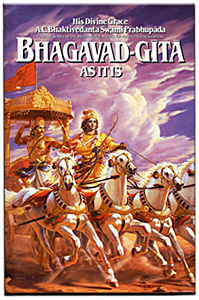
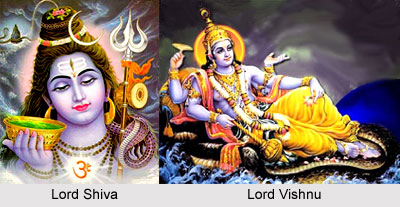
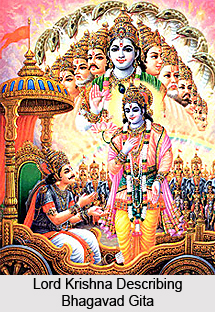
Nothing can be formally traced or make out of any of the particular terms. There is no unique philosophy that forms the basis of the faith of the majority of India`s population. There is no one holy book in Hinduism. The Rig Veda, Upanishads and Bhagwad Gita are all described as the sacred text of the Hindus. Moreover, there is no one deity of the Hindus. The different festivals and ceremonies celebrated by the Hindus make the tradition rich and colorful and thus bring out the essential philosophy of life.
 Sikhism, founded by Guru Nanak emerged during the early 16th century. Sikhism propounds monotheism, worship of one God. The ideas of `Karma` and `rebirth` also form the basis of Sikhism. It believes that abstract or universal terms are words only, or denote mental states such as ideas, beliefs, or intentions. Relation with philosophical ideas that deal with `empiricism` are also found in this religion. It deals with the theory of knowledge, emphasizing the role of experience, especially sensory perception.
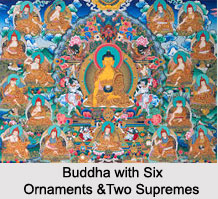
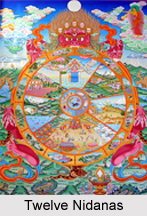
Buddhism, founded by Gautam Buddha is based on the principle or the law of impermanence. It states that everything is subject to change, although some things may last longer than other. Buddhism defines the law of causation, and also states that it is the `karma` which leads to the occurrence of all events. The great philosophy of life is understood in the four important teachings of Buddha. It states that suffering is universal, it is caused by desire and yearning, suffering can be prevented and overcome, and eradication of desires can lead to removal of suffering. These leads to the attainment of `nirvana` or complete enlightenment.
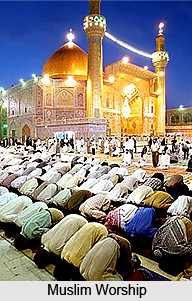
Islam, introduced in India in the early 8th centuries professed universal brotherhood and submission to Allah- the God Almighty. The mystics of the Islam or the Sufi saints spread the message of peace and universal love. Through this the true meaning of religion and its theoretical aspect i.e. philosophy comes out.
Similar are the teachings and belief of other religions of India. The beauty of the Indian philosophy lies in the grand unification of a Metaphysical God who is the Absolute Reality and the bedrock of all existence, and a Personal God who is the basis of all morality, beliefs and the stimulation to lead a meaningful life.
Thus Indian Philosophy and Religion are inseparable. The motives of all the religions are hidden in the unique philosophy of life, which shows the same goal of manifesting the intrinsic divinity in man.