
 Kurma Purana is a compilation of the teachings imparted by Kurma (incarnation of Vishnu as a tortoise) while narrating the story of Indradyumna at Patala. Lord Vishnu had first preached this Purana to Narada. In his turn, Narad narrated it to Sutji who later narrated this Purana to an assembly of the great sages. Lomharshana recited the Kurma Purana to the assembled sages in the forest of Naimisharanya. The mode of narration of this Purana is the conversation between Lord Krishna and the Sun God (mentioned in Bhagavad Gita) and Danvantari. It is believed that if the book is to be given as gift along with a golden image of the tortoise it is auspicious.
Kurma Purana
Kurma Purana consists of the teachings that were imparted by Lord Vishnu while in the Kurma avatar.
About Kurma Purana
Kurma Purana is a compilation of the teachings imparted by Kurma (incarnation of Vishnu as a tortoise) while narrating the story of Indradyumna at Patala. Lord Vishnu had first preached this Purana to Narada. In his turn, Narad narrated it to Sutji who later narrated this Purana to an assembly of the great sages. Lomharshana recited the Kurma Purana to the assembled sages in the forest of Naimisharanya. The mode of narration of this Purana is the conversation between Lord Krishna and the Sun God (mentioned in Bhagavad Gita) and Danvantari. It is believed that if the book is to be given as gift along with a golden image of the tortoise it is auspicious.Content of Kurma Purana
 Content of Kurma Purana comprises a description of the exploits of Lord Vishnu in the Kurma avatar. This work begins with a hymn to the incarnation of Vishnu as Kurma (tortoise) on which the mountain Mandara rested when the ocean was twirled. At that time Goddess Lakshmi arose from the ocean and became Vishnu`s consort. When the Rishis ask him who this goddess is, Vishnu replies that she is his highest Sakti. The Introduction then relates further how Indradyumna, who in a former birth had been a king, but was born again as a Brahmin by reason of his devotion to Vishnu, desired to gain knowledge of the glory of Lord Shiva. Lakshmi refers him to Vishnu. Then he worships Vishnu as the Universal God, the Creator and Preserver of the universe, but also as "Mahadeva," "Shiva" and as "father and mother of all beings." At length, Vishnu, in his incarnation as the tortoise, imparts the Purana to him.
As in this Introduction, Shiva is the Highest Being throughout the work, but it is emphasized over and over again that in reality Brahma, Vishnu and Shiva are one. The worship of Sakti, i.e. "Energy" or "Creative force" conceived as a female deity, is also emphasized. In like manner as Vishnu is none other than Shiva, Lakshmi, and Sakti, is in reality not apart from the Devi.
When a decision regarding as to which god was the more worthy of worship, Vishnu or Shiva, the seven Rishis decided the dispute by declaring that the deity worshipped by any man is that man`s deity, and that all the gods deserve the worship of at least some beings. Notwithstanding Siva is the god above all gods to such a degree that, though Krishna is praised as Vishnu Narayana, he obtains a son for his wife Jambavati only after strenuous asceticism and by the mercy of Shiva.
The five themes of the Puranas, namely the Creation, the genealogies etc, are also treated in the Kurma Purana, and in this connection a few of Vishnu`s Avataras are touched upon. However, an entire chapter is devoted to the incarnations of Shiva. A considerable section of the first part consists of a description and glorification of the holy places of Varanasi (Kasi Mahatmya) and Allahabad (Prayaga Mahatmya). The second part begins with an Isvara Gita (a counterpart to the Bhagavad Gita), teaching the knowledge of God, i.e. Shiva, through meditation. This piece is followed by a Vyasa Gita, a larger section in which Vyasa teaches the attainment of the highest knowledge through pious works and ceremonies, and therefore delivers a lecture on the duties of the householder, the forest-hermit and the ascetic. A few chapters deal with expiatory ceremonies for all sorts of crimes, where there is also mention of chastity. This gives rise to the narration of a story of Sita (not occurring in the Ramayana), how she is rescued from the hands of Havana by the fire-god.
There were originally four Samhitas of the Kurma Purana namely, Brahma Samhita, Bhagavad Samhita, Souri Samhita and Vaishnavi Samhita, which provide knowledge about the Kurma Purana but presently, only the Brahma Samhita is available. The Brahmana Samhita of the Kurma Purana includes two parts- Vyagratita and Vyagastitho. The existing Brahma Samhita depicts this story of Kurma Purana in two parts- the Purva part and the Uttar part. The Purva part of the Brahma Samhita comprises the tale of Indradyumna, description of Kurma Purana, description of Varnashram, description of the sequence of these ashrams, origin of the geosphere, description of various incarnations of Vishnu, preaching of the gods, description of the self-begotten Manu, destruction of Daksh`s yagya, killing of Hiranyakashipu, Vamana avatar (dwarf incarnation), description of Iksvaku clan, description of Pururava clan, description of Lord Rama and Lord Krishna incarnations, description of Satya, Treta, Dwapar and Kali yugas, greatness of Varanasi, greatness of lingas, greatness of Prayag, Yamuna and other pilgrimages.
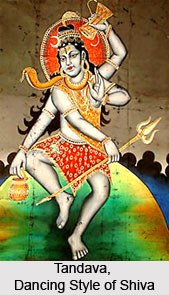
The Uttara part deals with the performance of sacrificial duties in mortal existence. On the essential level Uttarakhand of the Purana describes worldly matters and duties to be performed as a mortal being and also denotes the right Yoga of unexpressed knowledge, appearance of Devadidev (Rudra) during Tandava, description of metaphysical knowledge, preaching of metaphysical knowledge by God, description of Ashtanga Yoga, duties of a celibate, description of edible and non-edible things, rituals to be performed regularly, rituals of dining, description of the duties of a Vanaprasthi, duties of an ascetic, description of expiation, expiation for drinking of wine and greatness of different places of pilgrimage.
Thus discussed are the contents of the Kurma Purana.
Recently updated articles in Indian Puranas
Kausika, Son of Vasudeva
Kausika is a minor figure in Hindu mythology and is identified in the Vishnu Purana as the only son of Vasudeva and his wife Vaishali. He is recognize...
Tandu, Attendant of Lord Shiva
Tandu is revered as the divine attendant of Lord Shiva and the foremost exponent of the Tandava dance. According to the Natya Shastra, he instructed S...
Niramitra, Mahabharata
Niramitra was a son of Nakula and Kareṇumati in the Mahabharata. A descendant of the Pandavas and the Kuru dynasty, he fought on the Pandava side duri...
Mahodara, Ramayana
Mahodara was a prominent Rakshasa warrior, minister, and army chief who served under Rāvaṇa during the Battle of Lanka in the Ramayana. Celebrated for...

Lalabaksha, Hell in Purana
Lalabaksha is one of the hells described in Hindu Puranic literature, particularly in the Bhagavata Purana and the Devi Bhagavata Purana. It is a real...
Related articles in Indian Puranas
Adhyayas in Agni Purana
Adhyayas in Agni Purana are all encompassing. The chapters have dealt with a variety of subjects related to human lives. A large number of chapters ha...
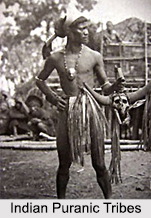
Indian Puranic Tribes
The existence of Indian Puranic tribes is often mixed with mythology and fiction that depict them as superhuman or sub.
Puranic Texts
Puranic Texts are vital according to Hindu, Jain or Buddhist religion; they describe the history of the Universe.

Puranic Shaivism
Puranic Shaivism established during the Gupta Dynasty. This puranic religion developed and expanded, and was accompanied by the development of Brahman...
Nilamata Purana
Nilamata Purana is a Kashmiri Purana that is referred by Kalhana. It is considered as one of the sources of ancient history of Kashmir.