


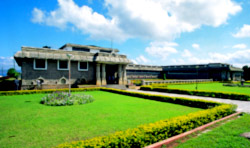
This museum exhibits items related to the Buddhist and Brahmanical faiths. As the name suggests, this museum was named after the Buddhist scholar and savant Acharya Nagarjuna. To preserve and display the antiquities collected from the excavations, this museum is a grand mansion in its own beauty. There are five galleries in the museum that exhibits different items of all cultural periods. This includes carved lime stone slabs, sculptures, inscriptions, and other antiquities of 3rd and 4th century A.D. The main gallery exhibits the masterpieces of Ikshvaku art and architecture. This art and architecture has taken several forms as the all-pervading serene Buddha, well sculptured amidst the ayaka-slabs, the cross beams of ayaka platforms. There are also showcases all around the wall, which shows the development of human civilization from Stone Age to the Megalithic period through excavated artifacts and ample illustrations. The minor antiquities include terracotta and stucco figurines, seals and coins. Apart from this, there are also two galleries located in a large hall, exhibiting the decorated drum slabs, dome slabs, cornice, beams and other architectural units of a stupa, a few Brahmanical sculptures, and a variety of earthen ware of the Ikshavaku and subsequent periods. The carved architectural units that once used to decorate the various stupas, confine the life of the Master from birth to Mahaparinirvana. It displays how the Master had to pass through the events of great departure, meditation, enlightenment and preaching. The carvings in the museum also portraits the Jatakas like the Sasa-jataka, Champeya-jataka, Sibi-jataka, Mandhathu-jataka, and several others. The other Brahmanical sculptures that are exhibited here include Kartikeya and his consort Devasena, a Sivalinga, Sati and a few figures of Vidyadharas. Other interesting items that have been displayed in the museum are the carved mandapa pillars depicting joyous moods of children at play, war themes and other secular themes, medallions showing elephants in majestic postures and the example of a drawing (hastalekha) on a slab. The artistic excellences of the potters are displayed here in the museum in polished, designed, utilitarian household articles. The third gallery of the Nagarjunakonda Archaeological Museum abodes models of the submerged valley and also of secular and religious structures. The floor of the museum, on the other hand, exhibits the model of the valley with its topographical environs. Neolithic and Megalithic burials, stupas showing a variety of plan along with the Mahastupa, viharas like the Mahisasaka, Bahusrutiya, Kumaranandivihara, Brahmanical temples dedicated to Sarvadeva, kartikeya, Pushpabhadrasvamin, Ashtabhujasvamin, and lot more are exhibited in the showcases of the museum. There are also the models of the secular edifices such as the amphitheatre, bathing ghat, etc. Among these galleries, one gallery represents select specimen of the epigraphs, decorated architectural members and medieval sculptures. There are also written inscriptions on the pillars that form the part of the structural complexes, sculptures, pedestals, memorial pillars and detached slabs. Mostly they are written in Prakrit language and some in Sanskrit also. The most notable inscriptions among all these are the inscriptions of Vijaya Satakarni, the memorial pillar depicting King Vasishthiputra Chamtamula, ayaka pillar of Chamta Sri, the Buddhapada, inscription and a Sanskrit inscription on a pillar invoking God Pushpabhadrasvamin. In addition to all these, there is also a Telegu inscription issued by king Purushottama of Orissa. The Medieval sculptures that have got its place in the museum include ornate Yoga-Narasimha, Mahishmardini, Durga, Siva and a Jaina Tirthankara seated in Yoga posture (14th-17th century AD). People who are interested to visit historical places may visit the museum from 9am to 4 pm, except on Friday. The entrance fee is very cheap. It is Rs.2 per head. Moreover, children upto 15 years of age are free to enter the museum. |
| |||



Home > Reference > Indian Museums > Indian State Museums > Museums of Andhra Pradesh > Archaeological Museum, Guntur, Andhra Pradesh
Archaeological Museum Guntur
| Nagarjunakonda Archaeological Museum of Guntur, is a storehouse of artifacts, sculptures, inscriptions and antiquities. |
| ||||||||||||||||||||||||||||

