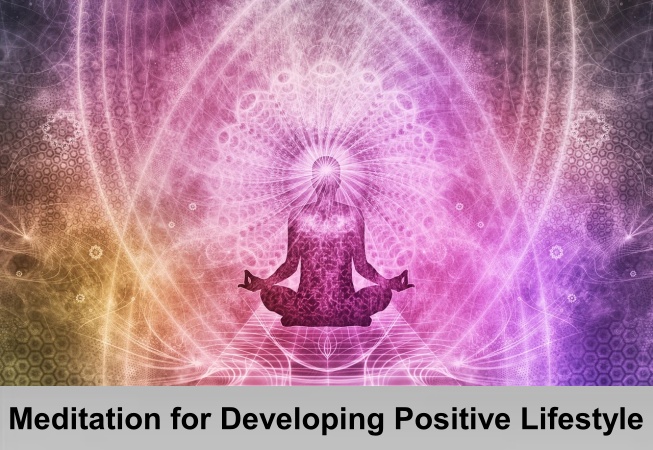
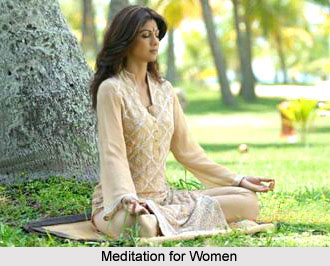
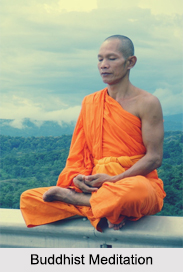
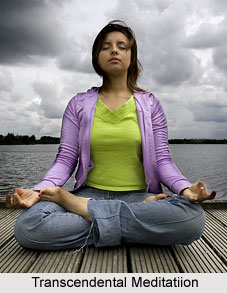
A healthy body is essential to the development of one`s full potential. If the physical machinery is not in optimum condition, it will not be fit for daily work, meditation, and also service to others. Some think a yogi should be emaciated in the name of self-discipline. But in fact, excessive physical austerities indicate an over-concern with body. Others believe that those on the spiritual path need not concern themselves with matters of the body as their energies are directed towards loftier things. In Yoga, it is important to keep a balance in life. Proper exercise, proper breathing, proper relaxation, proper diet, and positive thinking are the requisite attendants of meditation. In order to remove distractions from the mind, a healthy body and psyche are necessary. When there are disturbances of a physical or emotional nature, meditation is not possible. At that point of time the body requires complete rest.
Proper Exercise
Proper exercise is not muscle building, nor is it a short set of strenuous workout for building body. The entire internal and external physical system should be kept in tune. This is the purpose of Yoga exercises, or asana, which involve systematically stretching, muscles rather than contracting them. The effect is to tone the body, release tension, and insure excellent circulation, digestion, assimilation and elimination. The body is kept supple and at the same time concentration and serenity are developed. Yogic breathing is called panorama, which actually means control of the vital energy.
 A person can live without food, water, sunlight, and sleep for fairly extended periods of time, but the body cannot survive without oxygen beyond several minutes. Prank, the vital force, makes the difference between life and death. Its primary source is the breath. The quality and quantity of air and the timing of the breath have a direct effect upon the brain and its function. This is an area which Western scientists are just beginning to investigate. There are certain panoramas or breathing exercises that increase the amount of energy in the body. It cleanses the lungs, reduces the amount of sleep needed, calms the nerves, stills the mind and heats or cools the physical system. It even helps raise the kindling, or spiritual energies of the body as well.
Relaxation Techniques
Proper relaxation is also needed to maintain mental, spiritual, and physical health. Yogic as aims and pranayama include special techniques for relaxation. These techniques also emphasize the conservation and efficient use of the energies contained in the body. Many think that relaxation involves leaving home for some exotic place where the mind and body are ceaselessly pumped with stimulants and depressants and a full range of other damaging delights. True relaxation comes from removing the stimuli i.e. visual and edible. Like a piece of sturdy machinery, the physical and mental bodies can take quite a bit of abuse before giving signs of protest. Unfortunately, it has become a practice to ignore the basic rules of health. Many people substitute frequent visits to the local GP, specialist, or psychologist for living a healthy life. Most of the diseases of the mind and body can be eliminated by following the five basic points. These points can be mentioned as proper exercise, proper breathing, proper relaxation, proper diet and positive thinking and meditation.
Mind in Meditation
The mind is its own worst enemy as well as its own best friend. According to yogic thought, the mind has five different types of behaviour. In the shiplap state, it is fragmented, distracted and scattered on various objects. The mind is then restless and jumps from one thing to another. In the mocha state the mind is described as dull and forgetful. Vikshipta is the third type of mind which is basically the gathering mind; the vikshipta or gathering mind is seldom steady and at other times, distracted. The karate or one-pointed mind is a type of mind state, where there is only one idea present. The niruddha state of mind signifies the type of mind where full control of the mind has been achieved. Meditation is the process of calming the mind as it is only through an unruffled mind the journey in meditation begins. The greatest impediment to meditation is thus the lack of concentration which is indeed an effect of the restlessness and tossing of the mind.

When one sits for meditation, mind plays the pivotal role in the progress of the continuous process of meditation. Initially the mind unaccustomed to the new game of calming the thought process, leap about in an uncontrolled way. To remove tossing and other obstacles to one-pointed ness, it is thus necessary to adamantly fix the mind on one object alone. If the mind runs with its natural process, pulling it back again and again is indeed necessary. The mind while meditating wants to create hundreds of alternate thought forms. However, the mind if not disciplined then no progress can be made in meditation.
Mind in meditation is that elementary base which acts like a vehicle to transport one from his own self to his inner self. It is the guiding star in uniting one with the supreme consciousness. Quite ideally therefore it is necessary to introspect and watch the mind carefully. To still the mind in meditation is thus necessary to feel the inward journey. Bubbling thoughts in the mind therefore must be silenced and emotions should be calmed and this is the very first step of focusing the mind in meditation.
The purpose of focusing the mind or concentrating it, is to still the mental waves. One should not allow the mind to dissipate energy uselessly on vain thoughts, worries, imagination and fears. Rather, through constant practice it is indeed necessary to hold the mind in meditation in one thought form for a particular time frame and then slowly increase the time limit. This is how the mind in meditation is tamed, concentrated to one point and then finally focused. It is only through a focused mind one experiences blissfulness from within. The mind is generally attracted to pleasing or favorite ideas. Therefore, concentrating on something that is appealing can become beneficial in meditation. Because of its natural externalizing bent, in the beginning concentrating the mind can be done whilst focusing it on gross objects. A flame, the moon or a concrete spiritual symbol can be focused upon with open eyes. Later subtle objects and abstract ideas can be used in calming the mind while meditating.
By manipulating the mind in meditation one becomes successful to bring it under control and compel it to concentrate. However concentrating the mind in meditation is far different from the idea of wrestling with it as struggle only sets more mental waves into motion. It is through visualization, regular chanting of prayer and japa the mind is focused in the process of meditation. Patience is very much needed while concentrating the mind. Cheerfulness and tenacity is also important. Success in focusing the mind however comes eventually. By serious introspection, it is possible to discover the various impediments to concentration and those impediments could be removed with patience and effort. The main idea of concentrating the mind in meditation is to overcome body consciousness, whilst becoming aware about the inner self, the super consciousness. When the mind is more concentrated, more power is brought to bear on one point whilst making the continuous process of meditation, a success.
The benefit of focusing the mind in meditation is colossal. It is amidst the acuity of the focused mind one goes beyond the "I" feeling; it is then one`s uniqueness, consciousness, senses, intellect and ego merges in its origin. The purpose of life hence is to fix the mind on the Absolute. When it is so fixed, one becomes calm, serene, steady and strong. In concentration the senses cease to function, and there is no longer awareness of the body and surroundings. As it deepens, one experiences great joy and spiritual intoxication. Concentration opens the inner chambers of love and the way to meditation is therefore the sole key to the realm of Eternity.
Meditation and Respiration
Meditation is practiced in various ways. However, the important part of all the meditations is the breathing techniques involved. Whatever the meditation procedure is, proper breathing during the process is of utmost significance. As breathing has an important role in respiration. All the meditations involve voluntary control of respiration, which has an important effect on mind and body.

Effect of Meditation in Respiration: The meditation and yoga has great effect on reducing many diseases as it controls the respiration and temporal lobes of brain directly. Basically respiration is one of the involuntary physiological functions, upon which a volitional control can easily be exerted and this is what is exactly done in meditation. Respiration has four stages which are ventilation, diffusion, transport of gases and control of respiration.
Meditation has an important effect on different respiratory parameters which involves the capacity to hold the air by lungs and nasal passages. The meta-analysis show that respiratory rate vary in different meditation techniques. The respiratory rate generally decreases from premeditation to meditation, which requires a reduced inflow of oxygen. This also results in reduced production of carbon dioxide. The breathing is often suspended in meditation, which has distinct psychological and physiological effects. As the flow rate of respiration changes during meditation, the pressure on diaphragm also changes. Since the oxygen is suspended for prolonged time within the body, blood purification properly occurs. The inhalation and exhalations are long and counted during meditation, which has a prolonged effect on mind and body. It is a well-established fact that mind and body are together pacified after the meditation, which has a correlation with breathing control.
Diet for Meditation
The food that is consumed by the human body correlates directly to the efficiency with which the brain functions. Certain red food coloring creates hyperactivity in children while refined sugar can cause emotional instability. These are just two examples of substances that are often needlessly consumed without understanding their effect on the body and mind. A person who meditates regularly must be particularly aware of these substances. Even on a day-by-day basis, diet affects the quality of meditation. The optimum diet for a mediator is a simple one. This is not to say that meals should not be appetizing, but there should be an absence of those foods, which negatively affect the mind. Hot and pungent spices, garlic, onions, salt, coffee, black tea, and meat agitate the mind, and hence control of the thoughts becomes difficult. Then there are those foods, which dull the mind, rendering a state of sleepiness instead of concentration. These include all pre-cooked and overripe foods; alcohol is also included in the list. Marijuana and cigarettes, though not taken as foods, also fit into this category.

It is not expected that every person will make an immediate radical change in diet, but those who are sincerely interested in meditation may begin by phasing out meat and cigarettes. In many cases it can be seen that asanas or pranayama will make this much easier. Many detrimental habits will fall away of themselves simply due to the change of consciousness that occurs in meditation. The process can be start by shopping and cooking with a greater degree of awareness. Fresh fruits and vegetables can be their in the list. Additives, processed foods, and canned goods should be completely avoided. Concentration should be put to nutritional and vegetarian diet. Within a few Months a great change will take place for sure. Several years ago vegetarianism was an under- ground practice. A person who refrained from eating meat was viewed with a certain amount of curiosity, if not suspicion. Today it is quite a different story. Health food stores and vegetarian restaurants are prevalent. There is a growing awareness that our health is directly affected by what we eat. Many diseases can be cured by a change in diet or a short period of fasting, with no medications at all. This is true not only of physical disorders, but of many mental difficulties as well. It is particularly important that pregnant mothers have this awareness. Too often they do not realize the effect of their diet on the developing fetus.
Contrary to the popular concept, vegetarians do get enough protein. It is meat-eaters who take in an excess of protein. Animal protein contains a high concentration of uric acid, which is a nitrogen compound similar to ammonia. It is not water-soluble and cannot be broken down by the liver. Thus, though a certain amount is eliminated, the greater portion of uric acid is deposited in the joints. The result is often arthritis. Hardening of the arteries and heart disease are two of the most common maladies in present days, where the greatest amount of meat is consumed. The main problematic matter is cholesterol, which cannot be eliminated from the body. It forms fatty deposits along the walls of the heart and arteries. And it gradually thickens until they are clogged and inflexible. Some think that merely switching from butter to margarine will solve the problem, but in fact any oil that has been hydrogenated is equally as harmful. The major source of cholesterol, however, does not come from occasional butter on the toast in the morning but from the hundreds of pounds of meat and its fats that most people consume each year.
The cancer is another dreaded disease. Many substances have been found to create cancer in animals, but results of most studies seem to indicate that the amount consumed by the average person is insufficient. Innumerable chemicals are fed and injected into animals. These increase weight to yield more money per animal. Nitrites, food coloring, artificial hormones, and even arsenic are among the chemicals contained in animal flesh by the time it goes on the supermarket shelf. These, plus the many other additives consumed by members of an industrialized society, collect in the body and are stored in the tissues. Cancer occurs when the cells react to these excessive toxins by mutating into cells, which reproduce uncontrollably. There are other physical and spiritual reasons for not eating meat. One of the reasons can be explained, as when the grain is fed to animals, it is four times as much grain is used if a person consumed the grain directly. This raises a moral question in regard to sharing of the world`s resources. Plants are the original source of energy for all living things, as they store the energy of the sun through photosynthesis. Vegetarians take their nourishment from the original source. Because of this their diet is more economical with regards to personal cost and the best utilization of available land.
It is also noteworthy that the human being`s digestive system is not one of a carnivore. The teeth are designed for biting and mashing vegetables, not tearing flesh. The human liver is proportionally smaller than that of a meat-eating animal and is not built to handle the filtering of animal poisons. The alimentary canal is also short in carnivorous animals to speed poisons through the body quickly. But in human being it is quite long as it is in any vegetarian animal. Though for a yogi, the main consideration in not eating meat is the basic principle of ahimsa, or non-injury. Animals have feelings and a consciousness, just as humans do. In India, a cow is regarded with great respect for the service it renders to man. It tills the fields, provides milk and its by-products for nourishment, and its dung is used for fuel and building houses. An Indian farmer would never think of cooking his cow for dinner.
A subtle part of what is consumed becomes the consciousness. Those who have changed from a meat eater to vegetarian diet notice a corresponding change in consciousness. There is a certain grossness that disappears, and the awareness becomes finely tuned. This is of course, extremely conducive to meditation. The purer the diet, the more easily the mind is controlled. Then, with time and practice, success in meditation is assured.