 Vangiya Sahitya Parishad a literary society situated in the Indian state of West Bengal. L Leotard and Kshetrapal Chakraborty founded "The Bengal Academy of Literature" at the Shobhabazar residence of Binay Krishna Dev on 23 July 1893. Though development of Bengali literature was its aim, yet almost every function of the society was performed in English. Even the monthly journal of the organisation The Bengal Academy of Literature was in English. To avoid this inconsistency Umesh Chandra Batabyal proposed to publish the journal also in Bangla on 18 February 1894 under the title Vangiya Sahitya Parishad. On 29 April the same year, the name of the society itself was changed to "Vangiya Shahitya Parishad" (Vangiya Sahitya Parisad) and since then the journal of the society is being published under the title Sahitya Parishad Patrika.
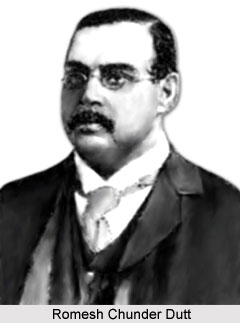
In 1894 Romesh Chunder Dutt was the President of the society while Rabindranath Tagore and Nabinchandra Sen were its vice Presidents. L Leotard, Devendra Nath Mukherji and Ramendrasunder Trivedi were the secretaries of the society. A special meeting of the society was held on 19 February 1899 with Dwijendranath Tagore on the chair to consider the necessity of establishing a building of its own. For the time being the Parishad was shifted to a rented house at 137/1 Cornwallis Street, Kolkata.
By the first decade of the twentieth century the Parishad witnessed extensive expansion and the number of its members rose to 523. Among the members Romesh Chunder Dutt, Rabindranath Tagore, Nabin Chandra Sen, Debendranath Mukherji, Roy Jatindranath Chowdhury, Satyendranath Tagore, Jyotirindranath Tagore, Gaganendranath Tagore, Rajanikanta Gupta, Ramendrasundar Trivedi, Debendra Prasad Ghosh, Narendra Nath Mitra, Amrita Krishna Mallick, Suresh Chandra Samajpati, Dwijendra Nath Bose were most prominent.
Again a special meeting was held in 1906 to establish branch offices of the society outside Kolkata. Accordingly a branch was immediately established at rangpur and in course of time 30 branches were established in several districts of West Bengal as well as outside West Bengal. To construct a new building of its own Charu Chandra Ghosh, Rajanikanta Gupta, Hirendranath Datta, Suresh Chandra Samajpati and Nagendranath Basu waited upon Maharaja Manindra Chandra Nandi of Kasimbazar and the Maharaja was pleased to donate seven kathas of land in Halshibagan for the society. Towards the close of 1909, the society moved to its permanent house.
Membership of the society is of five categories - Friendly, Special, Life, Associate and General. Any person can be a general member of the society. The Parishad earned fame as a literary society patronising Bengali literature in several research works. The main objective of the Parishad is to translate books into Bengali language from Sanskrit Language, Arabic and English and publish rare books, literature and research papers. Bangla Shabdakos, Shrikrsnakirtan, Sanbadpatre Sekaler Katha and Sahityasadhak Charitamala of Jogesh Chandra Roy Bidyanidhi are among the famous books published by the Parishad.
The Parishad also made a good collection of ancient coins, stone sculptures, metal sculptures, copperplates, ancient illustrations, possessions of some literati and famous persons hand written letters and grants, ancient armoury, manuscripts and ancient minutes. The Parishad`s own collections and presents and complements from Pundit Iswar Chandra Vidyasagar, Romesh Chunder Dutt, Satyendranath Dutt, Binoy Krishna Deb, Ritendranath Tagore, Premsundar Bose and Jatindranath Pal have all the more enriched the Parishad library. At present the library possesses about 150 thousand books.
Jatindranath Chowdhury and Rajanikanta Gupta took initiative to collect ancient Bangla and Sanskrit language Puthis (manuscript). The collection of puthi of the Parishad has risen to seven thousand. The only manuscript of Shrikrsnakirtana is in the collection of the Parishad.
Quite a large number of generous people have opened Endowment Funds for the publication of books and awarding medals and prizes. A charity fund has also been formed to give monitory help to needy literati. Many families of needy writers have so far been benefited by the charity fund established by Pulinbihari Datta.