Asutosh Museum of Indian Art, Calcutta, West Bengal - Informative & researched article on Asutosh Museum of Indian Art, Calcutta, West Bengal
  Indianetzone: Largest Free Encyclopedia of India with thousand of articles Indian Museums


in  
Art & Culture | Entertainment | Health | Reference | Sports | Society | Travel
Forum  | RSS Feeds  | Free E-magazine
Indian Museums : Museums l Indian Museums l Indian Science Museums l Indian State Museums l Indian Art Museums and Galleries l Indian Archaeological Museums l Indian Historical Museums l Indian Libraries l Museum Of Nagaland
Home > Reference > Indian Museums > Indian State Museums > Museums in West Bengal > Asutosh Museum of Indian Art
Asutosh Museum of Indian Art, Calcutta, West Bengal
Asutosh museum of Indian Art, Calcutta (presently Kolkata), stimulates an art-lover`s affinity towards Indian art.

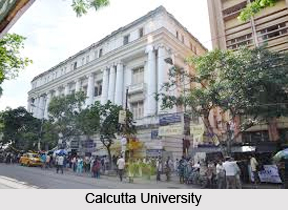
Asutosh Museum of Indian Art happens to be the first museum in any Indian University, which remains open to public. Located within the Centenary Building of Calcutta University, of Kolkata city in West Bengal, this museum was founded in 1937. The Asutosh Museum of Indian Art received its name after the famous academician and educational-entrepreneur, Sir Asutosh Mookerjee. Sir Asutosh Mookerjee, was the man who took the initiative of making Indology , incorporating Indian art and archaeology as a discipline to be taught at the University . The mantra of conservation , exhibition and in-depth research-oriented study of specimens of Indian art and antiquity, especially hailing from eastern India, was disseminated by this museum.

Asutosh Museum of Indian Art, CalcuttaThe start for the Asutosh Museum of Indian Art was insignificant. With only five items in their store, the Museum went a long way under the immense patronage of the diligent and first curator of the museum, Sri D.P. Ghosh, and the other helpful donors and facilitators. From 5 the number outstandingly increased to a massive 25,000 objects diversified sculptures, paintings, folk-art articles, textiles, terracotta, and so on focusing on the cultural heritage and innovative spree of different people over the years and ages. The museum had its initial settlement in the backside space of the old Senate Hall, a place from where the mobile display commodities were drifted to Murshidabad Imambada and were concealed underground to be saved from the ravaging bombs of the World War II. After five years, things returned, but changes recurred in 1960. Finally, leaving the transitory habitation, in 1967 the museum got its final address in the newly built Centenary Building of the University. The galleries were present in the ground and first floors of this building.

The new arrangement has given the Museum not proper space and infrastructure, but also made the Asutosh Museum of India Art, attain a national acclaim. Very soon, the Asutosh Museum of Indian Art began offering a certificate course in Art Appreciation, to the interested candidates. This enlightens the student with the coveted knowledge of aesthetics and archaeology.

The Museum has published precious books guiding on the art of preservation, reports on excavation-operations conducted by the Museum and handbooks on Bengal sculpture, terracotta and coins in its rich repository. Multiple testimonies of colored and monochrome postcards, meant for sale, is another fascinating technique of giving art a greater dimension.

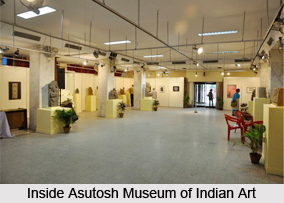
Asutosh Museum of Indian Art, CalcuttaIn 1959, the University of Calcutta constituted a Post - Graduate Diploma Course in Museology , for further acquaintance with the discipline. In this respect, the Museum provided the necessary scope for research and laboratory-work for this particular course. Close to the entrance in the ground floor, is a large hall, towards the right direction, decked with marvelous sculptures, picked up from several parts of Bengal. In these collection of sculptures, the sculptured image of Vishnu Vasudeva, carved in black basalt and brought from Jessore , easily arrests attention, in spite of being positioned at the corner. However, the bays of the left wall present iconic figures. A regal bearded sculptured figure spreads an air of dignity at the entrance, placed adjacent to a huge sculpture Makara (aquatic-creature) , belonging to the medieval period.

In vicinity to the entrance, are the hoard of fine stone sculptures gathered from various areas of Bengal, Orissa and Bihar. There reside terracotta articles and coins, seals, beads and other antiquities unfolded in long-term excavation. Fabulous is the chronological sequel of stone-sculptures placed upon pedestals and in showcases, ranging from first century B.C. till the recent times. Sculptures related to the Pala-Sena era speak volumes regarding the standards of artistic venture in Bengal and Bihar in the first half of the medieval times.

Surya figure - Kasipur Sculptures of times prior to the medieval era , are a turban-attired head of Dwarapala from Udaygiri, Bhuvaneswar, Orissa (1st Century B.C.), a headless male figure carrying a staff in hand, perhaps of Kartikeya (a mythological god)from North Bengal (2nd century A.D.) and a small red sand stone sculpture of Buddha from Chandraketugarh reflecting a Kushana-Mathura style. These representations are primarily of famous icons. Buddhist sculptures originally from Sarnath and some architectural testimonies (5th-6th century A.D.) attest the refined and deft craftsmanship of the artisans of the Gupta age. . Similarly mind-blowing is the 6th-7th century A.D., dated, Surya figure , procured from Kasipur, West Bengal , highlights the pattern of he classical Gupta art .

The Eastern School of medieval sculptures find its best illustration through the beautiful creations, exhibited at the Asutosh Museum of Indian Art. Some glorious instances are the sculpture of Vishnu riding on Garuda and the head-image of a lady, from Agradigun, West Dinajpur, a perfect sculpture of Harihara from Bihar, a bodily construct of Vishnu from Jatardeul, a twin-faced medallion representing a dancing Vishnu on Garuda, within the background structure of Sudarsana Chakra from Sarisadaha in 24 Parganas . Besides an outstanding sculpture of Kartikeya from Kaligram, Rajshahi, Bangladesh, that of Rishabhanath from Purulia, sculpture of Manjusri from Bhangor, and finally the sculptured icon of Saraswati from Sundarban, and so on. There are also demonstrations of the contemporary lithic art that grew in India during the middle ages. The birth and advancement of art in eastern zone of India has a curious history of its own. The states of Bihar, Bengal, Orissa, Nepal and Assam, cumulatively made for the Eastern part , then. About a millennium, beginning from the third century B.C., the progress in the field of art was quite prominent. The complete Indian authority, reinforced by the governments administered by the Mauryas , the sunga- Kanvas (c. 180-30 B.C.), the Kusanas (c.78-175 A.D.) and the Guptas (c. 318-550 A.D.), caused an uniformity in the style of art.

Yakshini Teracotta Sculpture - BangarhPlenty of terracotta sculptures excavated at different archaeological sites reveal that art was of vital importance even in the third century B.C. A few sculptural expositions in this Museum shows the practice of sculpture in Eastern India, shows the commencement of the practice as a much previous phenomenon. The subtle distinctions in the artistic examples are divulged before the common eye in the museum. Thus, the precisely defined sculpture of Varendra forms a contrast to the elegant and symmetrical moulds, obtained from Vanga and Samatata.

There are a plethora of the terra cottas, seals, ritual and consecrated commodities, coins and antiquities at the left side of the hall, located in the right from the entrance. Terra cottas and antiquities gathered from famous archaeological spots of Bengal like Chandraketugarh, Harinarayanpur, Tamluk, Panna, Tilda, Bangarh, Mahasthangarh, Paharpur, etc. testify the prowess of Bengal`s artisans in this regard. Rarely noted terracotta artifacts from many north Indian sites , namely Patna, Kumrahar, Nalanda, Ahichchhatra, Kausambi, Rajghat. Terracottas of older times , specifically, of the Maurya, Sunga, Saka-Kushana and Gupta eras and the burnt clay and bricks describing several stories based in the epics and mythology, function as interior-decorations for the temples of Bengal during the late middle ages .

Teamed up with the terra cotta exhibits, are the seals portraying animals, emblems, and love-situations and also graphic expressions .

Raslila Teracotta Sculpture - BansberiaThere resides in the museum, memorial tablets, carved on temple surfaces and inside, during the late and medieval periods communicates elaborately a subject, theme, or meaning. Gosthalila from Bakreswar, Birbhum; Rasalila from Bansberia, Hooghly; Indrani riding over its Vahana the elephant, from Faridpur, Bangladesh; a scene of hunting from Naldanga, Jessore and so on are worthy of mention.

Ascending the staircase, leading to the first floor, one encounters the grand imitations of ancient Indian and SriLankan mural paintings on the outer wall of the main hall, and folk-art, paintings, metal and wooden sculptures within the hall. The folk-arts, existing in textiles too, have come from Bengal and Orissa. Added to these, are the resplendent and sublime banner paintings from Tibet and Nepal and innumerable paintings inhabiting the Mughal, Rajasthani, Pahari and local patterns . Traditional art-forms like Pats (scrol-l paintings), painted Saras, such as Lakshmi Saras (earthen wares with paintings), Pata (manuscript covers with paintings), Kantha (embroidered textiles, often narrating themes or stories), folk-toys, dolls and ritual objects find place as the prime attractions. Each scroll painting is unique a presentation, because of the arrangement of the lines and vibrant shades, illustration of topics from popular legends , epics pertaining to the life of metaphysical personalities like, Krishna, Rama, Sri Chaitanya and others. A tiger in the Gazipat or the fable of Kamale-Kamini projecting Chand Saudagar (Saudagar meaning merchant), engaged in his sea-adventures highlight the attributes of the character concerned. Textile-crafts , such as Baluchari saris of the early 19th century , resplendent kanthas, dance masks and other types complement the inherent worth of these preserves.

Krishna Radha Manuscript Cover ,Wood- GanjamVisitors of the Asutosh Museum of Indian Art learn that clay, wood, pith, cloth, paper, are elements used in folk-art . Remarkable is the sensitive depiction of maternity in the cast of the mother and child, lucked from Goalpara, Assam .

A Nepal-made paper manuscript , replete with illustrations and dated A.D. 1105 from signifies the full-fledged blossoming of the Eastern Indian School . This manuscript is displayed inside a table show-window with exclusive paintings, palm-leaf manuscripts with catchy exemplifications , also pocketed by the Museum from eastern India and Nepal. These segment of the museum, is thronged with exquisite Rajasthan, Gujarat art too, often spiritual in essence.

Moreover the magnificence of the luxury-loving Mughals, of Central Asia, are perceivable in the Mughal paintings organized as per the chronological order.

The gallery of wood and metal sculpture, across the corridor is no less alluring for the visitor. Uncommon items from Nepal and Tibet and from Orissa happen to be the hallmarks of this department of the Asutosh Museum of India Art. . The syncretistic fusion icon of Siva Lokesvara from Barisa, Bangladesh, a Vishnu standing in Samapadasthanka stance from Sagardighi, district Murshidabad and a seated poised Buddha from Jhewari in Chittagong. Orissa, the mystical land of temples, was adept in metal modeling. Moulds of Krishna Radha, Bal Gopala and nayikas glorifying the gallery are Orissa-born . Metal specimens , linked with the Western Indian tradition and Jaina religion, provide diversity to the reserve.

The most treasured wooden sculpture of the Museum is the figure of Gopala (child-form of Sri Krishna) of 16th century A.D. , got from Malda ensures the acme of flawlessness that devoted endeavor might attain.

Hunting Scene featured on ivory - PuriThe enormous miscellaneous collection involving ivory works, bidri works, metal wares, glass , a 17th century A.D.`s hunting scene ,featured on ivory , and collected from Orissa, are radiant enough in appearance .

The University of Calcutta, being a premier academic institution, illuminate with valuable knowledge the students of Ancient Indian History & Culture, Museology, Sanskrit, Pali, Islamic History, Bengali and others engrossed in Indology. The Museum goes forward in guiding planned excursions from educational institutions. The wonderful library accommodating valuable books on art and culture, the airing of lectures and exhibitions celebrating art and archaeology and the selling of picture postcards at reasonable rates aid in reaching the desired destination.

The Museum welcomes visitors from 11am. to 5pm., on Monday to Friday. As is evident, the Asutosh Museum of Indian Art, Kolkata, gifts a connoisseur of art an enchanting experience with the awe-inspiring sea of art and archaeology, very prized and rare.

(Last Updated on : 10/01/2009)
  More on Museums in West Bengal...
 
Indian Museum Victoria Memorial Birla Industrial & Technological Museum
Asiatic Society Bangiya Sahitya Parishad Asutosh Museum of Indian Art
Birla Academy of Art and Culture Museum Bengal Natural History Museum Science City
State Archaeological Museum State Archives Of West Bengal Nehru Children`s Museum
Royal Gallery Calcutta Gallery Thangjing Museum at Bishnupur
Recently Updated Articles in Indian Museums
  • District Archaeological Museum
    District archaeological museum in Nizamabad district is a storehouse of valuable items belonging to different eras in history; the exhibits are divided into archaeological, decorative and bronze and decorative gallery.
  •  
  • Museums of Orissa
    Museums of Orissa mirror the ancient tradition and rich cultural heritage of the state and its people.
  •  
  • Museums of Manipur
    Museums in Manipur display artifacts relating to the ancient archaeological excavations and Indian freedom struggle.
  •  
  • Museums of Andaman and Nicobar Islands
    Museums of Andaman and Nicobar Islands mirror the glorious tradition and culture of the ancient period of the islands.
  •  
E-mail this Article | Post a Comment
Free E-magazine
Subscribe to Free
E-Magazine on Indian Museums

 
Asutosh Museum of Indian Art, Calcutta, West Bengal - Informative & researched article on Asutosh Museum of Indian Art, Calcutta, West Bengal
Sitemap
Contact Us   |   RSS Feeds
Copyright © 2008 Jupiter Infomedia Pvt. Ltd. All rights reserved including the right to reproduce the contents in whole or in part in any form or medium without the express written permission of Jupiter Infomedia Pvt. Ltd.