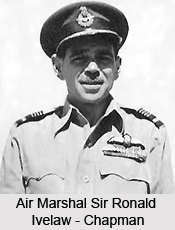
Air Marshal Sir Ronald Ivelaw- Chapman
Air Marshal Sir Ronald Ivelaw-Chapman was the former chief staff of Indian Air Force.

Share this Article:

Air Marshal Sir Ronald Ivelaw- ChapmanAir Marshal Sir Ronald Ivelaw-Chapman was born in Guiana in 1899. Then Guiana was under British rule. His father was a successful businessman. At the age of four he was taken to England. He received his formal education from Junior School and Senior School at Cheltenam. In 1917 Sir Ronald Ivelaw-Chapman was selected in the Royal Flying Corps and took training from No.12 and No.53 Flying Training School. In 1918 Sir Ronald Ivelaw-Chapman was appointed to No.10 Squadron RFC in France as 2nd Lieutenant. Here he took part in some bombing operations and was awarded the Distinguished Flying Cross. After that he rose to the rank of acting Captain and commanded the Squadron `B` Flight.

After First World War Sir Ronald Ivelaw-Chapman was sent to India and was given the charge of No.97 Squadron. In 1923 he was transferred to U.K as a test pilot of the Aircraft & Armament Experimental Establishment at Martlesham, Heathand. Afterwards he served as an ordinary pilot, with two multi-engined night bomber squadrons. He was appointed to the No.70 Squadron and participated to the Kabul air evacuations in Iraq. For his extraordinary performances in these operations he received the Air Force Cross. After that he commanded several flying units. Sir Ronald Ivelaw-Chapman graduated from RAF Staff College and served as a staff of Air Ministry. In 1936 he commanded the No.6 FTS at Netheravon. Just before World War II he was given the responsibility of rewriting the RAF War Manual at Air Ministry office. On promotion to the rank of Group Captain Sir Ronald Ivelaw-Chapman commanded the No.4 Bomber Group during the early of part World War II. After few months he was transferred to U.K .At that time he served as the staff of intelligence planning. In 1943 he was promoted to the rank of Air Commodore and was appointed No.1 Group as a Base Commander at Elsham Wolds.

In 1944 he flew in a Lancaster bomber, which attacked and destroyed German ammunition at Aubigne Racan. After that the Germans from a farm where he was hiding arrested him. Air Marshal Sir Ronald Ivelaw-Chapman was brutally interrogated but he remained tightlipped. The Germans then sent him to a normal prisoner-of-war camp. He was freed after the war and subsequently was promoted to the rank of Air Vice Marshal. He served as the commander of No.38 Group at Marks Hall for nearly two years. Air Marshal Sir Ronald Ivelaw-Chapman returned to London and was appointed as the Director Imperial Defense College, Belgrave Square. In 1950 he was sent to India as the Commander-in-Chief of the fledgling Indian Air Force. He served two years in this post. In 1951 Air Marshal Sir Ronald Ivelaw-Chapman was transferred to U.K as Commander-in-Chief of Home Command at White Waltham. After he was appointed as the Vice Chief of Air Staff at Air Ministry. He retired from his service in 1957. Air Marshal Sir Ronald Ivelaw-Chapman died in 1978.


Share this Article:

Related Articles

More Articles in Indian Administration


Administration of the Indian Gahadvalas
King occupied the highest position and had enormous power in the administrative system of the Gahadvalas.
Administration in Indian Villages
Administration in Indian Villages has seen significant changes from ancient period to contemporary period. The basic administration structure of Indian villages was quite common in the ancient, medieval and modern period.
Administration of Chera Dynasty
Administration of Chera Dynasty bears some mentioning in the epic Shilappadikaram. There were four divisions of the total Chera kingdom.
Nayaka Administration
Nayaka Administration was one of the major consolidating factors of the Vijaynagar kingdom in the 16th century. The Nayakas ruled as feudal landlords and they controlled the production in their territories through a hierarchical network.
Geeta Chopra Award
The Geeta Chopra Award is a prestigious civilian award in India, mainly given to the children under the age of 16 years, for their acts of bravery. The award is given under the National Bravery Awards category that was introduced in the year 1957.
Sanjay Chopra Award
Sanjay Chopra Award is presented to the bravest boys in India.
Village Administration in Ancient India
Village has been the pivot of administration in ancient India. As the states were small it enhanced the importance of the village.
Indian Coins
Coins of India has been modified from time to time with the changes in different dynasties. Coins of the Indian rupee were first minted in 1950.
Rural Local Self Government in India
Rural local self government in India is a three tier system, which looks after the necessities of the villagers and encourages developmental activity in the villages. The three tiers of rural local self government are Gram Panchayat, Panchayat Samiti and Zilla Parishad.
History of Indian Army
History of Indian Army dates back to the ancient India. From the ancient era to the modern age Indian army has evolved through the ages, with the bravery of Indians.
Kannada Language Newspapers
Kannada language newspapers are catering to the needs of the society, since 1930s. There are several renowned Kannada language newspapers that are published in south India. They are Hosa Digantha, Kannada Prabha, Kranti Kannada Daily and Prajavani.
Land System in Ancient India
Private Ownership of land was not uncommon in ancient India. As per the system King was considered as the owner of the land.
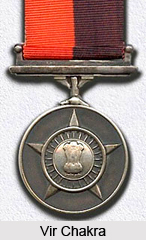
Vir Chakra
Vir Chakra which is the third gallantry award which is awarded for war time acts of bravery. It is granted only to the army personals for their exemplary acts of bravery in the battle field.
Samiti in Ancient India
Samiti was an assembly in ancient India that assisted the King. It is equivalent to modern Lower house or Lok Sabha.
Indian Media
Indian media is a medium of communication, which plays a crucial role in the development of the country. It evolved from print media to electronic media. Print media comprises of newspapers and magazines, whereas electronic media consists of radio, television, films and digital journalism.
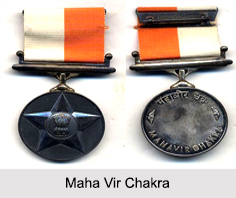
Maha Vir Chakra
Maha Vir Chakra is the second highest military felicitation in India. It is awarded for the acts of conspicuous gallantry in the presence of the enemy whether on land or water or air.
Telugu Language Newspapers
There are a number of newspapers in Telugu, which cater to the needs of the people of Andhra Pradesh.
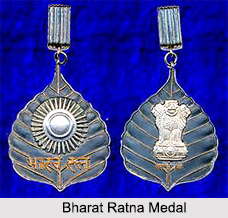
Bharat Ratna
Bharat Ratna is the highest civilian award in India and is given for the highest degree of service to the nation. The award was established by India’s first President, Rajendra Prasad. Apart from Indian citizens, Bharat Ratna award has been given to non-Indians and a naturalized Indian citizen.
Kirti Chakra
Kirti Chakra is awarded for conspicuous gallantry otherwise than in the face of the enemy. It is the second highest military honour awarded during peacetime in India. The decoration may be awarded posthumously.
Panchyat Samiti
Panchayat Samiti is the link between the district administration and the Gram Panchayat.
Padma Bhushan Awardees
Padma Bhushan Awardees are those people who have received Padma Bhushan, the third-highest civilian award in India.