


 Jharkhand was previously a part of Bihar, which have immense historical importance. A tour of Jharkhand will enable one to venture into the fame and glory of the land by visiting some of the very ancient and beautifully constructed temples, which tell the tales of the glorious past. Temples of Jharkhand are preservers of the rich culture and tradition of the bygone ages of the state. These temples also depict the past glory of the religious heritage of India. Jharkhand was previously a part of Bihar, which have immense historical importance. A tour of Jharkhand will enable one to venture into the fame and glory of the land by visiting some of the very ancient and beautifully constructed temples, which tell the tales of the glorious past. Temples of Jharkhand are preservers of the rich culture and tradition of the bygone ages of the state. These temples also depict the past glory of the religious heritage of India.
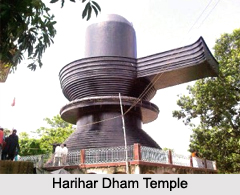
Harihar Dham Temple Harihar Dham Temple is situated in Bagodar, which is located at a distance of about 60 kilometers south west of the Giridih district. It occupies an area of about 25 acres. This temple is considered to be the biggest Shiva Linga in the world. More specifically, the Shiva Linga of this temple has a height of about 65 feet. It is known that the construction of this Shiva Linga took around 30 years. Maha Shivaratri is the festival celebrated in this temple. This temple is thronged by a plethora of devotees from all over India every year on Shravan Poornima in order to worship Lord Shiva. Baidyanath Temple Baidyanath Temple is located in the district of Jharkhand called Deoghar, more specifically in Santhal Parganas Division. This temple is considered to be one of the twelve Jyotirlingas in India. It is also regarded as one of the most sacred abodes of Lord Shiva. This temple is also famously known as Baba Baidyanath Dham and is frequented by a plethora of devotees every year. This temple is popular for the mela of Shraavana held between July and August. As per the beliefs of the Hindus, Ravana, the king of demons worshipped Lord Shiva at this place in Deoghar. He offered Lord Shiva his ten heads and the Lord satisfied with this, cured Ravana who was injured by cutting his heads and also blessed him with certain power with which he created turmoil in the world. Since Lord Shiva acted as a doctor to cure Ravana, he was also referred to as a doctor or a Vaidya and from this the Shiva temple at Deoghar got its name. This temple is located at a distance of about 223 kilometers from Patna, the capital city of Bihar. 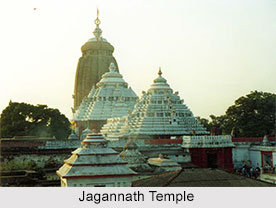
Bhuvaneshwari Temple Bhuvaneshwari Temple is located on Telco hill top in Jharkhand. This temple is popularly known as Telco Bhuvaneshwari Temple. The name of this temple can be divided into Bhuvanam and Easwari. Bhuvanam means ‘the universe’ and Easwari stands for ‘the ruler’. The name of this temple is based on the name of goddess Bhuvaneshwari who is regarded as the ruler of the universe. The Bhuvaneshwari Temple complex serves as a home to a temple called the Guruvayur Temple. Chhinnamasta Temple Chhinnamasta Temple is located in Rajrappa in Ramgarh district of Jharkhand. This temple is dedicated to goddess Chinnamasta. The noteworthy aspect of this Hindu pilgrimage centre is the headless deity of Goddess Chinnamasta, which stands on the body of Kamdeo and Rati in the lotus bed. Makar Sankranti, Maha Shivaratri and Vijayadashami are the important festivals celebrated in this temple. Jagannath Temple Jagannath Temple in Ranchi, Jharkhand is another significant temple which was constructed by Thakur Ani Nath Shahdeo of Barkagarh Jagannathpur principality. The construction work of this temple was finished on the 25th of December, 1691. The Jagannath Temple is placed on top of a small mound and it is about 19 kilometers away from the main town. This temple of Ranchi is known to be architecturally similar to the world- renowned Jagannath Temple at Puri, Odhisa, but the former temple is of a smaller size. The Jagannath temple in Ranchi organizes a Rath Yatra of Lord Jagannath every year, similar to the Rath Yatra or the car festival of Lord Jagannath in Puri. Various non-tribal and tribal devotees of Ranchi and other neighboring areas visit this temple to enjoy the annual car festival of Lord Jagannath. The temple collapsed on the 6th of August, 1990 and the restoration work started on the 8th of February, 1992. The restoration work of the temple is over. Sun Temple Sun temple is situated at a distance of 39 kilometers from Ranchi near Bhundu village on the Tata Road. This temple is constructed in the shape of a gigantic chariot having ornately decorated seven life size horses and 18 wheels. It is considered to be a poetry made of stone. This temple was established by Sanskrit Vihar. It is managed by Shri Ram Maroo. The pond in the vicinity of this temple serves as a holy place for Chhathavratis. Close to the temple is a fine dharmashala where the pilgrims can take rest. The availability of fine roads connecting the site of this temple enables visitation by tourists throughout the year. Temples of Maluti Village There is a village in Jharkhand by the name Maluti which is located at a distance of about 55 kilometers from Dumka in Jharkhand. This village possessed 108 temples, out of which 72 temples exist today. It is believed that the temples in the Maluti village date back to the Mughal era and are constructed with terracotta stone. This village has thus become one of the most favorable tourist destinations for those interested in ancient spots of historical importance. As far as the architecture of these temples is concerned, few of them follow the trend of the Birbhum and Bengal temple architecture. Among the 72 temples in this village, Shiva is the main deity in 58 temples and the remaining 14 temples are devoted to Maulisha, Lord Vishnu and Goddess Kali. The Maluti temples are known to illustrate the mythological stories of Lord Krishna and Ramayana. The ancient temples of Jharkhand in India mirror the rich and glorious era of India. A tour of India will be incomplete without a visit to the historical sites of Jharkhand where several sites having old temples are still new to the outer world. |
| |||



Temples of Jharkhand
| Temples of Jharkhand are scattered throughout the state and are dedicated primarily to the Hindu Gods. |
| ||||||||||||||||||||||||||||

