Religious Thinkers of India
|
Indian religious thinkers include personalities like Adi Shankaracharya,Ramanujacharya, Rammohan Roy, Mirabai etc.
|
|
|
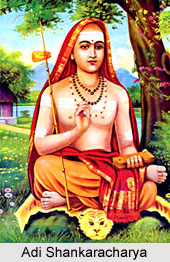 Religious thinkers of India brought a vast change in the Indian society.
The religious thinkers of India have brought about the vast changes in the Indian society for the welfare of the citizens. India is the land of number of religions. It has been home to a large number of religious thinkers, philosophers, Yogis, Munis, rishis and spiritualists. A major reason for this has been the tolerant and liberalist traditions inbuilt in ancient Indian society. A majority of the religious thinkers have advocated themselves as reformers and not as prophets or founders of new religions. Religious thinkers of India brought a vast change in the Indian society.
The religious thinkers of India have brought about the vast changes in the Indian society for the welfare of the citizens. India is the land of number of religions. It has been home to a large number of religious thinkers, philosophers, Yogis, Munis, rishis and spiritualists. A major reason for this has been the tolerant and liberalist traditions inbuilt in ancient Indian society. A majority of the religious thinkers have advocated themselves as reformers and not as prophets or founders of new religions.
Adi Shankaracharya was an Indian philosopher who consolidated the doctrine of Advaita Vedanta, a sub-school of Vedanta and his teachings are based on the unity of the soul and Brahman, in which Brahman is viewed as without any specific characteristics. Ramanujacharya was a theologian, philosopher, and scriptural exegete. He is seen by ?r?vaisavas as the third and most important teacher of their tradition, and by Hindus and one of the classical teachers of the leading Vedanta school of Hindu philosophy. Shri Madhvacharya was the chief proponent of Tattvav?da and prominent religious thinkers of India. He was widely known as Dvaita or dualistic school of Hindu philosophy. It is one of the three most significant Vedanta philosophies. Madhva was one of the important philosophers during the Bhakti movement and a pioneer in many ways, going against standard conventions and norms. Madhvacharya is the third incarnation of Vayu, aka Mukhyaprana, after Hanuman and Bhima.
Vedanta Desika is considered the second greatest Sri Vaishnava writer and was also a great poet, devotee, philosopher and master-teacher. Tradition regards Vedanta Desikan as the incarnation of the ghanta (bell) of the Lord of Tirupati.On initiation of "Garuda Mantram" (a mantra on Garuda, the celestial kite that served as the steed for Vishnu) by celestial sage Narada, Desikan went to Thiruvaheendrapuram and performed penance chanting the mantra, when Garuda appeared before him and taught him the "Hayagriva Mantra". Ultimately, Lord Hayagriva appeared before him and presented an idol of himself to Desikan. It is for this reason that, almost in all Desikan temples, there will be an idol of Hayagriva adjacent to the Desikan idol.
Some more religious thinkers of India include Manavala Mamuni, Ayya Vaikundar, Chaitanya Mahaprabhu, Ram Mohan Roy, Swami Dayananda, Swami Vivekananda,
Sri Aurobindo and Sri Narayana Guru.
|
|
|
|





