
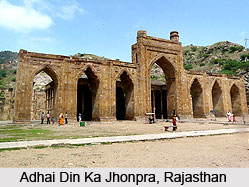
 Mosques in India are not only a place of worship and centre of learning, but also masterpieces on stone depicting love and architectural wonder. India and Islam have a very old company bestowing different ways of life and lending a nourishing colour to the nation. There is a long association of temples in the Indian subcontinent but a deeper look into the architectural outline of the historical land unlocks new panorama of wonder in India. Islam has several worshipping centres or mosques in India devoted to its greatness. These are also some of the most renowned travel destinations.
Mosques in India
Mosques in India mirror a stunning blend of Islamic and native Indian tradition of architecture.
Introduction
Mosques in India are not only a place of worship and centre of learning, but also masterpieces on stone depicting love and architectural wonder. India and Islam have a very old company bestowing different ways of life and lending a nourishing colour to the nation. There is a long association of temples in the Indian subcontinent but a deeper look into the architectural outline of the historical land unlocks new panorama of wonder in India. Islam has several worshipping centres or mosques in India devoted to its greatness. These are also some of the most renowned travel destinations.Advent of Mosques in India
The invasion of Muhammad Ghori laid the foundation stone of Islam in India and subsequently the construction of mosques. Afterwards, the Sultanates and the royal Mughal emperors founded in India the institutionalized Islamic worship. The elegant architectural style of the mosques in India, even if noticeably far eastern, took on subtle Indian nuances, developing into a separate style of its own. The towers of Indian mosques rise high and sustain a belief of equality and justice, and people lift their hands together in a magnificent traditional praise of the Almighty. Extraordinary in overall execution and design, the mosques are differentiated by the utter brilliance of their simplicity and style.
Mosques During Babur
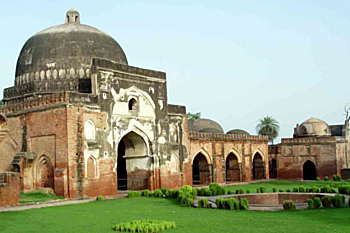 indicate that the mosque was well set into motion, if not finished, by the end of 1527, and its gate, well and garden were completed by 1528. The mosque is not mentioned in literary sources; Babur`s memoirs contain extraordinary blanks for this period and Zain Khan`s work ends abruptly with the events of early 1527. Nevertheless, one can certainly assume that the mosque complex commemorates Babur`s decisive victory over Sultan Ibrahim Lodi at Panipat and thus the Mughal conquest of Hindustan.
Since the structure of garden has disappeared by now, the Panipat mosque`s location within it is not known. However, the building`s enormous size suggests that it, rather than the garden, had dominated the complex. The rectangular prayer chamber, measuring 53.75 by 16.50 metres, is dominated by a large central domed bay flanked on either side by three-bayed triple-aisled side wings. Each bay of the side wings is entered by an arched opening supported on massive piers. Over the mosque`s brick construction is a heavy stucco veneer, reminiscent of that covering much Delhi Sultanate architecture. The northwest and southwest corners of the mosque were marked by octagonal towers crowned by domed pavilions, although only one survives. Each of the mosque`s bays is surmounted by a dome, those over the westernmost aisle being smaller than those on the east. It comes thus as a foregone conclusion that mosques during Babur, with such instances like the one being described in Panipat in Karnal presently, were only just the humble beginnings, which do stress much on the genius and merit of such a man like Babur as an emperor with such less royal treasury and even less assistance! Indeed, it is also an acknowledged fact that Babur`s mosques were taken up in later Mughal times as the exemplary kinds, upon which much of the royal household had assayed to build upon in the religious domain.
Panipat mosque`s large central bay`s qibla (the direction that should be faced when a Muslim prays during Salah) wall, the one oriented toward Mecca, is stone-faced, but elsewhere the veneer on the mosque`s interior is stucco over a brick core. This central bay is the mosque`s focal point, visible even from the outside through the wide entrance. Attention is drawn to the mihrab (a niche in the wall of a mosque that indicates the qibla, that is, the direction of the Kaaba in Mecca and hence the direction that Muslims should face when praying; the wall in which a mihrab appears is thus the "qibla wall) by an epigraph - including the Throne Verse from the Quran, and an historical inscription dated 1527-28 - rendered dramatically in black stone against white marble. This very first instance of a mosque during Babur in such primeval times only heightens the emotion of an admirer amidst such meticulousness of `Mughal-ish` architecture. While the Panipat`s mosque`s chamber itself is a simple domed structure, recalling the Lodi Bara Gumbad built in Delhi`s Lodi Gardens in 1494, the appearance of net pendentives here used only decoratively, evokes a Timurid flavour. Each side wing is divided into two aisles by massive brick piers; the resulting bays are crowned by domes resting on brick pendentives that are covered by a thick stucco veneer, modelled to resemble net squinches, introduced to north India exclusively by the Mughals.
A stone gate stands in the courtyard`s north wall amidst the Panipat`s mosque of Babur in Karnal. It is carved in the tradition of earlier Lodi gates, for example that at the Lodi-period tomb of Khwaja Khizr dated 1522-24 in nearby Sonepat. Most of the enclosure wall has disappeared in contemporary times, but remains suggest that the entire courtyard was walled and that each side had similar gates.
The Panipat mosque`s prayer chamber appears to have been loosely modelled on the type of congregational mosque utilised by the Timurids. It also incorporates features of mosques built by the pre-Lodi sultans in this region. This mosque type, however, was favoured by Babur not because of any earlier Indian associations, but for two rather different reasons. First, it is decidedly different from the single-aisled multi-bayed type, used exclusively by Babur`s immediate predecessors, the Afghan Lodis. Notably at Panipat, the site of this mosque, Babur had defeated the Lodis. Second, it is a type that, although somewhat transformed in the process of Indian translation, had been constructed by Timur, for example in his Bibi Khanum mosque in Samarkand. As the Mughal Babur was the only surviving Timurid ruler ruling in India, it must have been especially important for him to preserve at least a vestige of Timurid architectural forms. Thus one notices here precisely that mosques and its architecture during Babur were an intelligent amalgamation of Persian ancientness and the Delhi Sultanate recentness, both nearly witnessed and recognised by a Mughal Babur.
Two other mosques remain that were constructed by leading nobles following Babur`s orders. Probably these orders were general ones, not commands to erect specific mosques. One of these mosques is at Sambhal, approximately 140 km east of Delhi. It was constructed in 1526 by Mir Hindu Beg, an important noble in the court of both Babur and Humayun. Built a year before Babur`s Kabuli Bagh mosque in Panipat, the Sambhal mosque is the first extant Mughal building in India - also counting as an undisputable mosque construction during Babur and his noblemen`s patronage. The complex is entered through a gate on the east that opens to a large walled courtyard. The prayer chamber, like the one of the Panipat mosque, is rectangular with a large square central bay. Its entrance is set into a high pishtaq, recalling those of Sharqi mosques at Jaunpur. The chamber is flanked on either side by three-bayed double-aisled side wings. A single dome surmounts the central bay and a small flatish dome surmounts each bay of the side wings. The mosque`s pishtaq and other features resembling fifteenth-century Sharqi structures in nearby Jaunpur, suggest a reliance on local artisans and designers.
Even though the Sambhal mosque was renovated at least twice in the 17th century, enough of its original state remains to demonstrate that the plan and general appearance anticipate Babur`s Panipat mosque commenced the following year. The size (40.5 by 12.4 metres), too, anticipates the scale of Babur`s imperial mosque, thus making this mosque at Sambhal the largest one constructed in the Delhi region since Timur`s sack of that city in 1398. This mosque by Babur is situated high on a hill and dominates the city for a considerable distance. According to Hindu lore that was known to the Mughals, the tenth and last incarnation of Vishnu will appear in Sambhal at the end of this era (yuga).
A second mosque probably built in response to Babur`s general orders, not a specific command, stands at Ayodhya, today in Faizabad District, on the banks of the Ghaghara river. Three inscriptions indicate it was constructed by Mir Baqi, a noble, in 1528-29, that is, after the mosques at Sambhal and Panipat. Unlike the other mosques built under Babur`s auspices, this one at Ayodhya is a single-aisled three-bayed kind. It is also considerably smaller than the other two. The central bay`s pishtaq is much higher than the flanking side bays, but all three bays contain arched entrances. Most of the mosque is stucco-covered, over a rubble or brick core, but carved black stone columns from a pre-twelfth-century temple are embedded into either side of the central entrance porch. The Ayodhya mosque - yet another diversified instance of mosques constructed during Babur, is surmounted by three prominent domes.
This site today however is highly charged. Indeed, it needs to be noted that this mosque being described in Ayodhya is historic and legendary as the Babri Masjid as one knows today for much separate religious conflicting reasons. Many claim the Babri Masjid, situated on a hillock, had replaced a temple which Babur had destroyed. Today this mound popularly is considered the birthplace of the Hindu deity Lord Rama, thus answering to the conflicts of a Hindu-Muslim religious division upon such a mosque during Babur`s ancient times in India. An important Mughal chronicler, writing approximately seventy years after the Babri Masjid`s construction, acknowledges Ayodhya`s sanctity as Rama`s dwelling, states nothing about the exact site of Rama`s birth. It is thus difficult to disentangle recent popular passion from historical accuracy in association with Ayodhya`s mosque by Babur.
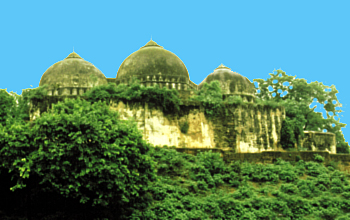 All the same, Ayodhya was a site of great importance to Babur`s Hindu subjects during the Mughal period. The incorporation of older Hindu architectural members prominently displayed on the mosque`s facade, at a period when the reuse of Hindu material was highly unusual, suggests the patron, Mir Baqi, was attempting to make a general statement of Muslim superiority. The Babri Masjid, then, like the others of Babur`s time, appears to be located in an area owned a charged significance. Babur`s own mosque in Panipat was built on the site of Lodi defeat and Mughal victory, while the other two sites were both associated, however loosely, with ancient Hindu tradition. As such, the mosques during Babur with instances like Babri Masjid do incorporate united endeavours of Islamic-Hindu religious constructions, highly unlike in present Indian times.
Babur`s choice of Panipat for a mosque is not difficult to understand. However, the construction of mosques during Babur on sites associated with non-Islamic tradition is less comprehensible, for a ruler who had claimed his right to sovereignty based on his Timurid heritage and Turkish-ness, not on religious grounds. While such rhetoric predominated during his pre-India conquest, once the emperor had established himself permanently in India, Babur had added the establishment of Islam as a mission of his rule. He had referred to Hindus as kafirs, i.e., pagans or infidels and war against his greatest Indian threat, Rana Sangam, was termed jihad or holy war. Shortly after his victory over Rana Sangam, Babur had assumed the title Ghazi, i.e., a warrior dedicated to the cause of Islam and had penned a verse stating his resolve to defeat Hindus and pagans. All such rhetoric followed the long-established practice of Islamic rulers conquering non-Islamic lands. The placement of the Ayodhya and Sambhal mosques by Babur`s nobles in generally charged locales was well in keeping with the spirit of Babur`s new `legitimising rhetoric`.
Babur had ruled Hindustan for less than five years before his demise in December, 1530. Although the Mughal emperor had ruled for only a short time, this man was that individual who had introduced Timurid architectural concepts and most importantly, the rationally organised four-part paradise garden. This latter in particular was to become a Mughal trademark, which very much was incorporated within the mosques during Babur as well as, during his generations to come to rule a Mughal India.
Mosques During Aurangzeb
 Mughal emperor Aurangzeb was virtually that last ruler of the Mughal Empire, who would have governed in a manner, which already had begun to show signs of downfall and degeneration. Mughal architecture under Aurangzeb was an instance of being austere and minimal in each attempts. Indeed, being the son of Shah Jahan, Aurangzeb was much anticipated to balance the scale of perfection in both terms of administration and architecture - the current emperor was hugely unsuccessful in both. Though known to possess an out-and-out religious bent of mind, the construction of mosques during Aurangzeb was quite a humble and neglected an attempt. Aurangzeb`s mosques are not much acknowledged in public in present Indian times, who suddenly had shifted his capital from Agra to the Deccan.
Early during emperor Aurangzeb`s reign, the harmonious balance of Shah Jahani-period architecture was hugely rejected in favour of an increased sense of spatial tension with an emphasis on height. Stucco and other less expensive materials emulating the marble and inlaid stone of earlier periods cover built surfaces. Immediately after Aurangzeb`s accession, the use of forms and motifs such as the baluster column and the bangala canopy, earlier reserved for the ruler alone, are found on non-imperially sponsored monuments. This suggests both that there was relatively little imperial intervention in architectural patronage and that the vocabulary of imperial and divine symbolism established by Shah Jahan was grossly devalued by Aurangzeb, answering for the difference of the religious construction of mosques under Shah Jahan and mosques during Aurangzeb. At the same time architectural activity by the nobility had proliferated as never before, suggesting that they were eager to fill up the role previously dominated by the emperor, which also can be understood in the long run of mosques which were developed during and under Aurangzeb.
Contemporary histories relate that Aurangzeb had repaired numerous older mosques. The frequent mention of his repair and construction of mosques suggests that this was the architectural enterprise he most highly had valued. Aurangzeb was attentive to the maintenance of mosques. Once he had ordered a lamp for a mosque in an old outpost and on another occasion he had written to his prime minister (wazir) to express dismay that the carpets and other furnishings of the palace were in better condition than those of the palace`s mosque. Such information suggests the emperor`s spiritual links were indeed profound. The restoring of mosques during Aurangzeb during the beginning of his turbulent rule, responds to the problems.
After capturing Maratha forts, Aurangzeb often is known to have ordered the construction of a mosque. In part, they were erected from religious fervour and in part they served as a symbol of Mughal conquest. These mosques by Aurangzeb were probably constructed quickly of locally available materials. Other mosques he had built had very much filled a genuine need. For example, in Bijapur city the Mughal emperor had erected an Idgah since there was no suitable one there. In the Bijapur palace he had added a mosque for his personal use.
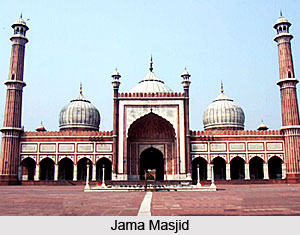 Shortly after his accession, Aurangzeb had ordered a small marble chapel, recognised today as the Moti or Pearl mosque, to be constructed inside the Shahjahanabad fort (the Red Fort of contemporary times in Old Delhi). Shah Jahan had erected no mosque inside this fort, using instead the large Jami mosque (the historic and colossal Jama Masjid nearby the Red Fort) for congregational prayers. Aurangzeb, however, had desired a mosque close to his private quarters. Five years under construction, his exquisite Moti mosque was completed in 1662-63, at considerable personal expense. It is enclosed by red sandstone walls that vary in thickness to compensate for the mosque`s angle, necessary to orient the building towards Mecca and at the same time to align it with the other palace buildings. Indeed, if one witnesses the Moti Masjid today, it comes as a brilliant dazzling instance by the Diwan-i-Am and Diwan-i-Khas of Red Fort. Entered on the east, the compound consists of a courtyard with a recessed pool and the mosque building.
Although the Moti mosque and its courtyard are small, approximately 9 by 15 metres internally, the high walls, over which nothing can be seen, emphasise the sense of compact verticality creating a sense of spatial tension - a characteristic of Aurangzeb`s architecture in relation to mosques. This is further underscored by the three bulbous domes on constricted necks, the central one rising above the others. These domes were originally gilt-covered copper that resembled gold, drawing attention to the height. They later were replaced with white marble domes, still in place.
Closely modelled on the Nagina mosque, the prayer chamber of Aurangzeb`s Moti mosque, entered through three cusped arches, is divided into two aisles of three bays each with an ancillary corridor on the north for use by the court ladies. The marble surfaces here and on the courtyard walls are more ornately rendered than those on Shah Jahan`s mosques. Here arabesque foliate forms - unique during this period to imperial palace mosques - cusped arches and even architectural members are elegantly carved. They serve as a contrast to the much more sedate ornamentation of Shah Jahan`s religious edifices - a much surprising comparison between this father-son duo, who were almost at loggerheads with regards to Mughal architecture and its upholding, at times the mosques of Aurangzeb also surpassing Shah Jahan`s!
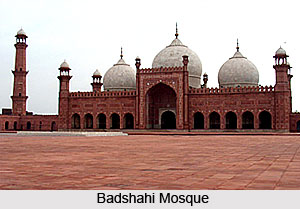
Aurangzeb`s Badshahi mosque also reveals an ornateness and emphasis on spatial tension seen in the Moti mosque, but on a much larger scale. Adjoining the Lahore Fort, the Badshahi mosque remains the largest mosque in the subcontinent (with India and Pakistan very much united in those times of Mughal Empire). An inscription over the east entrance gate indicates that it was built in 1673-74 by Aurangzeb under the supervision of Fidai Khan Koka, the emperor`s foster brother.
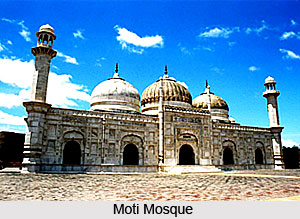 Aurangzeb`s mosques built in close association with palaces - primarily those dating to the time of his father, Shah Jahan - are considerably more ornate as opposed to the mosques of Shah Jahan`s reign. Their decor, however, is inspired by Shah Jahan`s palace architecture. Being a father, Shah Jahan was successful enough to influence his son deeply in terms of Mughal architectural splendour, which are thoroughly enlightened in the mosques during Aurangzeb. Ornateness formerly reserved for palaces is now found in mosques, which to Aurangzeb were the most significant architectural type. As palaces were less important to him, he had curtailed some of the earlier court ritual; for example, during his eleventh regnal year, the emperor had abolished the practice of jharoka. Significantly after this time, his most elaborate mosque, the Badshahi mosque, was built. For Aurangzeb, personal devotion and the ritual of prayer were more meaningful than courtly ritual such as the viewing of the emperor at the jharoka that had developed to bolster the semi-divine character of earlier Mughal rulers.
By contrast to the ornateness of Aurangzeb`s palace mosques is the impressive red sandstone Idgah at Mathura, also certainly sponsored by Aurangzeb. This Idgah, a mosque meant for the annual Id celebration, had replaced the temple of Keshava Deva, destroyed in 1669-70 by Aurangzeb`s command to avenge the on-going insubordination by Jats. This very factor of the Mughal ruler, of devaluing his Hindu religious builds and replacing them with Islamic architecture, had made him grossly unpopular and hated amongst his most subjects. As such, mosques during Aurangzeb are not much under discussion in present times, with much of information lost in timeline
This mosque bears considerably less ornamentation than do the other two built by Aurangzeb, but they were associated with imperial palaces. The Mathura Idgah, however, was situated nowhere near a palace. Rather, it was built at Mathura, a city then of secondary importance, on top of a demolished temple, to remind rebel forces that non-Muslims would be tolerated only so long as Mughal authority was obeyed. Perhaps such mosques during Aurangzeb and its adherence to Indo-Islamic Mughal architecture had sown the seeds to such Hindu-Muslim conflict in relation to religious builds in holy and Hindu-dominated places like Mathura, considered the abode of Lord Krishna, which also was very much visible during Babur years earlier and his construction of the Babri Masjid in Ayodhya.
Mosques of Northern India
 Mosques of Northern India serve as the religious centres for the prevalent Islam in this region of the country. Built in ancient times, these mosques have still retained their elegance and charm owing to the excellent care that had been bestowed on them. The mosques are adorned with beautiful Islamic elements and inscriptions and are popular pilgrimage centres for the people of the whole country.
Mosques of Punjab : Famous mosques of Punjab enlist Moorish mosque situated in Kapurthala. The mosque was built during the rule of Jagatjit Singh, the last Maharaja of Kapurthala. The temple has a beautiful architecture with its inner wall adorned with artworks from the Mayo School of Arts, Lahore. Another mosque is Mubarak Mosque located in Qadian. It was established by Mirza Ghulam Ahmad in 1882.
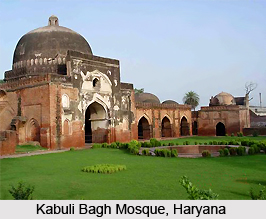
Mosques of Haryana : Haryana also house a number of mosques. Aliwardi Masjid is an ancient mosque built almost 200 years ago. Situated near Gurgaon, the mosque was built by Nawab Aliwardi Khan who also owes the credit of finding the Aliwardi village. Another mosque is Humayun`s Mosque built during the reign of Humayun, Mughal Emperor. Kabuli Bagh Mosque was built by another Mughal Emperor, Babur. It was erected in 1526 AD after the Mughal victory over Sultan Ibrahim Lodi in First Battle of Panipat. Lat ki Masjid is an ancient mausoleum built by Feroz Shah Tughluq. The mosque is a beautiful example of Tughluq architecture. Magnificent stone pillars and geometrical and floral motifs are the most attractive features of this mosque. Pathar Masjid was built in 17th century and is renowned for its fluted minarets made of red sandstone attached to the back wall of the mosque.
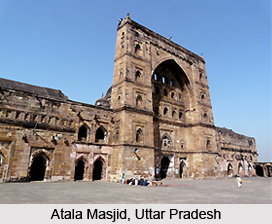 Mosques of Uttar Pradesh : Some of the most prominent mosques of the country are also located in Uttar Pradesh. Bara Imambara, located in Lucknow, was constructed by the Nawab of Lucknow, Asaf-ud-Daulah, in the year 1784. It is one of the most admirable monuments of Lucknow. Jama Masjid is one of the largest mosques of the country. It is situated in Agra, opposite to Agra Fort. It was built in 1648 by Shah Jahan in the honour of his favourite daughter Jahanara Begum. Atala Masjid is a 15th century mosque situated in Jaunpur, famous for its ancient artefacts. Jami Masjid is also located in Jaunpur . It was built by Hussain Shah. Gyanvapi Mosque belongs to the Mughal period built by the Mughal emperor Aurangzeb. In Agra, Moti Masjid stands exhibiting architectural wonders. The mosque was built by Shah Jahan. Sir Syed Masjid is situated in Aligarh. The architecture of the mosque is stunning, attracting a number of tourists.
Mosques of Jammu and Kashmir : Islam is prevalent in Jammu and Kashmir and a number of mosques have been established in this region too. In Srinagar, Jama Masjid is situated which is the most significant mosque of this region. The mosque was built by Sultan Sikandar in 1400 AD. Hazratbal Mosque is located along the bank of Dal Lake. The architecture of the mosque represents a blend of Kashmiri and Mughal styles of architecture. Charar-i-Sharief is an ancient mosque built around 600 years ago. Other mosques of Jammu and Kashmir enlist Baba Reshi Shrine, Ziarat Baba Buddan Shah, Patthar Masjid, Masjid of Akhund Mullah, Khanqah-e-Mola etc.
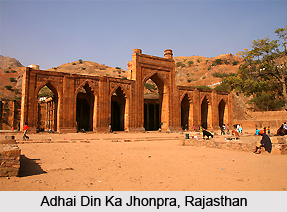 Mosques of Rajasthan : Impact of Islam can also be seen in Rajasthan through various mosques. Dargah of Khwaja Moinuddin Chisti is one of the most important Muslim pilgrimage centres in the country. It was built by the Mughals and is symbolic of secularism. In Ajmer, Jama Masjid is located which is considered as the most stunning mosque of Rajasthan. It is in fact situated inside the campus of Dargah of Ajmer and enhances the beauty of the Dargah manifold. Adhai Din ka Jhonpra is popular for its splendid architecture which is a fusion of Indo-Islamic styles.
The architecture that frames the Mosques of Northern India is a visual treat. Some of these mosques exhibit a fusion of Hindu and Islamic styles of architecture which enhanced the beauty even more. Different artistic elements have been used to embellish the interiors of the mosques. Apart from being the religious centres, they also stand as the monuments of national importance as they immensely contribute to the national and cultural heritage of the country. These mosques also serve as famous tourist destinations.
Mosques of Western India
 Islam had spread throughout the country since ages ago and a number of mosques had been established in different parts of India over years. Mosques of Western India are the beautiful testaments of the fact that Muslim cultures and traditions are highly prevalent in the western region of the country. These mosques have been well maintained and some of the very ancient ones stand as prominent monuments till date.
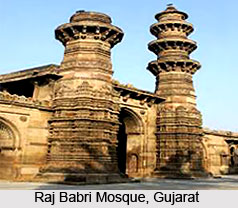
Mosques of Gujarat : Several mosques are situated in Gujarat. Sultan Ahmed Shah mosque is one of the most ancient mosques of the city built in 1414 AD by Sultan Ahmed Shah, from which the mosque takes its name. It is located towards the left of the Bhadra Fort. Another mosque of this state is Siddi Bashir Mosque. The mosque is famous for its unique architecture where the minarets of the mosque, on shaking, vibrate and become stable immediately after that. Raj Babri Mosque is another ancient mosque established in 15th century during the reign of King Ahmed Shah. It is well known for its shaking minarets. Rani Rupmati Mosque, constructed by Sultan Mehmud Beghara, is located in Ahmedabad. The king named this mosque in the honour of his Hindu wife Rupmati. In Ahmedabad, another mosque is situated known as Rani Sipri Mosque, constructed in 1514 AD by Rani Sipri. The mosque exhibits an amalgamation of Islamic and Hindu architecture. Mahabat Maqbara was built in 1892 and is famous as the best testament of Indo-Islamic style of architecture. Another popular mosque of Gujarat is Jami Masjid which is known for its architecture where 140 pillars support the ceiling. It is an ancient mosque of 19th century. Sidi Saiyyed Mosque is also located in Ahmedabad. It was established in 1573 and is considered as the most beautiful mausoleum of the state. Its main attraction is the carved stone latticework windows. Other mausoleums of Gujarat include Bawaman Mosque, Mai Puri Masjid, Ratan Bai Masjid, Sarkhej Roza etc.
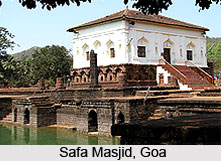 Mosques of Goa : Although Goa is believed to be a Christians state, it also houses a number of mosques. Safa Masjid, located in Ponda Taluka, is one of the oldest and biggest mosques of Goa. It was constructed by Ibrahim Adilshan of Bijapur in 1560. Jama Masjid is situated in Sanguem near Margao. Another Jama Masjid is located in Panaji and is the oldest mosque of this region. Built in 18th century, the interior of the mosque is adorned with black and white marbles having Islamic designs. Namazgah mosque was established by Prince Akbar as a celebration of their conquest over Catholic Goa. Surla Tar Mosque is an ancient mosque located in Surla village. It was constructed by Ismail Adilshah in 1560 AD. Another famous mausoleum of Goa is Safa Masjid situated in Shahpur district. This elegant structure was built by Ibrahim Adil Shah who was the Sultan of Bijapur in the year 1560. It is embellished with Islamic arches on the walls of the mosque.
Mosques of Maharashtra : Maharashtra also enlists a number of mosques. Jama Masjid, located in Mominpura of Nagpur, is the biggest mausoleum of this region. Shah Ganj Masjid is considered as one of the most beautiful mosque of the country having amazing architecture. Another mosque of the state is Dwarkamai Masjid. It is famous for being the place where Sai Baba had stayed for about 60 years. A sacred fire, also known as Dhuni, always keeps on burning in the mosque which was once lit by Sai Baba. Masjid of Biloli is an ancient stone mausoleum built more than 300 years ago. Gharib Nawaz Mosque is also located in Nagpur. The mosque has an exquisite marble interior having Islamic arches with calligraphic verses of Quran.
These mosques represent excellent architecture and amazing artistry. Some of the mosques have a blend of Hindu and Islamic styles of architecture. Apart from being the popular centres for spiritually, these mosques also attract a sea of tourists from all over the world.
Mosques of Eastern India
Mosques of Eastern India are the evidences of the prevalent Islamic culture in the eastern region of the country. Since time immemorial a number of mosques emerged in the states of eastern India. Exquisite architecture adorns these monuments and in addition to a number of Muslim pilgrims, these mosques also allure a sea of tourists.
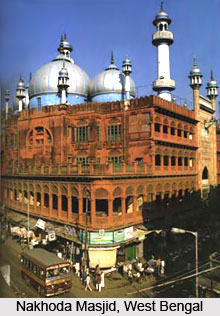
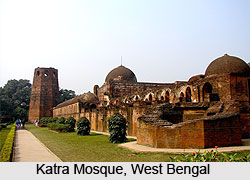 Mosques of West Bengal : Islam is widely spread in the state of West Bengal which houses a number of mosques. Adina Mosque, situated in Malda district, was once considered as the largest mausoleum of the country. It was built by Sikandar Shah in 14th century. Hooghly Imambara is another famous mosque situated in Hooghly which was built by Muhammad Mohsin. Its construction started in 1841 and completed in 1861. Beautiful hanging lanterns, candles and marbles adorn the interior of the mosque. Nakhoda Masjid, located in Burrabazar of Kolkata, was built in 1926. Brilliant artistry can be witnessed in the interior of the mosque. Another mosque in West Bengal is Kherur Mosque situated in Sagardighi. This elegant mosque was established by Rafat Khan during the rule of Sultan Hussain Shah in 15th century. Tipu Sultan Shahi Mosque is one of the most renowned mausoleums of Kolkata. Constructed by the youngest son of Tipu Sultan, Prince Ghulam Mohammed, in 1832, it is a significant structure for the historical and cultural heritage of the country. Other mosques of West Bengal are Katra mosque, Footi mosque, Nakhoda mosque, Baro Shona masjid etc.
Mosques of Bihar : A few famous mosques are also located in Bihar. Pathar Ki Masjid is a well known mausoleum situated on the bank of Ganga River. In 1962, the mosque was built by Parvez Shah who was the son of Mughal emperor Jahangir. It has a stone architecture and is an important landmark of the city where it is situated. Another mosque of this state is Sher Shah Suri Masjid situated in Patna and built by Sher Shah Suri. It is a fine example of Afghan architecture.
 Mosques of Orissa : Several elegant mosques are situated in Orissa which also serve as famous tourist spots. The mosques of Orissa include Capital Mosque, Bhubaneswar; Jama Masjid, Cuttack; Kadam Rasul (Jagti), Dhamnagar; Kazi Rafiuddin Baba (Kazi Baba), Quazisahi, Dhamnagar; Shah Mohammad Hanif (Baghu Baba), Munsipatna, Dhamnagar; Shah Saheb Baba, Nazar Sahi, Dhamnagar; Gazi Baba, Pathan Mohalla, Dhamnagar; Molana Shaduddin Ahmed (Molana Saheb Baba), Molnasahi, Dhamnagar etc.
Mosques of Jharkhand : Muslim culture is also prevalent in the state of Jharkhand and mosques of this state serve this religion greatly. Jami Masjid is an ancient mosque situated in Sahebganj. It was constructed in 1592 AD during the rule of Raja Maan Singh. The mosque was once the most beautiful and elegant structure of the state.
Mosques of Eastern India stand as significant monuments and greatly enrich the national heritage of the country. A combination of different architectural styles can be seen in these mosques and exquisite artistry comprising of Islamic elements are their most attractive features. Many of these churches also serve as prominent landmarks in the respective cities.
Mosques of West Bengal : Islam is widely spread in the state of West Bengal which houses a number of mosques. Adina Mosque, situated in Malda district, was once considered as the largest mausoleum of the country. It was built by Sikandar Shah in 14th century. Hooghly Imambara is another famous mosque situated in Hooghly which was built by Muhammad Mohsin. Its construction started in 1841 and completed in 1861. Beautiful hanging lanterns, candles and marbles adorn the interior of the mosque. Nakhoda Masjid, located in Burrabazar of Kolkata, was built in 1926. Brilliant artistry can be witnessed in the interior of the mosque. Another mosque in West Bengal is Kherur Mosque situated in Sagardighi. This elegant mosque was established by Rafat Khan during the rule of Sultan Hussain Shah in 15th century. Tipu Sultan Shahi Mosque is one of the most renowned mausoleums of Kolkata. Constructed by the youngest son of Tipu Sultan, Prince Ghulam Mohammed, in 1832, it is a significant structure for the historical and cultural heritage of the country. Other mosques of West Bengal are Katra mosque, Footi mosque, Nakhoda mosque, Baro Shona masjid etc.
Mosques of Bihar : A few famous mosques are also located in Bihar. Pathar Ki Masjid is a well known mausoleum situated on the bank of Ganga River. In 1962, the mosque was built by Parvez Shah who was the son of Mughal emperor Jahangir. It has a stone architecture and is an important landmark of the city where it is situated. Another mosque of this state is Sher Shah Suri Masjid situated in Patna and built by Sher Shah Suri. It is a fine example of Afghan architecture.
Mosques of Orissa : Several elegant mosques are situated in Orissa which also serve as famous tourist spots. The mosques of Orissa include Capital Mosque, Bhubaneswar; Jama Masjid, Cuttack; Kadam Rasul (Jagti), Dhamnagar; Kazi Rafiuddin Baba (Kazi Baba), Quazisahi, Dhamnagar; Shah Mohammad Hanif (Baghu Baba), Munsipatna, Dhamnagar; Shah Saheb Baba, Nazar Sahi, Dhamnagar; Gazi Baba, Pathan Mohalla, Dhamnagar; Molana Shaduddin Ahmed (Molana Saheb Baba), Molnasahi, Dhamnagar etc.
Mosques of Jharkhand : Muslim culture is also prevalent in the state of Jharkhand and mosques of this state serve this religion greatly. Jami Masjid is an ancient mosque situated in Sahebganj. It was constructed in 1592 AD during the rule of Raja Maan Singh. The mosque was once the most beautiful and elegant structure of the state.
Mosques of Eastern India stand as significant monuments and greatly enrich the national heritage of the country. A combination of different architectural styles can be seen in these mosques and exquisite artistry comprising of Islamic elements are their most attractive features. Many of these churches also serve as prominent landmarks in the respective cities.
Mosques of Southern India
Islam had emerged as a prominent religion in the country since ages ago. Muslim culture and tradition has been widely spread in different parts of India and Mosques of Southern India have sheltered the spiritual needs of a number of Muslim pilgrims. Over years, the mosques have been preserved and maintained as important monuments and attract a plethora of tourists irrespective of caste, creed and religion.
 Mosques of Andhra Pradesh : In Andhra Pradesh, a number of mosques are situated. Jama Masjid, in Hyderabad, is one of the most prominent landmarks of the city. This ancient mosque is located near the famous monument Charminar. It was built by Quli Qutub Shah in 1857. Mecca Masjid is also situated in Hyderabad. It is popular for its amazing architecture. Another mosque in the state is Hazarath Bal Mosque located in Vijayawada. It is one of the most famous pilgrimages for the Muslims of the whole country. Begumpet Mosque, in Hyderabad, was built in 1906. It exhibits magnificent architecture of Saracen style adorned with geometric patterns and intricate carvings. Village Mosque is also a famous mausoleum of the state. The mausoleum was built on the place where a plate with Muslim inscriptions was found. Bada Pahad Dargah attracts a sea of devotees from all over the country. Another magnificent mosque of Andhra Pradesh is Toli Masjid which is about 300 years old. The mosque was built in 1670 in the reign of Sultan Abdullah and represents excellent architecture.
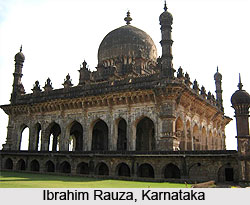
Mosques of Karnataka : Karnataka also enlist a number of mosques. Ibrahim Rauza is a famous mausoleum of the state constructed by Ibrahim Adil Shah II. Built with beautiful architecture, the interior of the mosque houses beautiful arches embellished with inscriptional, arabesque and floral traceries. Jumma Masjid is one of the most ancient mosques of Bangalore. It exhibits excellent architecture and is decorated with ornate granite pillars. Jamia Masjid, also situated in Bangalore, was built in 1940. The mosque is dedicated to Tipu Sultan and is built with white marble of Rajasthan. Masjid E Azam is one of the most sacred place for Muslims, located in Mysore. The mosque is dedicated to the followers of the Markaz Ahle Sunnath Wal Jamath sect of Islam. Most of the structure is painted in green and exhibits beautiful architecture. Other mosques of this state include Kudroli Mosque, Noor Masjid, Sultani Masjid, Khalifa Masjid etc.
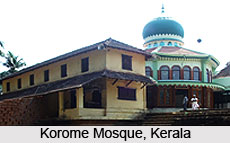 Mosques of Kerala : Juma Masjid, located near Kumarakom, is one of the most famous mosques of Kerala. It is the oldest mosque of the country, built more than 1000 years ago. Kaduvayil Thangal Dargah is another famous religious centre for Muslims. Shrine of a famous local Muslim saint known as Kaduvayil Thangal is situated here. Varambetta Mosque is located in Wayanad district and is the oldest mosque of the district. The mosque was built about 300 years ago. Another renowned mosque is Pattambi Mosque. It is famous for the annual feast arranged at the shrine known as Pattambi Nercha. Kaduvayil Juma Masjid is situated in Varkala. It is dedicated to a Muslim saint, Kaduvayil Thangal and is considered as one of the most significant Sunni pilgrimage centre. Korome Mosque Wayanad District is an ancient mosque built around 300 years ago. Traditional architecture adorns this beautiful mosque constructed by the local Nair community. Other mosques in Kerala enlist Malik Dinar Mosque, Mampuram Mosque, Mishkal Mosque, Shahre Mubarak Grand Masjid and many more.
Mosques of Tamil Nadu : Several mosques stand in the state of Tamil Nadu as the prime religious centres of Muslims. Athar Jamad Masjid is located in Coimbatore. It is an old mosque built about 100 years old. Thousand Lights Mosque, located in Chennai, was built by Nawab Umdat-ul-Umrah in the year 1810. It is one of the biggest mosques of India. The mosque is very important for the Shia Muslims. Kazimar Big Mosque is situated in Madurai and is a renowned place of worship for Muslims.
Mosques of Puducherry : Jamai Mosque is a famous mosque of Puducherry. Beautiful architecture and picturesque background make the place a famous tourist spot. Another ancient mosque of Puducherry is Meeran mosque which was built about 350 years ago. It was built by Arcod Navab in gothic Islamic Architecture. Kuthbha mosque is considered as the first mosque of this region. Mulla Moahmed Mosque is another significant mausoleum of Puducherry and is well known for its architecture.
Apart from being the religious centres these mosques are also popular for their intricate and mesmerising architecture. An amalgamation of varied architectural styles, decorative elements, and fine artistry make these mosques a delightful visit. The Mosques also contribute immensely to the cultural and national heritage of the country.
Mosques of Andhra Pradesh : In Andhra Pradesh, a number of mosques are situated. Jama Masjid, in Hyderabad, is one of the most prominent landmarks of the city. This ancient mosque is located near the famous monument Charminar. It was built by Quli Qutub Shah in 1857. Mecca Masjid is also situated in Hyderabad. It is popular for its amazing architecture. Another mosque in the state is Hazarath Bal Mosque located in Vijayawada. It is one of the most famous pilgrimages for the Muslims of the whole country. Begumpet Mosque, in Hyderabad, was built in 1906. It exhibits magnificent architecture of Saracen style adorned with geometric patterns and intricate carvings. Village Mosque is also a famous mausoleum of the state. The mausoleum was built on the place where a plate with Muslim inscriptions was found. Bada Pahad Dargah attracts a sea of devotees from all over the country. Another magnificent mosque of Andhra Pradesh is Toli Masjid which is about 300 years old. The mosque was built in 1670 in the reign of Sultan Abdullah and represents excellent architecture.
Mosques of Karnataka : Karnataka also enlist a number of mosques. Ibrahim Rauza is a famous mausoleum of the state constructed by Ibrahim Adil Shah II. Built with beautiful architecture, the interior of the mosque houses beautiful arches embellished with inscriptional, arabesque and floral traceries. Jumma Masjid is one of the most ancient mosques of Bangalore. It exhibits excellent architecture and is decorated with ornate granite pillars. Jamia Masjid, also situated in Bangalore, was built in 1940. The mosque is dedicated to Tipu Sultan and is built with white marble of Rajasthan. Masjid E Azam is one of the most sacred place for Muslims, located in Mysore. The mosque is dedicated to the followers of the Markaz Ahle Sunnath Wal Jamath sect of Islam. Most of the structure is painted in green and exhibits beautiful architecture. Other mosques of this state include Kudroli Mosque, Noor Masjid, Sultani Masjid, Khalifa Masjid etc.
Mosques of Kerala : Juma Masjid, located near Kumarakom, is one of the most famous mosques of Kerala. It is the oldest mosque of the country, built more than 1000 years ago. Kaduvayil Thangal Dargah is another famous religious centre for Muslims. Shrine of a famous local Muslim saint known as Kaduvayil Thangal is situated here. Varambetta Mosque is located in Wayanad district and is the oldest mosque of the district. The mosque was built about 300 years ago. Another renowned mosque is Pattambi Mosque. It is famous for the annual feast arranged at the shrine known as Pattambi Nercha. Kaduvayil Juma Masjid is situated in Varkala. It is dedicated to a Muslim saint, Kaduvayil Thangal and is considered as one of the most significant Sunni pilgrimage centre. Korome Mosque Wayanad District is an ancient mosque built around 300 years ago. Traditional architecture adorns this beautiful mosque constructed by the local Nair community. Other mosques in Kerala enlist Malik Dinar Mosque, Mampuram Mosque, Mishkal Mosque, Shahre Mubarak Grand Masjid and many more.
Mosques of Tamil Nadu : Several mosques stand in the state of Tamil Nadu as the prime religious centres of Muslims. Athar Jamad Masjid is located in Coimbatore. It is an old mosque built about 100 years old. Thousand Lights Mosque, located in Chennai, was built by Nawab Umdat-ul-Umrah in the year 1810. It is one of the biggest mosques of India. The mosque is very important for the Shia Muslims. Kazimar Big Mosque is situated in Madurai and is a renowned place of worship for Muslims.
Mosques of Puducherry : Jamai Mosque is a famous mosque of Puducherry. Beautiful architecture and picturesque background make the place a famous tourist spot. Another ancient mosque of Puducherry is Meeran mosque which was built about 350 years ago. It was built by Arcod Navab in gothic Islamic Architecture. Kuthbha mosque is considered as the first mosque of this region. Mulla Moahmed Mosque is another significant mausoleum of Puducherry and is well known for its architecture.
Apart from being the religious centres these mosques are also popular for their intricate and mesmerising architecture. An amalgamation of varied architectural styles, decorative elements, and fine artistry make these mosques a delightful visit. The Mosques also contribute immensely to the cultural and national heritage of the country.
Recently updated articles in Temples of India
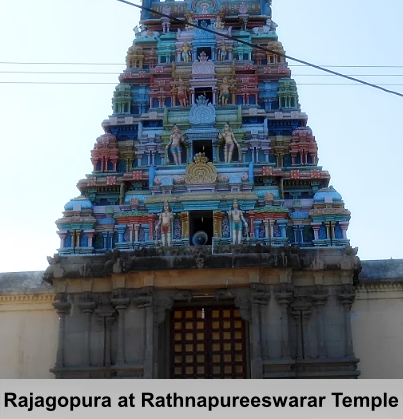
Rathnapureeswarar Temple
Rathnapureeswarar Temple in Tiruvarur district, Tamil Nadu, is a revered Shaivite shrine among the Paadal Petra Sthalams. Dedicated to Lord Shiva, it...
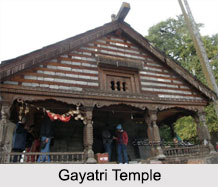
Gayatri Temple, Sirmaur
Gayatri Temple is located in Sirmaur district, Himachal Pradesh. Gayatri Temple is a sacred shrine that belongs to the medieval age.
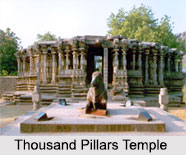
Thousand Pillars Temple
Thousand Pillars Temple, Andhra Pradesh possesses 1000 pillars built by the Kakatiya ruler Rudra Deva during 1163 AD and is adorned with beautiful scu...
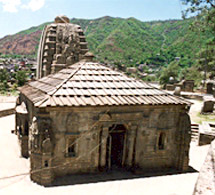
Triloknath Temple, Mandi District
Triloknath Temple is built in the Shikhara style of architecture, situated in Mandi, HP.

Shiv Temple at Mooni, Jammu & Kashmir
Ideally seated at the Billawar taluk of Kathua, Shiv Temple is a holy shrine.
Related articles in Temples of India
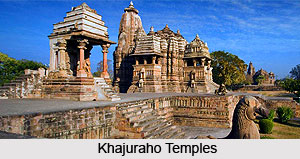
Khajuraho Temples
Khajuraho Temples are known the world over for their beauty and architectural construction. This group of temples is situated in the central Indian st...
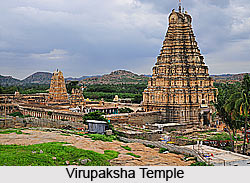
Temples In Hampi
Temples in Hampi are the manifestations of rich religious beliefs and architectural and sculptural abundance.
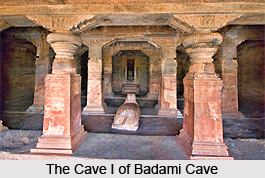
Badami Cave Temples
The Badami Cave Temples, an exemplary production of Indian architecture, are situated in the town of Badami.
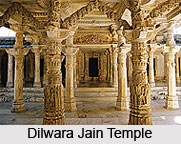
Temple Architecture During Rajput Period
Temple architecture during the Rajput period was inclined to the aspect of Bhakti. Rajput kings encouraged this art which is reflected in the grandeur...
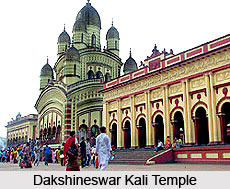
Medieval Temples of India
Medieval temples of India vary from each other due to the style and architecture. The impact of the prevalent kingdom is prominent in the style of bui...