


 Indian Marble Sculptures bear the excellent style and patterns of the finest craftsmanship that are achieved with quality. They provide an eloquent glimpse of strikingly attractive, versatile sizing of beautiful artistic designs and craftsmanship. The finest marbles used for sculpture does not contain stains. But some of natural stains are seen in the sculpture, which the sculptor skilfully incorporates into the sculpture. Indian Marble Sculptures bear the excellent style and patterns of the finest craftsmanship that are achieved with quality. They provide an eloquent glimpse of strikingly attractive, versatile sizing of beautiful artistic designs and craftsmanship. The finest marbles used for sculpture does not contain stains. But some of natural stains are seen in the sculpture, which the sculptor skilfully incorporates into the sculpture.
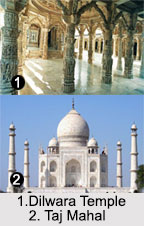
History of Indian Marble Sculptures The marble carving is the oldest art form concerning the formation of three dimensional forms from marble. Before the art of painting, the art of carving the shapes from the stones was started. There are records in the history stating that the art of carving statues and sculptures subsisted from the ancient times. Famous Indian Marble Sculptures Following are the Famous Indian Marble Sculptures: Dilwara Temple: Dilwara Jain Temples are one of the most outstanding and tantalizing marble stone cutting work of the temple and it is one of the finest Jain temples in the world over, known for its amazing architecture and wonderful marble stone carvings. There are total five shrines in these temples. All shrines are built with the help of white marble stones. Around the large courtyard of temples, numerous small shrines are seen. Every small shrine is employing a beautiful image of the tirthankaras with a series of elegantly carved pillars, giving rich look from the entrance to the courtyard. It is believed that this artwork was constructed during 11th and 13th centuries AD. In later period, many Hindu temples were carved with marble. The interiors of all these temples are covered with delicate design or religious symbols. Even Sanchi is famous for the Grand Stupa built by king Ashoka and there are total four gateways that were carved intricately in marble. The two richly carved pillars, rise to be crowned by carved lions, elephants and dwarfs, from these the famous is Ashoka lions, the official seal of India. Shah Jahan’s Works: As per Historical evidences the art of marble sculpture reached at the peak during the Mughal rule. In Mughal dynasty, Shah Jahan's reign is marked for monumental Taj Mahal architectural achievements. He initiated the most important architectural change in the form of the use of marble in preparation of monuments or tombs instead of sandstone. Thus, the use of marble in building temples & palaces is very common in Rajasthan State. He replaced the Red Fort structure made up with red stone with marble buildings such as the Diwan-i-Am, the Diwan-i-Khas and the Moti Masjid. He also built the black marble pavilion at the Shalimar Gardens in Srinagar and a white marble palace in Ajmer. Apart from the marble carvings one should also admire the intricacy of marble inlay work on various architectural marvels constructed by Mughals like Taj Mahal or buildings within Red Fort of Agra. Marble deposits are most prevalent in Rajasthan and Gujarat. They are also found in Andhra Pradesh, Madhya Pradesh, Jammu and Kashmir, Haryana and Maharashtra. The most popular marble sculptures in India are those of Hindu Gods and Goddesses. These Hindu statues are to be found in temples, as well as in spiritual shrines at home. They are also well-liked as attractive items. Statues of mythological figures and saints are also crafted in marble. Marble is also used to carve Buddhist statues and Christian figures. |
| |||



Indian Marble Sculptures
| Indian Marble sculptures are mostly used for the religious purposes in India. Marble is used in preparing idols of Gods and Goddesses. |
| ||||||||||||||||||||||||||||

