 Mangrove ecoregions are not very rich in species but play a crucial role as a transition habitat from the marine to freshwater and terrestrial systems. They provide shelter to numerous species of vertebrates and invertebrates that live and reproduce among the knotty mass of the mangrove roots. These species depend on these mangroves for refuge and survival.
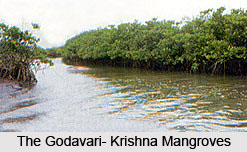
The Godavari- Krishna mangroves are a mangrove ecoregion, occupying India`s southeastern or Coromandel Coast. Spread over an area of 7,000 square kilometers (2,700 square miles) it covers
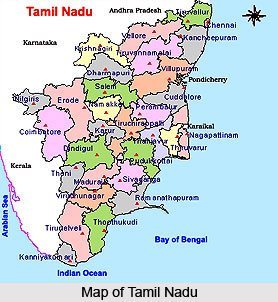
 the state of Orissa in the north to Tamil Nadu in the south in alternating pockets. The largest mangrove community in the ecoregion lies in the Godavari - Krishna delta in Andhra Pradesh. Point Calimere in Tamil Nadu, Pulicat Lake in Andhra Pradesh and Tamil Nadu and the Bhitarkanika Mangroves and the Chilika Lake in Orissa are the other mangroves communities found in the region.
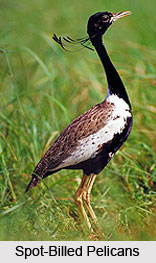
The main variety of trees found here are Avicennia marina, Suaeda spp, Rhizophora spp. and Bruguiera spp. One hundred and forty species of birds inhabit the forests including some of the endangered species like the Lesser Florican and aquatic birds such as flamingoes, spot-billed pelicans, spoonbills and painted storks. It is also an important spawning ground for fish fry, shrimp, crabs and other invertebrates. Crocodiles, monitor lizards, hermit crabs, fiddler crabs, mudskippers are also found in the region.
the state of Orissa in the north to Tamil Nadu in the south in alternating pockets. The largest mangrove community in the ecoregion lies in the Godavari - Krishna delta in Andhra Pradesh. Point Calimere in Tamil Nadu, Pulicat Lake in Andhra Pradesh and Tamil Nadu and the Bhitarkanika Mangroves and the Chilika Lake in Orissa are the other mangroves communities found in the region.
The main variety of trees found here are Avicennia marina, Suaeda spp, Rhizophora spp. and Bruguiera spp. One hundred and forty species of birds inhabit the forests including some of the endangered species like the Lesser Florican and aquatic birds such as flamingoes, spot-billed pelicans, spoonbills and painted storks. It is also an important spawning ground for fish fry, shrimp, crabs and other invertebrates. Crocodiles, monitor lizards, hermit crabs, fiddler crabs, mudskippers are also found in the region.
More than ninety percent of this ecoregion`s natural habitat has been destroyed owing to human activities. There are three small-protected areas spread over 930 sq. km.