


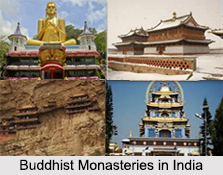
 Buddhist Monasteries in India are the manifestations of the religion that originated in India. Buddhist Monasteries are considered to be one of the most holy and sacred places in the country. Every year, millions of people from all corners of the world throng to these monasteries in search of eternal peace. Buddhist Monasteries in India are the manifestations of the religion that originated in India. Buddhist Monasteries are considered to be one of the most holy and sacred places in the country. Every year, millions of people from all corners of the world throng to these monasteries in search of eternal peace.
History of Buddhist Monasteries in India The history of Buddhist Monasteries dates back to the era of king Ashoka. Getting converted into Buddhism, Emperor Ashoka laid the foundation of Buddhist Monasteries and stupas. The very first Buddhist Monastery in India was built in the western parts of the country. The Buddhist Monasteries were primarily used as seats of worship and also for religious teachings. Architecture of Buddhist Monasteries in India The Buddhist form of architecture had originated during the reign of Ashoka. Buddhist Monasteries and stupas built by the king bears testimony to the Buddhist philosophy and ideals. It has been seen that the Buddhist Monasteries in India bear close resemblance to the Hindu styles and ways. The monasteries were built within cave structures and the entrance of the cave led to a large open space where the worshippers could sit and worship the stupa or statue of Lord Buddha. Sometimes the stupa of Lord Buddha was also kept in a separate room similar to the pattern of Garbhagriha in Hindu temples. The common trend among the Hinayana Buddhists was to build a temple in a secluded region by cutting out walls in mountains. On the other hand the Mahayana Buddhists were more adventurous in nature because they tried to build temples out of a single piece of stone. For example; Ajanta Cave and Ellora Cave, Karla Caves in Maharashtra, etc.
 Various Buddhist Monasteries in India Various Buddhist Monasteries in India
The Buddhist Monasteries spread far and wide in the country. These monasteries located in the northern or eastern part of India are extremely popular; some of them also depict the life and teachings of Lord Buddha. Some of them are as follows: Hemis Monastery: Hemis Monastery is the largest and is also considered to be the wealthiest monastery in the Ladakh region. The king of Ladakh, Sengge Namgyal reconstructed this monastery in 1672. Tabo Monastery: Tabo Monastery is one of the oldest monasteries in India; Rinchen Sangpo laid the foundation of this monastery in India in 996 AD. Most of the parts of the monastery are filled with paintings including walls and ceilings. Ghum Monastery: Ghum Monastery is situated at the hill regions of Eastern Himalaya range in Darjeeling, West Bengal. Ghum Monastery is also known as Yogachoeling Gompa and is the oldest Tibetan Buddhist monastery and one of the largest in the state.
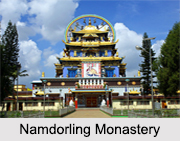 Namgyal Monastery: This Buddhist monastery is found by the third Dalai Lama himself, which makes it the most religiously significant Buddhist monasteries of India. The monastery has one more monastery within its premises, along with temples and learning institutions. Namgyal Monastery: This Buddhist monastery is found by the third Dalai Lama himself, which makes it the most religiously significant Buddhist monasteries of India. The monastery has one more monastery within its premises, along with temples and learning institutions.
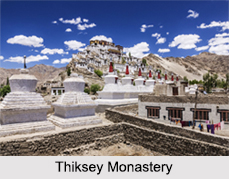
Rumtek Monastery: Rumtek Monastery of Sikkim serves as a home to a number of monks where the monks practice their religious customs. Apart from the religious rituals the monasteries also comprises an Institute of Higher Buddhist Studies and a Golden Stupa. Tawang Monastery: Tawang Monastery is the largest Monastery in India, located in the Tawang Town of Arunachal Pradesh. It is one of the biggest Tibetan Buddhist Monasteries in India and in the world too. Stakna Monastery: Stakna monastery is another beautiful monastery located in Jammu and Kashmir. Home to only about 35 lamas, the monastery is renowned for its collection of arms and armoury. There are also three statues of Buddha: Buddha from the past, the present and the future. Some of the major Buddhist Monasteries in the Indian land are Thiksey Monastery, Guru Ghantal Monastery, Pemayangtse Monastery, Bomdila Monastery, Enchey Monastery, Urgelling Monastery, Spituk Monastery, Diskit Monastery, Kye Monastery, Mindrolling Monastery and many more. Buddhist Pilgrimage Sites in India The various Buddhist Pilgrimage Sites that are located in various parts of India are mentioned below: Bodhgaya, the most important place of pilgrimage for the Buddhists is situated in Bihar. It was the place where Gautama Buddha had achieved enlightenment under the Bodhi tree. Presently in reverence to the Lord, the Mahabodhi Temple has been constructed in the exact place of his enlightenment. Sanchi Stupas in Madhya Pradesh is a collection of number of Buddhist monasteries, stupas and pillars. It was built by the great Mauryan Emperor Ashoka to honour the greatness of the Lord. An important feature of Sanchi is that it does not have any images of Lord Buddha in the human form. Rather the Lord has been represented with the help of symbols like foot prints, wheels and lotus. Sarnath houses one of the most important Buddhist Monasteries of the 20th century. The main Buddhist Monastery in Sarnath is Mulagandhakuti Vihar. This Buddhist Monastery is 110 feet high and has a statue of Lord Buddha. It also contains the relics of Buddha which were found in Taxila. Nalanda in Bihar houses the remains of 11 monasteries and several Chaityas till date. |
| |||



Buddhist Monasteries in India
| Buddhist Monasteries in India reflect the philosophy of Lord Buddha and serve as places of worship as well as tourist attraction. |
| ||||||||||||||||||||||||||||

