Vastu Shastra - Informative & researched article on Vastu Shastra
 Indianetzone: Largest Free Encyclopedia of India with thousand of articlesIndian Religion


in  
 Art & Culture|Entertainment|Health|Reference|Sports|Society|Travel
Forum  | Free E-magazine  | RSS Feeds  
Indian Religion : Vastu Shastra |Indian Religions |Indian Myths |Indian Mythology |Gods of India |Goddesses Of India |Religious Thinkers of India |Types of Religion in India |History of Indian Religion |Indian Yogis |Ajivikas |Sacred Scriptures in Indian Religion |Tantrism |Shaivism |Indian Communities |Sacred Animals in India |Roman Impact on South Indian Art and Society |Bhattacharyas |Indian Classical Terms
Home > Society > Indian Religion > Vastu Shastra
Vastu Shastra
The science of direction that combines all the five elements of nature and balance them with the man and the material.

 Vastu Shastra is a logical Indian science that deals with the ancient tradition of architecture. It is the "science of construction" and the traditional Hindu architectural system where the emphasis was laid in the directional alignments. The origin of vastu shastra is steeped in legends. It is said that Lord Brahma was the first recipient of this knowledge from Lord Shiva as a part of the Vedas, just like He received the knowledge of Jyotish. And then the knowledge of vatu shastra was gradually spread through the munis, seers and sages of ancient India. However, traditionally the foundation of Vastu is ascribed to the mythical sage Mamuni Mayan.
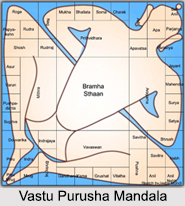
The expression Vastushastra has its root in the Sanskrit term Vastu which means "any really existing or abiding substance or essence. In the context of this ancient science of architecture, vastu also mean "the site or foundation of a house, site, ground, building or dwelling-place or habitation. The term shastra however means "science, doctrine or teaching".

Vastushastra follows the principle that postulates that in the world everything, substance, man and animals, are made from the Panchmabhoot that is the five basic elements: earth, water, fire, wind and sky. These five elements have close relationship with man and his environment. Nature has given them their proper place according to merit. Hence it is necessary that man, too, grant a proper place to these elements in the space where he resides. Hindu philosophy considers nature and God synonymous; hence, it becomes all the more significant to build one`s home according to the principles of Vastu Shastra so that man can exist harmoniously with nature.

Vaastu Shastra, as is practised presently, is based on the 125 verses contained in Brihat Samhita of Varahamihira. This very point indicates the vital link between Jyotish and Vaastu. There are two main branches of vastu: manav Shilpa Shastra relating to construction of buildings and deva Shilpa dealing with the principles of constructing temples etc. Maanav Shilpa deals with all types of buildings constructed for residential and other purposes like colleges, hospitals, factory buildings, hotels, offices, commercial complexes etc.

In ancient times several principles, pertaining to Vastu Shastra, were followed. For instance, maximum use of wood was made in the construction of buildings. Wood is a bad conductor of electricity and as such does not interfere with the power in environment. With their divine vision the sages and seers created Vastu Shastra so that a man should live a happy and prosperous life with his family.

It is believed that both positive and negative forces prevail in nature. Vastu Shastra helps in generating the positive forces within the building. The ultra-violet rays of the morning sun id beneficial for human body and enters a building from North-East side of that site. Hence, Vastu Shastra advices that this particular side should not be blocked by constructions, such as, toilets, septic tanks or storerooms. Besides these there are several norms that can help an individual built a house where he or she will be able to derive mental peace.

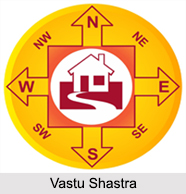
While applying Vastu Shastra one must remember that there it is important to follow its norms while buying a plot of land or a building. According to this science the earth is divided primarily into East, West, North and South and the sub directions South-east, The South-west, North-west and North-east. Every direction has its own importance in Vastu Shastra. Based on these eight directions the principle of Ashtak-sutra (eight principles) has been formulated. Each of these direction are said to be controlled by a particular Hindu god. Based on this notion Vastu Shastra advices what kind of construction should take place in each of these directions.

Besides these Vastu Shastra also deals with numerous norms that can guide an individual to select and buy a proper plot or house. Several ways are suggested to deal with accursed buildings, auspicious and inauspicious omens and others. Whether there are problems with a Junction plot, L type plot, building material or the flat system, Vastu Shastra has all kinds of solutions to problems related to such elements. Unifying science, art, astronomy and astrology, it can be said that Vastu Shastra is perfect as an ancient mystic science for designing and building.


(Last Updated on : 09/09/2009)
 
More on Vastu Shastra
Pyramid Vastu Home Vastu Vastu Principles
Essentials of Vastu Elements of Vastu Griha Pravesh
Designing a Home Using Vastu Vastu Tips for a House Kitchen Room in Vastu Shastra
Bathrooms in Vastu Shastra Tips for position of bathroom Sceptic Tank
Drainage Pipe Line Place of Idol and Worship Selection of Plot
Bedrooms Strong Room Verandah
Dining Room Drawing Room Store Room
Study Room Basement Corners of the Open Space around the Structure
Open Space Around The Building Parking Tips for building Staircase
Upper Floor Central Position of a Flat in Vastu Overhead Water Tank
Proper and Improper Shape of the Plot Survey of the Land or Soil Waste Storage Rooms
Angles in the Corner of a Plot Compound Wall Engineering and Architecture in Vastu Shastra
L Type Plots Roads Around the Plot Auspicious Time for Bhoomipuja
Division of the Plot Gate of the Compound Wall Location of the Well
Plots with Circular Roads Vithishula Trees Around the Building
Entering a New House as per Vastu Shastra Purchase of the Adjacent Plot Building Material
Universal Magnetic field in the Plot Slope in a Plot Diagonal Plots
Life of the building Quality of a Plot Constructions of Religious Temples
Constructions of Factories Constructions of Shops Constructions of Hospitals
Construction of Banks Constructions of Educational Institutions Flat system in Vastu Shastra
Natural elements and the Vastu Division of a Diagonal Plot East-South-East Extended Plot
Flooring of the Flat North-North-West Extended Plot Rectifications in the Extended Plots
South-South-West Extended Plot West-South-West Extended Plot East-North-East Extended Plot
Entrance Gate for Main Building in Diagonal Plots North-North-East Extended Plot Purchase of the Adjacent plot along the Diagonal Building
South-South-East Extended Plot West-North-West Extended Plot Windows of Flat
Apartments and Flat Systems Bedroom in the Flat Kitchen in the Flat
Outhouse And Garage Main Entrance Door of Flat Kitchen and Dining Table
Bathroom in flat Seating Room in the flat Structures in the Flat
Vastu in Different Units of a Flat Tips for Purchasing a Flat Row and Group Housing
Vastu Shastra Effect of Planets on Buildings Haunted Structures
Accursed Building Obstacle in a Structure or Dwarvedh Chhaya Vedh
Selection of the Right Plot Ways to Overcome Inauspicious Vithishula Trees Touching the Structure
Omens Related to Domestic Animals Omens Related to a Dog Omens Related to a Cat
Omens Related to a Horse Omens related to a Crow Junction Plots
Building Construction in L-Shaped Plots L and C Shaped Constructions Construction of L-type Buildings
Construction of C Shaped Buildings Buildings in Triangular Plots Omens Related to Birds
Omens Related to Serpent Omens Related to Sneeze Omens
Auspicious Constellations for Travel Multilevel Structures Structure On a Hill
Structure in a Ditch Vastu Shastra Related to Agriculture Interior Planning of the Main Building
Vastu Shastra for Buildings Semi - Diagonal or Extended Plot Units in Apartments and Flat Systems
Auspicious and Inauspicious Omens Mezzanine Floor Vastu Vidya
Vastu Purusa Vastu for Multi-Storied Residential Buildings Height of Multi-storied Buildings
Vastu Sastra in Town Planning Vastu Shastra in Astrology Construction of Central Space and Plinth
Importance of Vastu Shastra Construction of Residential Buildings Vastu Shastra in Modern Architecture
Construction of Doors and Windows in Buildings Relevance of Muhurta in Vastu Shastra Arvana in Vastu Shastra
Vastu Shastra in Ancient Texts Construction of Theatres Vastu Shastra of Karnataka Temples
Geographical Position of Plot Rectification through Vastu Principles Directions in the Plot and Building
Place of Auspicious and Inauspicious Powers on the Plot    
Recently Updated Articles in Indian Religion
Lord Subrahmanya
Lord Subrahmanya Swamy is considered to be the universal lord who blesses human beings and helps them get rid of their sins.
Gods of India
Gods of India form an inseparable part of the life of the people. Indian Gods are considered to be mysterious superhuman beings who are worshipped in this country in various forms.
Folk Gods of Kumaon
Folk gods of Kumaon have a rich history and they provide expression to the famous and popular ideas of the people.
Seven Sisters
Seven Sisters are the most famous among Dravidian deities in Southern India. The seven sisters also have a younger brother Potu Eazu.
Savitr
Savitr is a solar deity and off-spring of Vedic deity Aditi. Savitr has been mentioned in eleven hymns of Rig Veda.
E-mail this Article | Post a Comment
Forum
Forum on Indian Religion
Free E-magazine
Subscribe to Free E-Magazine on Society
 
 
Vastu Shastra - Informative & researched article on Vastu Shastra
Sitemap
Contact Us   |   RSS Feeds
Copyright © 2008 Jupiter Infomedia Ltd. All rights reserved including the right to reproduce the contents in whole or in part in any form or medium without the express written permission of
Jupiter Infomedia Ltd.