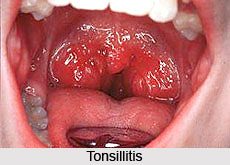
Tonsillitis is an inflammation of the tonsils. This is the fleshy cluster of tissue situated on both sides of the back of the throat that fight off germs that enter the body through the mouth. The tonsils become enlarged and red, and can be coated with a yellow, gray, or white substance. An affected child typically has a sore throat, fever, swollen glands in the neck. The patient will feel trouble in swallowing. Enlargement of the tonsils accompanied by repeated attacks of infection are known as chronic tonsillitis. Normally, the tonsils are about the size of a lima bean but they can become very much larger if severely infected. They are valuable organs of selective elimination and perform a two-fold function. Firstly, they protect the throat against disease germs. Secondly, they serve as barometers for indicating infection elsewhere in the body, when they become sore and swollen.
There are three main types of tonsillitis and these can be mentioned as acute, subacute and chronic. Acute tonsillitis can either be bacterial or viral and this is seventy-five percent in origin. Subacute tonsillitis which can last between 3 weeks and 3 months is caused by the bacterium Actinomyces. Chronic tonsillitis can last for long periods if not treated. This is almost bacterial.
Causes and Symptoms: Latest research has reached the conclusion that the tonsils act as barriers to infection. The mechanism whereby they tend to fight infection has not yet been identified, but observations have confirmed the view that children whose tonsils have been removed are more susceptible to infections than others. A body of opinion has therefore arisen which frowns upon surgical interference in obstinate cases of tonsillitis.
The onset of tonsillitis is manifested by a pain in swallowing, a sensation of chill, and fever. On visual examination, the tonsils are found to be enlarged, engorged, and covered with a varying amount of whitish or grey material i.e. the purulent discharge. Inflammation is not restricted to the tonsils only generally; the entire throat is involved in the problem. The glands under the jaws are also inflamed and tender to the touch. In severe cases there may be pain in the ear. These symptoms, particularly in children and adolescents up to the age of eighteen years, might be the precursor of rheumatic fever, a serious condition.
Since it is usually associated with attacks of cough and cold, Ayurvedists call the disease Tundikeri or Galayu. Constipation and other disorders of the digestive system are liable to precipitate the attack. In severe cases, there may be difficulty in breathing in addition to fever and a coated tongue.
In case of tonsillitis, the throat usually hurts and it`s hard to eat or drink or even swallow. Someone can also have a fever. Here are some other signs that bacteria or a virus are infecting your tonsils. As for example redder-than-normal tonsils, a funny-sounding voice, fever, bad breath, a yellow or white coating on the tonsils, and swollen glands in the neck.
Preventing Tonsillitis among children
To prevent tonsillitis, avoid letting the child near anyone who already has tonsillitis or a sore throat. Sometimes it is infectious. Make sure to practice good hand-washing habits, and teach the child to do the same. If it is evident that the child has the symptoms of tonsillitis, or has been exposed to someone who has been infected, a talk with the pediatrician should be done.
Home Remedies: The treatment of tonsillitis must start with hot fomentation of the front of the neck and steps should be taken to keep the region warm. Twelve grams of banafsha flowers or Viola odorata boiled in 50 ml of milk is a useful home remedy for tonsillitis. The milk should be filtered and drunk. The filtered banafsha should be lightly fried in ghee and worn round the throat as a poultice at night. Decoction of the bark of the acacia or babul tree mixed with rock salt should be used for gargles. If that is not easy to come by, saline gargles should be resorted to. The powder of Vasti Madhu or Glycyrrhiza glabra, Vacha or Acorus calamus, and Kulanjana or Alipina galanga, made into a paste with honey, should be used as an Iinctus. Roots of Vacha or Acorus calamus and Sati or Curcuma zedoria may be ground in milk and a paste prepared. It can be used as nasal drops to relieve the congestion of the nose.
Diet: The patient should fast for three to five days by which time serious symptoms would subside. Nothing but water and orange juice should be taken during this time. After the acute symptoms of tonsillitis are over, the patient should adopt an all-fruit diet for further three or four days. In this regimen, three meals of fresh, juicy fruits such as apples grapes, grapefruit, oranges, pears, pineapple, peaches and melons may be taken. The juice of fresh pineapple is most valuable in all throat afflictions of this kind.
After the all-fruit diet the patient may gradually embark upon a well-balance diet on the following lines:
Breakfast: Fresh fruits or grated raw carrot or any other raw salad, and milk. Prunes or other dried fruit may be added, if desired.
Lunch: Steamed vegetables, as obtainable, and whole wheal chapatis. Vegetables like bitter gourd and fenugreek are especially beneficial.
Dinner: A good-sized raw salad of vegetables as obtainable sprouts seeds as moong beans and alfalfa seeds, wholemeal bread and butter or cottage cheese.
Raw vegetable juices are also valuable in the treatment of tonsillitis. Juice of carrot, beet and cucumber taken individually or in combination are especially beneficial.
Water Treatments:
The bowels should be cleansed daily with a warm-water enema during the period of fasting. A cold pack should be applied to the throat at two-hourly intervals during the day. The procedure is to wring out some linen material in cold water, wrap it two or three times around the throat and cover it with some flannelling.
The daily dry friction and hipbath as well as breathing and other exercises should all form part of the daily health regimen. Even a hot Epsom-salts bath once or twice a week can also be taker regularly with beneficial results.
Tonsillitis can be successfully treated by the natural methods. Surgery for the removal of the tonsils is necessary only in very rare cases, when tonsils are seriously diseased, rugged and contain hopelessly incurable pus pockets.
Treatment of Tonsillitis by Magnetic Therapy:
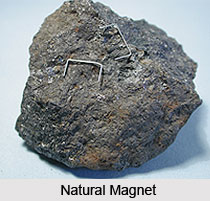
Local application of the CCM should be done after the application of south-pole oil. The duration of application in case of an acute attack should be 15 minutes twice on daily basis. Mixed magnetized water should be taken four times daily. In case of other Problems of the throat, like laryngitis, pharyngitis, the North Pole MEM should be applied to the throat for 20 minutes twice daily.
Medicines & Prescriptions in Ayurveda
1. Khadiradi Vati: Six tablets to be sucked daily as lozenges.
2. Agastya Rasayana: Take twice daily with honey in dosage as prescribed by the doctor.
A continued use of Agastya Rasayana for about six months will grant immunity from the disease for life.
Warm saline gargles are recommended twice a day.
|