


 Swastikasana is a meditative Yoga Asanathat has a history dating back to the Yoga Yajnavalkya (200 BC), where it was first described. Meaning the 'auspicious pose', Swastikasana is a comfortable pose that nevertheless maintains one's concentration, and its association with the iconic Hindu swastika (an auspicious symbol) has rendered it significant in the Yoga tradition.
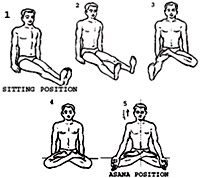
Meaning of Swastikasana In Sanskrit 'Savastika' means auspicious and when the term 'Swastikasana' is split onto three parts, 'Su-asti-ka' means to be well and healthy. The term 'Svasti' occurs frequently in the Vedas and denotes happiness. Aryan traditions have come to regard Savastika both as a sacred benediction in conformity with the classical usage of the word, and also as the mysterious symbol representing a cross. Yogis look upon Svastikasana as auspicious for it represents the crossings not only of the arms but also of the legs in one and the same posture. Yoga texts and Swastikasana The Swastikasana is at least 2000 years old, having first been described in the Yoga Yajnavalkya. Besides that, the Hatha Yoga Pradipika begins with the Swastikasana, no doubt because of its benedictory associations with the Swastika symbol. Both the Puranas (predating the Hatha Yoga Pradipika) and the Yoga Upanishads that postdate the Hatha Yogic text, mention the swastika with great regularity. Practice of Swastikasana Svastikasana is the pose of setting properly (i.e evenly) the two soles (i.e. feet) between the opposite thighs and knees, while sitting on the ground with an erect body. When the Yogis sit in this posture, the position of legs resemble the 'Svastika', hence it is called Svastikasana. Swastikasana is an effective meditative posture. 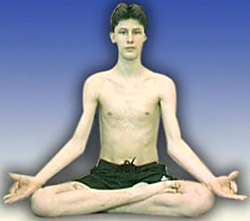 A sequential process for performing Swastikasana is given below
* One should sit erect thus keeping the spine straight. * Then one should keep the soles between thigh and calf muscles. * The person should stretch out both legs together, hands by the side of the body, palms resting on the ground, fingers together pointing forward. * Then, one should fold one leg at the knees and put it against the joint of the other thigh. * The person should fold the other leg and put it near the joint of the other thigh and put both hands on the knees in jnana mudra. * While returning to the original position, one should first stretch out right leg, then stretch out left leg and keep both legs together. Effects of Swastikasana Swastikasana helps to maintain normal temperature within the body and tones abdominal muscles and the sciatic nerve. This asana also improves one's concentrating power. This is a very suitable position for attaining knowledge, learning, meditation, preparation for other asanas and relaxation between any two sitting position. As the backbone is kept erect in Swastikasana, its functioning is greatly improved. Dnyana Mudra further helps in stabilizing pulse beats. Consequently strain on muscles is reduced, which in turn reduces strain on heart. Breathing slows down; collective effect of all this is one can achieve concentration of mind. This asana is very simple and anyone can practice. Precautions in practice of Swastikasana Within 10 to 12 days' practice of Swastikasana, one can execute this asana for 10 minutes. After more practice this period can be increased to 2 to 3 hours. Sitting for long in this asana alone can make one experience the true pleasure of this asana. Some points have to be remembered while practicing this asana. One should keep the legs straight in knees with toes pointing to the sky and raise the lower back and buttocks off the ground. The hands, upper arms and elbows should be on the ground, while supporting the waist with the hands. Head should be straight and eyesight fixed on the raised toes. One should note that the legs can be taken towards head for maintaining the balance. One should not move the neck while in the position and keep the legs and back in one straight line as in Sarvangasana (Shoulder stand). |
| |||



Home > Health > Yoga > Yoga Asanas > Types of Yoga Asanas > Meditative Asanas > Swastikasana Yoga Asana
Swastikasana Yoga Asana
| Swastikasana or the auspicious pose improves concentration and keeps the body healthy. |
| ||||||||||||||||||||||||||||

