


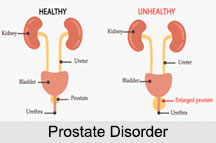
 Prostate Disorder is a male disorder that is found in nearly one-third of all men over 50 years of age. The prostate and bladder disorders can lead to numerous other ailments such as arthritis, kidney disorders and failure and uraemia. Prostate Disorder is a male disorder that is found in nearly one-third of all men over 50 years of age. The prostate and bladder disorders can lead to numerous other ailments such as arthritis, kidney disorders and failure and uraemia.
The prostate is a gland in men that helps make semen, the fluid that contains sperm. The prostate surrounds the tube that carries urine away from the bladder and out of the body. It is located directly underneath the bladder and in front of the rectum. Due to the upper portion of the urethra passing through the prostate, if the gland becomes magnified to an abnormal degree, it can obstruct the passage of necessary fluid through the urethra. Types of Prostate Disorder Disorders and problems with the prostate gland are mostly connected with aging. There exist several kinds of Prostate Disorders, the most important being Benign Prostatic Hyperplasia (BPH) or enlargement of the prostate gland, Prostatitis or inflammation in the prostate gland, stimulating unbearable pain and lastly the fatal Prostate Cancer. Causes of Prostate Disorder Prostate disorder is one such disease affecting the male world, which mainly is caused by gross negligence and disregard of one's health and necessary well-being. Lengthened periods of sitting in specific occupations also increase the pressure on the pelvic region, resulting in congestion of the tissues in and around the prostate gland. With the passage of time, changes such as inflammation or enlargement occur in the gland. Severe and fatal Prostatitis may also result from prolonged exposure to cold and chill and from infectious diseases. 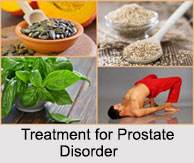
Chronic Prostatitis is only an after-effect of the acute stage of deadly prostate disorder. Excessive sexual excitement and exhilaration and constipation also poses chance to cause continual irritation of the gland. One more crucial cause leading to emergency prostate disorder is constipation, when the faeces turn tough and hardened and the rectum or lower bowel is overloaded, inducing inordinate pressure on the prostate gland. Symptoms of Prostate Disorders In its earliest stages, prostate disease may or may not be associated with symptoms. The symptoms of prostate disease depend on the condition, but may include: Treatment for Prostate Disorder In order to treat prostate disorders, a man must keep in mind to maintain an accurate and routine diet chart consisting of seeds, nuts, grains, vegetables and fruits. The patient should give up on all kinds of solid food and literally survive on water, blended with a hint of lemon juice for 2 or 3 days. This will help in greatly to increase the flow of urine. Heavy starches, sweet stimulants and highly flavoured items are absolutely forbidden, as they are widely known to grossly stimulate direct annoyance to the prostate gland and bladder. Ayurveda provides a cure to men suffering from prostate disorders. Homeopathic treatments for prostate disorders are also found to be effective. Practicing yoga on an everyday basis, like Vajrasana and Paschimottanasana are also known to treat prostate illness. They can be uncomfortable and unfortunate, but are not life-threatening and often can be treated successfully with drugs or surgery. |
| |||



Prostate Disorder
| Prostate Disorders are common in men, particularly in those over 50 years of age that lead to numerous other ailments. |
| ||||||||||||||||||||||||||||

