


 Parsi festivals in India are the representatives of the vibrant customs and traditions of the community. Although the Parsis of India originally emigrated from Persia, they no longer have social or familial ties to Persians, and do not share language or recent history with them. Over the centuries since the first Zoroastrians arrived in India, the Parsis have integrated themselves into Indian society while simultaneously maintaining their own distinct customs and traditions. This in turn has given the Parsi community a rather peculiar standing; they are Indians in terms of national affiliation, language and history. Parsi festivals in India are the representatives of the vibrant customs and traditions of the community. Although the Parsis of India originally emigrated from Persia, they no longer have social or familial ties to Persians, and do not share language or recent history with them. Over the centuries since the first Zoroastrians arrived in India, the Parsis have integrated themselves into Indian society while simultaneously maintaining their own distinct customs and traditions. This in turn has given the Parsi community a rather peculiar standing; they are Indians in terms of national affiliation, language and history.
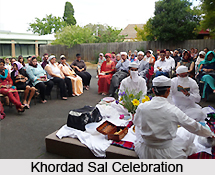
Khordad Sal The birth anniversary of Zoroaster or Prophet Spitaman Zarathushtra is celebrated as Khordad Sal in August-September. It falls sometime on the sixth day of the Parsi month of Farvardin. The religious lore and texts of the Parsis mention the festival and its importance. It is said to be the day on which many historic events of old Iran are said to have happened. Later, it came to be observed solely as Zarathushtra's birthday, the founder of the religion. On this day, Parsis wear new clothes; the house is cleaned and decorated with rangolis. Parsis arrange fragrant flowers and prepare delicious meals. The rituals of Jashan, or thanksgiving prayers are offered at the temples. A grand feast is prepared to mark the occasion. Zarthost No Deeso 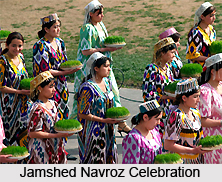 Zarthost No Deeso is observed as the death anniversary of Zoroaster. It is not a celebration but a mourning day for Parsis. It falls on June, on Khorshed roz, Dae mah (11th day, 10th month) of the Zoroastrian calendar. It is believed that Zoroaster was killed in a temple while he was praying. It is marked as a sombre occasion. According to another belief, Zarathushtra in his 77th year was killed in a fire-temple by the Turanian army. It is also said that on this day, Zarathushtra ascended for the skies. Other sources believe that Zarathushtra died in his sleep or was killed by a murderer. On this day, discourses on life and work of Zoroaster are held. Special prayers are recited and Zoroastrians go to the fire temple to pray. However, there are no elaborate celebrations. Zarthost No Deeso is observed in Mumbai and Gujarat particularly.
Jamshed Navroz Celebration of Jamshed Navroz festival dates back to over 3000 years when the legendary king of Persia, Jamshedji ascended the throne on the day of Navroz. The day happened to be a vernal equinox, when the length of the day equals that of the night and marked the transition from winter to summer.In the Fasli/ Bastani variant of the Zoroastrian calendar, this day is always the day of the spring Equinox (nominally falling on March 21st). In the Shahenshahi and Fasli calendars, which do not account for leap years, the New Year's day has drifted ahead by over 200 days. 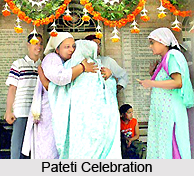 These latter two variants of the calendar, which are only followed by the Zoroastrians of India, celebrate the spring equinox as Jamshed-i Navroz, with New Year's day then being celebrated in July/August as Navroz. This day is celebrated as the day of the spring, when Mother Nature casts off everything that is old or super-flows and dresses herself like a young bride in every vibrant colour and hue, rejoicing in her own pure spiritual beauty. Thus, Navroz is a new dawn in everyone's life. Two special dishes are served. One is the Ravo made with Suji, milk and sugar and the other is fried vermiceli cooked in sugar syrup and sprinkled with raisins and lot of almond slivers. These latter two variants of the calendar, which are only followed by the Zoroastrians of India, celebrate the spring equinox as Jamshed-i Navroz, with New Year's day then being celebrated in July/August as Navroz. This day is celebrated as the day of the spring, when Mother Nature casts off everything that is old or super-flows and dresses herself like a young bride in every vibrant colour and hue, rejoicing in her own pure spiritual beauty. Thus, Navroz is a new dawn in everyone's life. Two special dishes are served. One is the Ravo made with Suji, milk and sugar and the other is fried vermiceli cooked in sugar syrup and sprinkled with raisins and lot of almond slivers.
Pateti Pateti is in fact the eve of the new year of Zoroastrian calendar. Most of the Parsis in India are followers of the Shahenshahi calendar. So, in India, Pateti falls in August. Pateti is the last day of the previous year, and the day to close accounts for the year. The significance of Pateti is that, it is the day to dwell on the wrongs or sins one may have committed the previous year, and atoning for them. Pateti is the occasion to redeem oneself by offering patet, or the prayer of repentance, and prepare to greet the New Year with a clean conscience. On the day of Pateti, the Parsis dress up in new clothes, offer charity and arrange lavish feasts in their homes. Parsis also visit the agyari or the fire temple on this day. The agyari is called as a fire temple because the sacred fire which was brought from Iran once upon a time is always kept burning in the temple by the high priest. 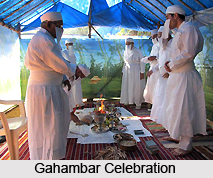 It is also a day of thanksgiving, to be grateful to God not just for the joys of life but also the sorrows. It is also a day of thanksgiving, to be grateful to God not just for the joys of life but also the sorrows.
Gahambars King Jamshed was the first person to observe the festival of Gahambar. Gahambar means 'in time' and refers to the six seasonal Zorastrian (Parsi) festivals. Gahambar can be translated to mean full time or proper season. During the rituals, tribute is paid to the phases or elements responsible for the creation of the world. Four liturgical services are performed during the first four days, and the fifth day is reserved for communal interaction. Celebrations begin with a benediction ceremony called Afrin. It is a prayer of love and praise in remembrance of one's ancestors. The Parsis observe six seasons, which originally are the agricultural festivals. Each festival is five days in length and corresponds to one of the six days of creation in Zoroastrian cosmology. |
| |||



Parsi Festivals
| Parsi festivals encompass a number of celebrations which reflect the culture and traditions prevailing in the community since time immemorial. |
| ||||||||||||||||||||||||||||

