The Meaning of "Namaste"
The "Namaste", though is a famous concept and now known all over the world, however, gesture is very ancient and traditionally Indian. It is an integral part of Indian culture. Namaste allows two individuals to come together energetically to a place of connection and timelessness, free from the bonds of ego-connection.
Namaste`s very essence is encapsulated in the hold of both palms held erect together in front of the bosom in greeting. If any one gesture were to be recognized as representative of Brand India, there is no doubt it is the simple, humble and overpoweringly significant Namaste. In that simple gesture lays the timelessness of India, the mother culture of the world. Namaste represents the belief that there is a Divine spark within each of us that is located in the heart chakra. The gesture is an acknowledgment of the soul in one by the soul in another. In a literal translation, "Nama" means bow, "as" means I, and "te" means you. Therefore, Namaste means, "bow me you" or "I bow to you". However, namaste needs no occasion and it can be performed anywhere, anytime, any place, without ritual or preconditions. It is an instinctive, unconditional thanksgiving to creation.
To perform Namaste, we place the hands together at the heart chakra, close the eyes, and bow the head. It can also be done by placing the hands together in front of the third eye, bowing the head, and then bringing the hands down to the heart. This is an especially deep form of respect or a teacher and student. Namaste allows two individuals to come together energetically to a place of connection and timelessness, free from the bonds of ego-connection. In yoga class, Namaste should ideally be done at the beginning and at the end of class.
 Anjali Mudra
Anjali means "offering", and Anjali Mudra is often accompanied by the word Namaste. This gesture is also found within certain asanas - in Tadasana (Mountain Pose), before you begin Sun Salutations, or in balance poses such as Vrksasana (Tree Pose). This sacred hand position is found throughout Asia. Anjali Mudra is one of thousands of types of Mudras that are used in Hindu rituals, classical dance, and yoga. As the consummate Indian greeting, like a sacred hello, Namaste is often translated as "I bow to the divinity within you from the divinity within me". This salutation is at the essence of the yogic practice of seeing the Divine within all of creation. Hence, this gesture is offered equally to temple deities, teachers, family, friends, strangers, and before sacred rivers and trees.
As a person brings his hands together at the centre, he is literally connecting the right and left hemispheres of the brain. This is the yogic process of unification, the yoking of our active and receptive natures. In the yogic view of the body, the energetic or spiritual heart is visualised as a lotus at the centre of the chest. Anjali Mudra nourishes this lotus heart with awareness, gently encouraging it to open as water and light do a flower.
Practise
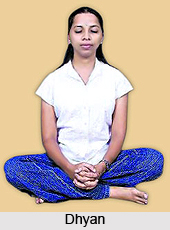
•Begin the Mudra by getting into a comfortable sitting position like Sukhasana, Siddhasana or stand in Tadasana.
•Lengthen your spine out of your pelvis and extend the back of your neck by dropping your chin slightly in. Now, with open palms, slowly draw your hands together at the centre of your chest as if to gather all your resources into your heart.
•Repeat that movement several times.
•In order to reveal the power of the hands at the heart, you can also try and shift your hands to one side or the other of your midline and pause there for a moment.
•After which, you can feel slightly off balance as though the centre of gravity had shifted.
•Then you can shift back to the centre and then gently touch your thumbs into your sternum (the bony plate at the centre of the rib cage).
•Broaden your shoulder blades to spread your chest open from the inside. Feel space under your armpits as you bring your elbows into alignment with your wrists.
•Stay here for some time and take in your experience. There may be shifts in mood and consciousness.
Next, imagine that you are beginning your yoga practice. Take Anjali Mudra again, but this time slightly part your palms as if to make a cup, so that your hands resemble the bud of a lotus flower.
Practise
•Drop your chin towards your chest. It is important that this anjali or offering be true to your self as that will be the most effective and uplifting for you. And you can align your mind (awareness), feeling (heart), and actions (body) within this gesture.
•When you feel your invocation is complete, draw your fingertips to the centre of your forehead, ajna chakra, and pause there feeling the calming effect of your touch.
•Bring your hands back to your centre to ground your intention within your heart.
After this practice of the Anjali Mudra, you will feel joyful and connected to your present, thus you can start your work for the day. Anjali Mudra can also be used within the Sun Salutations and many other asanas as a way to come back to and maintain your centre. When your hands come together overhead in Virabhadrasana I (Warrior 1) or in Tree Pose, this is still Anjali Mudra. Consciously, this upward movement of your hands will connect through an invisible line of energy to your heart and this same will help your posture and your inner attitude. Anjali Mudra can be done any time and at the beginning and end of any task that is important to you.
Benefits
•Reduces stress and anxiety
•Calms the brain.
•Creates flexibility in the hands, fingers, wrists and arms
•Opens the heart.
Anjali Mudra is an age-old means of helping human beings to remember the gift of life and to use it wisely. This Mudra seems ancient, almost as old as the beginning of time. It is rich in flavour, meaning and substance. In a moment of simplicity, we are transported to eternity through the Anjali Mudra. Practice of this meditative mudra helps ease fear and stress, relaxes the mind and helps you remain focussed. It also induces tranquality and helps you to stay calm.