Meditation is the process of knowing one`s own self amidst the eternal way of traveling to the inner self. Meditation is just not the process of sitting and contemplating but a journey to the inner self which only can happen when the mind is calm and the senses are unruffled. It is a process of relaxing the mind as it aids in unwinding tension, worries, pain and fear. In the first paced society therefore meditation is indeed the need of the hour to unwind, relax and finally to contemplate. Meditation has immense benefit. Be it the aged, or the women or the children, meditation can benefit all. Meditation for children is indeed the unique way to help the kid to grow up whilst poising his physiological, psychological as well as spiritual needs.
Relaxation and meditation can actually create a renewed sense of motivation and well-being. Moreover, it allows a person to turn inwards, become acquainted with oneself, and ultimately become at peace with oneself. Quite ideally therefore meditation for children supports them to connect to their inner self, enhances their imagination and creativity too. Meditation for children thus is a way to involve them in their creativity, helping them to identify their mental and physiological requirements and finally to set them free from the chains of worries, fears and tension.
Meditation for children is thus a process of relaxation which enhances their problem solving abilities. Sometimes just focusing attention on a different task permits new and fresh ideas to present themselves. Meditation can also help an angry or frustrated child to calm down and rethink a situation.
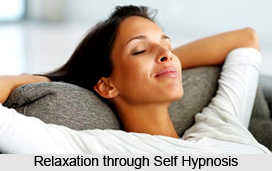
However, meditation for children requires proper training to aid them in telexing and meditating. The first step is therefore to teach them the process of relaxation and meditation and for this to make them sit or to lie down in a silent yet comfortable area is necessary. The second important step in meditation for children is to make them practice the breathing exercise. One or two deep breathes, with closed eyes helps the children to concentrate whilst focusing their thought. Breathing exercise is beneficial in calming down the hyperactive child and even it helps to control the temper thus supporting in taming an angry or misbehaving child.
Meditation for children also consists a variety of different techniques which are indeed useful in guiding a relaxation mode. Older children may practice meditation by giving time to themselves whilst contemplating quietly or by resting privately. For other children, some continuous deep breathing may be sufficient to help them in the process of contemplation. Children can be taught to reach out to God although they may not comprehend what they feel as a result, but can gradually learn to call it something like peacefulness, or love, or happiness.
The mind of the children is ever wandering hence to tame the mind and prepare it for contemplating requires techniques.
Few of the techniques of meditation for children are listed below:
Visualization or mental imagery
The mind and its physical instrument, the brain are restless in children hence must be brought under control. Visualization to a great extent helps to do that and is reckoned as an important process of meditation for children. Visualization is easy to do. The child is asked to imagine the waves of a pool or an ocean, then they are asked to allow their body to feel the water as it caress their arms and legs, and finally flow right through them. This is where their imagination plays an important part. There could be many different places where their thoughts might take them. The thoughts can be adventurous and exciting and do not always have to be slow or subdued. However, intent is simply to have them create a separate, but safe and lighthearted mental environment.

Positive affirmations
Positive affirmation in a great way affects the thought process whilst turning all the negative thoughts into the positive ones. Using the positive affirmations in the process of meditation for children has proved to be beneficiary. In this process the child is first asked to make a list of positive thoughts and phrases and then is asked to repeat the thoughts to himself or herself while meditating.
The idea of meditation for children is to lure the child to sit quietly and meditate.
For this a number of innovative techniques are there which helps the children to meditate.
•The child can be asked to meditate almost anywhere, not necessarily at ant secluded corner. The children can lie on the bed, floor, carpet, or the lawn or beach or where ever they feel comfortable. Then they should be advised to close their eyes and relax whilst feeling each part of their body in their mind. With their eyes closed then the children are advised to let their body go limp as a doll while counting to 10 in the mind.
•Another process is to make the child relax with his eyes closed. Then the child should be advised to imagine that he is walking on the beach, on a warm sunny day. Waves caressing his feet. He is to imagine himself to be standing still for a moment looking around, seeing the waves wash against the shore over and over again. This indeed helps in focusing the mind.
•Lying on a piece of carpet or other comfortable surface the child should be asked to stretch out on their back. With his eyes closed they should then relax their body to such an extent that it feel as if he is melting into the floor. An even in and out breathing whilst counting 1,2, 3 and so on further helps in the process.
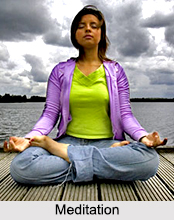
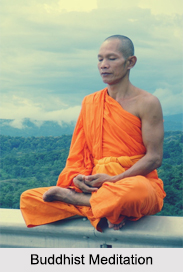
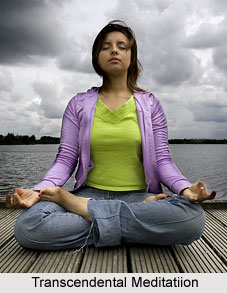
•Sitting meditation for children is also helpful in focusing their mind. The child needs to sit cross-legged, back held straight, and face forward. He is then to clasp his hands and let them rest in his lap. The eyes should be closed. An even breathing while counting each breath is necessary in sitting meditation. Sitting meditations allow children to explore their own thoughts while focusing inward and quieting the mind.
•Just like sitting meditation, walking meditation for children also is beneficial. Children should walk briskly while swinging arms easily back and forth. The technique of swinging the arm and legs helps in coordinating the mind and body. Here also an even breathing while counting 1,2 and 3 needs to be followed. Walking meditations help children burn off steam, release tension, ease stress and frustration, or reenergize.
Benefits of meditation for children are manifold. It helps in the growth of the individual whilst synchronizing his physical, mental and spiritual growth. Meditation for children can help in dealing the common problems like stress, anxiety, panic attacks, aggression, hyperactivity, restlessness and even sleeping problems. Meditation for children also helps in improving concentration, in enhancing creativity and above all in increasing his level of imagination.
Meditation for children thus is the key to raise offspring with a sense of focus and well being. It is an endeavor of creating a harmonious balance of the physiological as well as psychological growth of the child whilst alleviate stress and anxiety, frustration, fear, anger, restlessness, and many more symptoms that the children suffer in the fast paced life.