


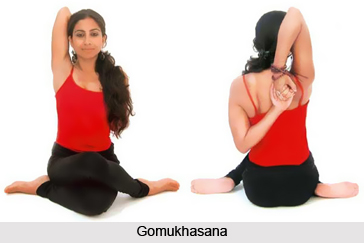
 Gomukhasana, or the cow's posture, is one amongst a handful of medical asanas that have been practiced by Indians for at least 2000 years. The Yoga Yajnavalkya (200 BC) described it first, after which it received regular mention in subsequent texts. Gomukhasana, or the cow's posture, is one amongst a handful of medical asanas that have been practiced by Indians for at least 2000 years. The Yoga Yajnavalkya (200 BC) described it first, after which it received regular mention in subsequent texts.
Meaning of Gomukhasana Gomukhasana is significant as it means the pose of the cow, a sacred animal in Hindu tradition. The Sanskrit translates literally to 'pose resembling the mouth of a cow'. The bovine's sanctity in Indian tradition stretches back to pre-Vedic times as indicated by the seals found in Mohenjo-Daro and Harappa which show hump-backed bulls. The Gomukha is also an Indian instrument with a broad end a narrow end like the face of a cow. Yoga texts and Gomukhasana Although Gomukhasana was first described in the Yoga Yajnavalkya (200 BC), none of the Puranas make mention of it, and it is next described only in the Hatha Yoga Pradipika. It was me ntioned or described with increasing regularity thenceforward. Practice of Gomukhasana A sequential process for performing Gomukhasana follows. Placing both the feet on the ground by the side of the buttocks and keeping the body steady is Gomukhasana, resembling the mouth of a cow. Gomukhasana can also be practiced with hands folded and this form of the asana is known as Baddhahasta of Gomukhasana. 1. Sit erect stretching both legs together in front, hands by the side, palm resting on the ground, fingers of the hands together. 2. Fold right leg at the knee and place it on the ground by the side of the left buttock. 3. Similarly bringing the left leg from above the right leg, place it on the ground by the side of the right buttock. 4. The two soles will remain out towards left and right side. 5. Place the palms on the knee one above the other and sit erect. 6. Or place the right palm above the left sole and left palm above the right sole, so that it will resemble the shape of a cow's ear. Look in front. 7. After some time return to the original position. 8. Afterwards practice it by changing the position of the legs i.e. by placing the right knee above the left knee. Effects and Precautions for Gomukhasana The practice of this Yoga Asana removes pain in the hip and lower extremities, and helps in making the spine straight. It is useful in alleviating the symptoms of arthritis and dry piles, and exercises the lungs. Those suffering from bleeding piles must however, not practice the Gomukhasana. |
| |||



Home > Health > Yoga > Yoga Asanas > Types of Yoga Asanas > Cultural Asanas > Gomukhasana Yoga Asana
Gomukhasana Yoga Asana
| Gomukhasana, the Asana just like the face of a cow, removes pain in hip and lower extremities. |
| ||||||||||||||||||||||||||||

