


 Folk Dance of Odisha includes several dances among which Chhau Nach, Ghumura Dance and Dhalkhai are the most popular ones. Other than these there are some other folk dances of the state as well. All these folk dances exhibit the culture and traditions and different societies of the state. Some of the dances have been detailed below: Folk Dance of Odisha includes several dances among which Chhau Nach, Ghumura Dance and Dhalkhai are the most popular ones. Other than these there are some other folk dances of the state as well. All these folk dances exhibit the culture and traditions and different societies of the state. Some of the dances have been detailed below:
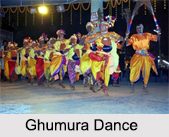
Ghumura Dance: This is the most popular folk dance of Odisha. It has been originated from the Kalahandi district of the state. Many researchers claim that this dance form has some similarities to many other Indian classical dances due to the ‘mudras’ and the form of the dance, whereas others claim that Ghumura resembles a war dance of ancient India which was performed by Ravana in the epic Ramayana. Ghumura was earlier used as a Darbari dance in Kalahandi state during war times. The typical mixed sound that comes out of the musical instruments like Ghumura, Nishan, Dhol, Taal, Madal etc. and the expressions and movements of the artists make this dance to be a ‘Heroic Dance’. The dance is associated with social entertainment, relaxation, love, devotion and friendly brotherhood among all class in present days. But traditionally it is associated with Nuakhai and Dasahara celebrations in Kalahandi and large parts of South Western Odisha. 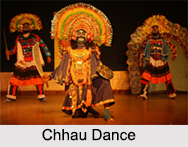 Pala: Pala folk dance of Odisha is widely performed throughout the state and it is associated with the cult of 'Satyapir'. People of Odisha strongly believe the theme of Pala; it is said that this dance originated at the time of the Muslim-Mughal period. It was in this period that the assimilation of the 'Satyanarayan' of Hindu pantheon with Pir of Muhammadanism, developed into a synthetic and a mixed cult known as 'Satyapir'. As a part of consequences of this action, the Hindu worshipers became the disciples of the Muslim guru called Fakir and adopted the worship pattern of the respected Muslim God and vice versa. Pala: Pala folk dance of Odisha is widely performed throughout the state and it is associated with the cult of 'Satyapir'. People of Odisha strongly believe the theme of Pala; it is said that this dance originated at the time of the Muslim-Mughal period. It was in this period that the assimilation of the 'Satyanarayan' of Hindu pantheon with Pir of Muhammadanism, developed into a synthetic and a mixed cult known as 'Satyapir'. As a part of consequences of this action, the Hindu worshipers became the disciples of the Muslim guru called Fakir and adopted the worship pattern of the respected Muslim God and vice versa.
The entire performance of the Pala is to evoke the deity of Satyapir, intended for the well being of the people. It is a group performance consisting of five or six persons and is a very exciting play to watch. Here, the 'Mridanga' and the Cymbals are used as the accompaniment to the music; the instruments player is called ‘Bayak’. Singers in chorus help the chief singer, known as 'Gayaka', to sing the songs and explain the meaning of various references from the play, to the audience. There are two types of Pala- Baithaki (sitting) and Thia (standing). Daskathia: 'Daskathia' folk dance of Odisha has originated from the Ganjam District. As, it got wide popularity; it spread to all other parts of Odisha as well. The word 'Dasa' means a devotee and 'Katha' refers to wooden pieces arranged in tune for the prayer of the devotee. The dance moves of this form are of light nature. Daskathia performance mainly revolves around the dramatic acting of the Gayak and the Palia helps to visualize the historical and mythical scenes of the poetry. Kathia is the only musical instrument that is used during the performance. The Kathia is a pair of small sticks that are held by the performers in between their fingers. 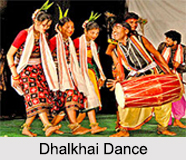 Dalkhai Dance: The 'Dalkhai' folk dance of Odisha is an eye-catching dance performance by the tribal women from the Sambalpur district. The festivalof 'Dusserah' is the occasion of performing Dalkhai. This performance is also very common on all other festivals such as Bhaijiuntia, Phagun Puni, Nuakhai, etc. Dhalkai is mostly danced by young women of Binjhal, Kuda, Mirdha, Sama and some other tribes of Sambalpur, Balangir, Sundargarh, Bargarh, Nuapada and Kalahandi districts. During this dance, men join them as drummers and musicians. The dance is accompanied by a rich orchestra of folk music played by a number of instruments known as Dhol, Nisan, Tamki, Tasa and Mahuri. However, the Dhol player controls the tempo while dancing in front of the girls. Dhalkhai means addressing to a girl friend. The love story of Radha and Krishna, the episodes from Ramayana and Mahabharata, the description of natural scenery are represented through this performance. Kosli Odia language is used in the song of this dance. Dalkhai Dance: The 'Dalkhai' folk dance of Odisha is an eye-catching dance performance by the tribal women from the Sambalpur district. The festivalof 'Dusserah' is the occasion of performing Dalkhai. This performance is also very common on all other festivals such as Bhaijiuntia, Phagun Puni, Nuakhai, etc. Dhalkai is mostly danced by young women of Binjhal, Kuda, Mirdha, Sama and some other tribes of Sambalpur, Balangir, Sundargarh, Bargarh, Nuapada and Kalahandi districts. During this dance, men join them as drummers and musicians. The dance is accompanied by a rich orchestra of folk music played by a number of instruments known as Dhol, Nisan, Tamki, Tasa and Mahuri. However, the Dhol player controls the tempo while dancing in front of the girls. Dhalkhai means addressing to a girl friend. The love story of Radha and Krishna, the episodes from Ramayana and Mahabharata, the description of natural scenery are represented through this performance. Kosli Odia language is used in the song of this dance.
Chhau Nach: This folk dance of Odisha is originated and performed in the Mayurbhanj District and also in Nilagiri of Baleswar district. It has its base in the martial arts tradition. The dance is a stylized mock battle in which two groups of dancers armed with swords and shields, alternatively attack and defend themselves with vigorous movements and elegant stances. Music of this dance is notable with its rhythmic complexities and vigorous percussion. The musical instruments include 'Mahuri' - a double reeded instrument, 'Dhola' - a barrel shaped two-sided drum, 'Dhumsa' - a hemispherical drum and 'Chadchadi' - a short cylindrical drum. Karma Nach: Karam or Karma literally means 'fate' in Kosli Odia language. This folk dance of Odisha is performed during the worship of the god or goddess of fate. It begins from Bhadra Shukla Ekadasi and continues for several days. This dance form has been originated from Sambalpur district of the state. Karma is mostly performed by schedule tribes in the districts of Balangir, Kalahandi, Sundargarh, Sambalpur and Mayurbhanj. 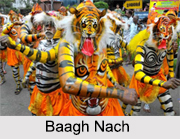 Baagh Nach: Tiger dance or Baagh Nach folk dance of Odisha is performed in Binka and Sonepur of Subarnapur district in the month of Chaitra. This dance is performed by only men, who paint their bare bodies with yellow and black colours stripes to look like tiger and attach a tail. One or more dancers move from house to house and once a crowd gathers, the dance begins. The dancers are accompanied by a drummer and a bell player who provide the music for the performance. Baagh Nach: Tiger dance or Baagh Nach folk dance of Odisha is performed in Binka and Sonepur of Subarnapur district in the month of Chaitra. This dance is performed by only men, who paint their bare bodies with yellow and black colours stripes to look like tiger and attach a tail. One or more dancers move from house to house and once a crowd gathers, the dance begins. The dancers are accompanied by a drummer and a bell player who provide the music for the performance.
Keisabadi: In Keisabadi folk dance of Odisha, only men can take part. This is also a Sambalpuri folk dance. Most of the dancers hold a stick two feet in length and they dance in different forms by striking the sticks according to the rhythms of the song they sing. The leader first starts to sings and then others follow him. The main theme of the song has been derived from the love story of Radha and Lord Krishna. Dhap Dance: This Sambalpuri folk dance of Odisha is mostly performed by the Kandha tribe of Kosal region. Both men and women participate in this dance. Men of one village dance with women of another village. Mostly unmarried boys and girls participate in this dance. Dhap dance is mainly performed during marriage ceremony and also for the sake of recreation. The name of the dance has been derived from the musical instrument Dhap, which accompanies this dance. The dancers hold the Dhap with their left hands and beat with their right as well as left hands. Goti Pua: In Goti Pua folk dance of Odisha boy dancers dress up like girls; they are the students of the ‘Akhadas’ or gymnasia. The Goti Pua dance is also known as Akhada Pilas as the dancers are mainly from the Akhada system. Apart from these dances, there are some other folk dances of Odisha which are Nacni, Chhiollai, Humobauli, Dauligit, Sajani, Chhata, Daika, Bhekani, Rasarkeli, Jaiphul, Maila Jada, Bayamana, Gunchikuta etc. |
| |||



Folk Dance of Odisha
| Odisha includes several folk dances, which exhibit the culture and traditions of the state. |
| ||||||||||||||||||||||||||||

