
 Danda Nata of Odisha is a kind of ritualistic festival. It is performed during the Chaitra Purnima and continues till the Pana Sankranti (Vishuva Sankranti) day. Chaitra and Baisakh are considered to be most auspicious for the worship of Lord Shiva. The invocation of the performances of Lord Shiva commences on the sixth day of the Meena Month, which comes in the months of March-April. When the performances start, there are many preliminary preparations made for the same for the first six days. After which, on the eighth day, the Jhamu Jatra takes place and the rest of the thirteen days of the month are exclusively meant for Danda Jatra.
Danda Nata
Danda Nata is a ritualistic festival performed in Odisha for invoking the blessings of Lord Shiva.
Introduction
Danda Nata of Odisha is a kind of ritualistic festival. It is performed during the Chaitra Purnima and continues till the Pana Sankranti (Vishuva Sankranti) day. Chaitra and Baisakh are considered to be most auspicious for the worship of Lord Shiva. The invocation of the performances of Lord Shiva commences on the sixth day of the Meena Month, which comes in the months of March-April. When the performances start, there are many preliminary preparations made for the same for the first six days. After which, on the eighth day, the Jhamu Jatra takes place and the rest of the thirteen days of the month are exclusively meant for Danda Jatra.Rituals of Danda Nata
The participants in a Danda Nata invoke the blessings of Lord Shiva to get blessed by a child, to fulfil certain ambition, to get rid of sickness, seeking happiness in life, good harvest or even peace and happiness to all the communities. Coincidentally, the total number of pledge takers in Danda Nata is 13 and the number of days for the festival is also 13. These vow takers are known as the `Bhoktas`. All the `Bhoktas` lead a very pious life for 21 days of this festival and they avoid eating meat, fish or cohabiting during this period.
Kamana Ghata carries an importance in Danda Nata. Ghata is the Pitcher, which is full of water, and it holds a very important place in the performance, since it represents the body and the water in it represents life. It represents the God invoked and hence worshipped with strong belief. After the function, the pitcher is again brought to the water of a pond or river with due care and immersed from where it had been brought.
A new pitcher is then taken to the pond or a river and water is filled in it, while the music is played with the accompaniment of drums and blowing of conch shell. This pitcher is first worshipped under a banyan tree and then taken out in a procession through the village and then kept in a hut (made preferably in front of a Shiva`s temple), known as the Kamana Ghara. Two pieces of cane-sticks represents `Hara` and `Gouri` and they are kept near the Ghata and are worshipped with the pitcher. A sacred fire is also kept lighted in the hut from which Pata-Bhokta lights up an oil lamp. As they light up the lamp, the Bhoktas yell with the word "Rushi Putre". Then resin and myrrh powder is thrown on the lighted oil lamp, which turns a burning up with a flare and the `Bhoktas` yell the words "Kala Rudramani Ho Joy".
The entire group of Danda Nata consisting of the `Bhoktas` and their colleagues go in various villages in a procession with the band of musicians. There is no specific declaration about where they are going to perform "Danda" in a day. Like the `Bhoktas`, some common men also keep a vow in their mind for getting some mercy from Lord Shiva. Seeing the procession, these vow takers clean up their houses with the help of cow-dung, water, put floor designs with coloured powders and keep a jug full of water ready. All this indicates an invitation to the group. After receiving such an invitation, the group stops there. After some preliminary preparations the group lights up an oil lamp and keeps it on in the verandah of the host and return to their place of camp. At mid day, the group comes back to the same place and performs the Bhumi (Earth) Danda or Dhuli (Dust) Danda.
Kamana Ghata carries an importance in Danda Nata. Ghata is the Pitcher, which is full of water, and it holds a very important place in the performance, since it represents the body and the water in it represents life. It represents the God invoked and hence worshipped with strong belief. After the function, the pitcher is again brought to the water of a pond or river with due care and immersed from where it had been brought.
A new pitcher is then taken to the pond or a river and water is filled in it, while the music is played with the accompaniment of drums and blowing of conch shell. This pitcher is first worshipped under a banyan tree and then taken out in a procession through the village and then kept in a hut (made preferably in front of a Shiva`s temple), known as the Kamana Ghara. Two pieces of cane-sticks represents `Hara` and `Gouri` and they are kept near the Ghata and are worshipped with the pitcher. A sacred fire is also kept lighted in the hut from which Pata-Bhokta lights up an oil lamp. As they light up the lamp, the Bhoktas yell with the word "Rushi Putre". Then resin and myrrh powder is thrown on the lighted oil lamp, which turns a burning up with a flare and the `Bhoktas` yell the words "Kala Rudramani Ho Joy".
The entire group of Danda Nata consisting of the `Bhoktas` and their colleagues go in various villages in a procession with the band of musicians. There is no specific declaration about where they are going to perform "Danda" in a day. Like the `Bhoktas`, some common men also keep a vow in their mind for getting some mercy from Lord Shiva. Seeing the procession, these vow takers clean up their houses with the help of cow-dung, water, put floor designs with coloured powders and keep a jug full of water ready. All this indicates an invitation to the group. After receiving such an invitation, the group stops there. After some preliminary preparations the group lights up an oil lamp and keeps it on in the verandah of the host and return to their place of camp. At mid day, the group comes back to the same place and performs the Bhumi (Earth) Danda or Dhuli (Dust) Danda.
Performance of Danda Nata
 Danda Nata is a ritual dance performed by the devotees of God Hara and Parvati in the month of Chaitra and Baisakha. The dance of Danda Nata involves song, dance, music and theatre style enactments of the performers. The Danda Nata dances generally have a moral undertone which emphasises universal brotherhood and social equality. By presenting Lord Shiva and other religious Gods the Danda Nata performers try to bring in the importance of social as well as religious integrity. The Danda Nata performance may seem unsophisticated and rugged but till today it is most popular among the common masses of Orissa.
The style of presentation in Danda Nata is simple just like the common Jatra performance of Orissa. Unlike a Jatra, Danda Nata dance performance does not require a raised platform. Any open space is enough for the performance. Even the green room which the performers use to make-up and dress-up is an impoverished one.
Danda Nata is not a full story presented at a time; each sequence has its own characters for the performance. So, there is a series of sequences in which each character appears in different Veshas and Upaveshas. Some variations are noticed amongst the Veshas and Upaveshas of Danda Natas of the North, South and West Orissa. The main Vesha in Danda Nata are: the Prava, Kalika, Shiva, Chadheiya, Chadheiyani, Patra, Saura, Sauruni, Parvati, Kela, Keluni, Sabara, Sabaruni, Bai Dhana, Binakar, Karuani, etc are mostly common every where irrespective of place. The other characters, which are introduced at some places but not found in other places, are Nandi, Gunia, Narada, Baidya, Jambaba and Dwari.
There are also the Bana Durga, Vaishnavas, Gudia, Gopalunis, Lord Krishna, Gopis, Brahmin, Old Man, Narada, Dandasi, Dumbura and his mother, Jamadar, Hadi, Hadiani, Saheb, Daroga, etc. here, except the characters of Gods or Goddesses, all others are taken from the most ancient human species, nothing related to modern civilization. They are taken from the lowest layer of the society. Many times they have no materialistic belonging on their name but have their biggest asset named "the deep faith in God". One of the main characters that need to give attention is the Pate Bhokta. Not a regular character in the Danda Nata, but he is in plain clothes there through-out, not only as the chief of the `Bhoktas` but a sort of Mediator between the characters and the spectators. He may be called as the Sutradhara or the Master of ceremony in a Danda `Jatra`.
Danda Nata has a high sense of humour immersed almost in every sequence. There are battle of wits, mutual admiration, quarrels and compromise between the different couples in all sequences that cause a humour. There are many other situations in Danda Nata, where spectators laugh and enjoy the performance.
A Danda Nata mainly consists of songs in Oriya. But, in some places Sanskrit verses are also recited. Proportion of prose dialogues used is very few and at many instances, they are spontaneous. In most of the verses, the writers choose to keep the first letters of the subsequent lines in an alphabetical order from "Ka" to `Kshya". Songs for inferior characters performed are kept purposefully in local dialects. In humorous situations, mixed languages and dialects of Hindi, Telugu, and Bengali have also been seen blended interestingly. In general, in Danda Nata the language used is fluent, simple and easily understood by common man.
Finally it can be said that Danda Nata is a very intriguing a performance. It is a treat for the eyes of an onlooker to witness the Danda Nata performance of Orissa.
Phases of Danda Nata
 Phases of Danda Nata
Danda Nata distinctly comprises of three phases. The first phase is of The Bhumi or Dhuli Danda and it contains acrobatic & gymnastic steps, which are performed during daytime. The second phase is of the Pani Danda, which means the performance of aquatic feats during daytime. And third phase is The Danda Suanga, where the dance, music & drama steps are performed during the night.
Phases of Danda Nata
Danda Nata distinctly comprises of three phases. The first phase is of The Bhumi or Dhuli Danda and it contains acrobatic & gymnastic steps, which are performed during daytime. The second phase is of the Pani Danda, which means the performance of aquatic feats during daytime. And third phase is The Danda Suanga, where the dance, music & drama steps are performed during the night.
(1) The Bhumi or Dhuli Danda It comprises of a lot of physical exercises and acrobatic techniques. The theme, in short sequences represent mainly the art of ploughing, cultivation and harvesting. A few formations through human figures like pyramids are displayed. Generally, the performance of Bhumi Danda is come on end by the afternoon and the `Bhoktas` yell "Kala Rudramani Ho Joy" and proceed to the village pond for the next phase.
(2) Pani Danda: This phase primarily consists of aquatic feats. Here, the group members show their performance as they swim and form pyramids in water, whereas the musicians play dhol & mohuri. Villagers gather around the pond or the riverside to watch these skills. After this performance, the `Bhoktas` return to their camp to have their only meal of the day and prepare for the next performance, to be held at night.
(3) Danda Nata Suanga: In a Danda Nata, every character takes entry in the dance with the accompanying music and gives his introduction, description of what the character is all about. He does this along with his costume, by even giving a description of his way of walking and make-up, while he sings or he dances. During a dialogue also the dance actions are corroborated in between the dialogues. Both the speaker and the listening character dance vigorously, in a course of the performance. This pattern is a regular feature of the Danda Nata, which characterizes its identity from other types of performing arts. The presentation of the Danda Nata performance is very simple as that of any common `Jatra` of Orissa except the stage that they do not need a raised platform in the center. Any open space or the village crossroad turns out to be an acting area, surrounded by spectators on all the sides.
The chief accompanying musical instruments in a Danda Nata is the Dhol, a double-sided drum and the mahuri, a wind instrument like shehnai. The other instruments, which are used only in sequences of God characters, are the ghanta (bell metal disc), sankha (conch-shell), kahali (Clarion) and the Johanna Brass alloy clappers. Apart from these, other smaller instruments like ghungroo, ghagudi (small & big tinklers), dasakathi, ram tali (wooden clappers), khanjani, ghooduki or dhuduki are also used. The characters themselves as per requirements also play Dambaroo and bina etc. The Bina used by the character "Binakara" in Danda Nata is not the type of "Bina" (the string instrument) known popularly in case of musical instruments. The player Binakara holds the Bow in his left hand raised and gives jerks gently that brings out the jingle in the rhythm and music is played out of it.
The musicians sit at a side of an open arena nearer to the passage of artists. With playing music they also turn to the Vesha Ghara (Screen Room) to lead a character to the arena. The drummers not only play the drums through out the performance but also illustrate their own skill and stamina by playing the drums with regular dances and acrobatics in between the sequences.
Music of Danda Nata
The chief accompanying musical instruments in a Danda Nata is the Dhol, a double-sided drum and the mahuri, a wind instrument like shehnai. The other instruments, which are used only in sequences of God characters, are the ghanta (bell metal disc), sankha (conch-shell), kahali (Clarion) and the Johanna Brass alloy clappers. Apart from these, other smaller instruments like ghungroo, ghagudi (small and big tinklers), dasakathi, ram tali (wooden clappers), khanjani, ghooduki or dhuduki are also used. The characters themselves as per requirements also play Dambaroo and bina etc. The Bina used by the character "Binakara" in Danda Nata is not the type of "Bina" (the string instrument) known popularly in case of musical instruments. The Binakara player holds the Bow in his left hand raised and gives jerks gently that brings out the jingle in the rhythm and music is played out of it.
The musicians sit at a side of an open arena nearer to the passage of artists. By playing music they also turn to the Vesha Ghara (Screen Room) to lead a character to the arena. The drummers not only play the drums throughout the performance but also illustrate their own skill and stamina by playing the drums with regular dances and acrobatics in between the sequences.
The musicians sit at a side of an open arena nearer to the passage of artists. By playing music they also turn to the Vesha Ghara (Screen Room) to lead a character to the arena. The drummers not only play the drums throughout the performance but also illustrate their own skill and stamina by playing the drums with regular dances and acrobatics in between the sequences.
Recently updated articles in Indian Dances
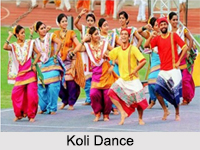
Koli Dance
A folk-dance form of Maharashtra, the Koli dance is mainly performance by the Koli community of the region. Known for their primary profession of fish...
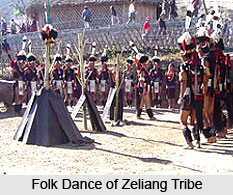
Folk Dances of Nagaland
Folk Dances of Nagaland reflects the naga tradition and culture of the local habitants. In most of the cases, naga dances are monopoly of men with som...
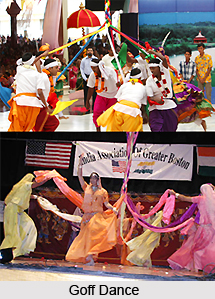
Goff Dance
Goff dance of Goa is performed during the Shigmo festival in the month of Phalgun in Hindu calendar. Goan peasants mainly practice this dance after th...
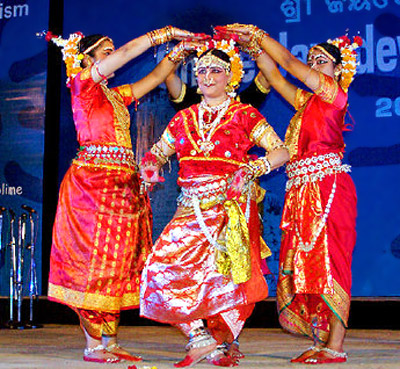
Abhinaya Chandrika
Abhinaya Chandrika is an ancient text on Odissi dance that explain every minute details of Odissi performance. The text explains about different mudra...
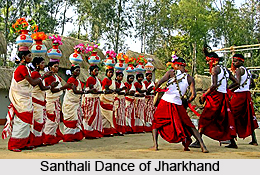
Santhali Dance
Santhali dance is a vibrant folk tradition of the Santhal tribe, reflecting the deep connection of the Santhal tribe with nature, community, and celeb...
Related articles in Indian Dances
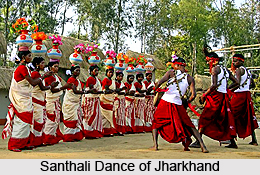
Santhali Dance
Santhali dance is a vibrant folk tradition of the Santhal tribe, reflecting the deep connection of the Santhal tribe with nature, community, and celeb...
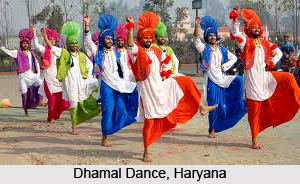
Dhamal Dance
A folk dance form of Haryana, the Dhamal Dance has its roots in the days of the Mahabharata. This dance form is primarily performed by men in the outd...
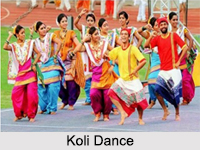
Koli Dance
A folk-dance form of Maharashtra, the Koli dance is mainly performance by the Koli community of the region. Known for their primary profession of fish...
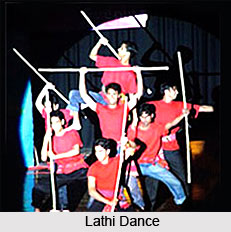
Lathi Dance
Lathi dance is a dance form of West Bengal performed on the occasion of Muharram.
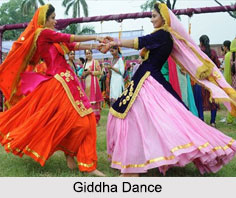
Giddha Dance
Giddha Dance of Punjab, performed only by the women, is a very popular folk art form in India. During Lohri, the Punjabi women reveal their joy throug...