|
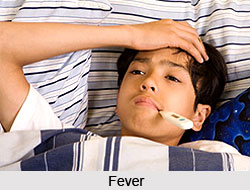
Common fever refers to that state of the body, during which the normal body temperature goes beyond and rises much above the normal and standard. Common fever is also characterised by disturbance in the normal functioning of the body system, much akin to the common cold. The disease is however regarded as common and almost day-to-day ailment, which rampantly occurs both in children and adults as an indication of excess morbid matter within the body. Fever is part of the human body`s defence mechanism. When the body is defending infections, the body temperature rises automatically. Common fever hence partially implies that Mother nature is trying to burn that `morbid matter` with the help of rising body temperature.
However, common fever does not occur by a mere disturbance or turmoil within the body; just as in common cold, common fever at times has its good points, just as cleansing out the morbid matter from the digestive system. The human body has a definitive temperature range, fluctuating within 36.9 degrees Celsius and 37.5 degrees Celsius, or between 98.4 degrees Fahrenheit and 99.5 degrees Fahrenheit. Simple rise or fall in the body temperature, further than this range, is verily termed as common fever. Firstly characterised by a decline in the normal working and operation of the body, the lowest temperature of the body occurs between 1.30 a.m. to 7 a.m. and the highest between 4 p.m. to 9 p.m. There exist various grave factors that lead to the rise and fall in the body temperature. The vacillating in body temperature is accountable to marginal variations, depending upon the amount of intake of food, the extent and level of exercise and the temperature encompassing the atmosphere. Indeed, these precise reasons brings one to the detailed causes of common fever, amounting to various bodily and internal malfunctions, majority of the causes arriving from viruses or unclean environs. The more accumulated morbid matter in the body due to the faulty eating and lifestyle, leads one to common fever, accompanied by unnecessary and extreme physical exertion and getting drenched in rain for an extended period of time.
Common fever, sometimes conceived at times as influenza, is however not the exact reasoning. Influenza is a much severe form of common fever and common cold. As a result, an everyday fever comes about from the acute viral rhinopharyngitis, or acute coryza, most normally acknowledged as the `common cold`. Common fever is regarded as exceedingly contagious, a viral infectious disease of the upper respiratory system, basically caused by picornaviruses (including rhinoviruses) or coronaviruses.
To this date, there exist no antiviral drugs established under authority, to treat or cure the infection called `common fever`. Indeed, treatments of common fever have been forever based upon researched and doctorial hypothecation. Each medication employed are palliative (any form of medical care or treatment that focuses upon alleviating the severity of disease symptoms, rather than endeavouring to halt, delay, or invert progression of the disease itself or provide a cure) and treat the basic symptoms only. Though a few `alternative treatments` such as Vitamin C megadosage, echinacea, and zinc and the umpteen other home remedies have been suggested and projected in modern times - none of them have proven successful to exhibit to decrease the duration of the illness and uneasiness. As a result, none of these above-mentioned treatments of common fever are approved by the Food and Drug Administration (an agency of the United States Department of Health and Human Services, responsible for determining and supervising the safety of foods, dietary supplements, drugs, vaccines, biological medical products, blood products, medical devices, radiation-emitting devices, veterinary products, and cosmetics) or European Medicines Agency (a European agency, looking deep into the evaluation of medicinal products). However, as a preventive cure and further protection against the common fever virus and to debar infection, washing or disinfecting hands have been found to be of much effect, as this downplays a person-to-person transmission of the fever virus.
A rather much popular and everyday disease of both the adults and children, common fever possesses almost day-to-day symptoms and indications, here again exhibiting much likeness to common cold. Symptoms like increased body temperature and sometimes low temperature, lot of perspiration, heaviness and burning in eyes, headache accompanied by body-ache, coated tongue, sore throat, running nose, nasal congestion, sneezing and coughing. The symptoms in common fever at times can also be accompanied by `pink eye` (medically also referred to as Conjunctivitis), severe muscle aches, fatigue, malaise (an overall discomfort and uneasiness of both the mental and physical body), headaches, muscle weakness, disorderly and unruly shivering and, complete loss of appetite. Fever and intense exhaustion are however almost infrequent during a cold and are more commonplace during influenza. The symptoms of common fever usually come to an understandable settlement, after approximately one week, which however can continue up to two weeks also. These above said symptoms can cause more severity in infants and young children. Although the disease is easy-going and checks by itself after a period of time for the most part, patients with common fever often look for practised medical help, make use of `over-the-counter drugs` (also acknowledged OTC drugs, these are medicines that are generally sold to a customer without a prescription) and can also skip school or work days.
Common fever however easy-going and mild they are conceived and thought of, can at times lead to lethal and deadly kinds. Indeed, such can be the severity of common fever and cold, that it can turn a patient lifeless, only leading in death. As such, various fearsome types of common fever exist in present day society, which perhaps only has been aggravated by the societal complications, pollution, over-stress and the likes. Some of the most deadly types in common fever can comprise - dengue fever, malaria, typhoid, hepatitis (including its various stages), Kala azar, Cholangitis or Septicemia.
Common fever amongst both adults and children depends heavily upon the prescribed dosage of medicine or the proper dietary chart that is generally mentioned by the doctors, The diet and a restricted food intake during an ongoing bout of fever, is sure to facilitate the patient, boosting him/her further towards betterment. The prescription given for common cold and cough or common fever regarding fasting is considered much beneficial during heavy fever too. During the first 3 to 4 days of fever, only fresh fruit juice mixed with water is mostly recommended medically. Cereals also are prescribed to be taken after complete recovery from common fever.
|
