


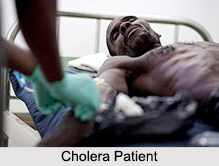
 Cholera is one of the most severe stomach diseases, mainly of the intestines, which affects the lower part of the small bowels especially during the monsoons, since it is water borne disease. The disease strikes suddenly and fills the intestinal canal with bacilli, which die rapidly and leave the person quickly either alive or dead, thus the mortality rate of this disease is much higher. Cholera is one of the most severe stomach diseases, mainly of the intestines, which affects the lower part of the small bowels especially during the monsoons, since it is water borne disease. The disease strikes suddenly and fills the intestinal canal with bacilli, which die rapidly and leave the person quickly either alive or dead, thus the mortality rate of this disease is much higher.
History of Cholera Cholera likely has its origins in the Indian Subcontinent; it has been prevalent in the Ganges delta since ancient times. It is believed that the first origins of Choleras have occurred due to the result of poor living conditions as well as the presence of pools of still water. Causes of Cholera Cholera is caused by a short, curved, rod-shaped germ known as Vibrio Cholerae. This germ produces a powerful poison which is spread by flies and water contaminated by the germs. The real cause of the disease, however, is the toxic and devitalized condition of the system brought about by incorrect feeding habits and faulty style of living. This condition facilitates the breeding of the cholera germs. 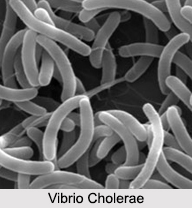
Symptoms of Cholera Symptoms may range from none, to mild, to severe. The symptoms of cholera are clearly visible in three stages. First Stage: Second Stage: Third Stage: 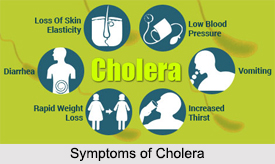
Treatment of Cholera The treatment should begin with the aim of combating the loss of fluids and salts from the body. After the acute stage of cholera is over, the patient may be given tender coconut water and barley water in very thin form. When the stools begin to form, he should be given buttermilk. As he progresses towards recovery, rice softened to semi-solid form mixed with curd, may be given. However, the patient should not be given solid food till he has fully recovered. Liquid and bland foods are the ones, which the patient can ingest without endangering a reoccurrence of the disease. Lemon, onion, green chillies, vinegar and mint should be included in the daily diet during an epidemic of cholera. Prevention from Cholera Though cholera can be treated, it should be prevented first in order to escape the pain of this horrible disease. Cholera can be controlled only by rigid purification of water supply and proper disposal of human wastes. In case of slightest doubt about the contamination of water, it must be boiled before use, for drinking and cooking purposes. Foodstuffs must be kept covered and vegetables and fruits washed with a solution of potassium permanganate before consumption. Other precautions against this disease include avoiding all uncooked vegetables, thorough washing of hands by all those who handle food, and elimination of all contacts with the disease. |
| |||



Cholera
| Cholera is an infectious disease that causes severe watery diarrhoea, which can lead to dehydration and even death if untreated. |
| ||||||||||||||||||||||||||||

